Testaccio Food Tours: Eating in Rome's Slaughterhouse Quarter
Testaccio is where Rome's food actually comes from: a covered market of about a hundred stalls, a district built around a slaughterhouse, and the offal cooking the city's trattorias inherited from its workers. Here is what a food tour here covers, what it costs, and how it differs from Trastevere.
Short answer
A Testaccio food tour typically costs $77.81 to $128.96 and runs 3.5 hours, centered on the covered Mercato di Testaccio (about 103 stalls, open Monday to Saturday, roughly 7am to mid-afternoon) and the quarter's quinto quarto offal tradition. Devour Tours and Eating Europe run the main options, rated 4.9 and 5.
Testaccio does not perform for visitors. It is the rione where Rome fed itself for a century, built around a slaughterhouse that operated from 1891 to 1975 and a covered market that still sells puntarelle, offal and coastal fish to people who cook for a living. The neighborhood gave the city its quinto quarto cooking, the fifth-quarter offal dishes that slaughterhouse workers once took home in place of wages, and it still hosts the most food-serious market culture in the historic center. Operators send their keener eaters here rather than to Trastevere, and this guide explains exactly what that means in practice: which tours run, what they charge, what the market's official hours are, and what the quarter's history adds to the plate.
Why do food tours go to Testaccio instead of Trastevere?
Testaccio earns its food reputation through working infrastructure rather than nightlife: a covered market of roughly 103 stalls, a slaughterhouse past that created Rome's offal cuisine, and an artificial amphora hill documenting two thousand years of food logistics. Trastevere offers atmosphere and restaurants; Testaccio offers the supply chain and its cooking, which is why guides describe it as the city's real food neighborhood.
The distinction matters when you are choosing where to spend a tour budget. Trastevere, covered in our Trastevere food tours guide, is where the evening crowds and the picture-perfect lanes are, and its tours reflect that: sunset walks, wine with dinner, piazzas. Testaccio is a 19th-century workers' quarter on the south side of the center, laid out when the industrial zone needed housing, and its food culture grew directly out of the Mattatoio, the slaughterhouse complex designed by Gioacchino Ersoch and built between 1888 and 1891.
Roma Capitale's own tourism service documents the connection plainly: tripe, oxtail, coratella, pajata and the other offal cuts belong to the "quinto quarto", the least prized part of the animal, historically eaten by the poorest families and above all by the Mattatoio's workers, who topped up their wages with the offcuts left from the prime cuts (Roma Capitale, trippa alla romana). That is not a marketing story a tour company invented. It is the city's own account of where a whole strand of Roman cooking came from, and a good Testaccio guide will tell it standing in the streets where it happened.
The quarter's second food landmark is older by two millennia. Monte Testaccio, the artificial hill at the district's edge, is built almost entirely of broken amphorae, the shipping containers that carried olive oil into ancient Rome from the provinces, above all Baetica in modern Andalusia. The Sovrintendenza Capitolina, the city's cultural heritage body, records the hill at 54 meters high with a circumference of about one kilometre, formed of potsherds systematically unloaded at the nearby river port (Sovrintendenza Capitolina). Roma Capitale's own news page gives a different height, about 35 meters, with an estimated volume of 580,000 cubic meters. Both figures are official; a careful guide cites one rather than averaging them.
So the honest pitch for a Testaccio tour is this: you are walking a neighborhood whose food identity is documented by the city itself, from the amphora hill to the slaughterhouse to the market that still feeds the district. Few food tour destinations anywhere can show that paper trail.
What does a Testaccio food tour actually include?
Most Testaccio tours run about 3.5 hours, cost between $77.81 and $128.96 depending on group pricing, and combine a walk through the covered Mercato di Testaccio with tastings at market stalls and neighborhood shops, usually ending with pasta and wine. Devour Tours and Eating Europe operate the three main options, rated 4.9 to 5 by guests.
The core structure is consistent across operators: meet at a piazza in the quarter, walk the market while the guide explains the produce and the offal cuts, taste at several stalls, then sit down for a pasta course, typically one of the four classic Roman pastas, with local wine. The differences are group size, price model and how deep the market portion goes.
| Tour | Operator | Price | Rating | Length |
|---|---|---|---|---|
| Testaccio Market & Local Tastings (small group) | Devour Italy Food Tours | $79.27 per group, varies by size | 4.9 from 293 reviews | 3.5 hours |
| Testaccio Food Tour with Market Visit & Local Tastings | Devour Tours | $77.81 per person | 5 from 52 reviews | 3.5 hours |
| Testaccio Food Tour with Roman Pasta and Market Tastings | Eating Europe Food Tours Rome | $128.96 per group, varies by size | 4.9 from 1,760 reviews | 3.5 hours |
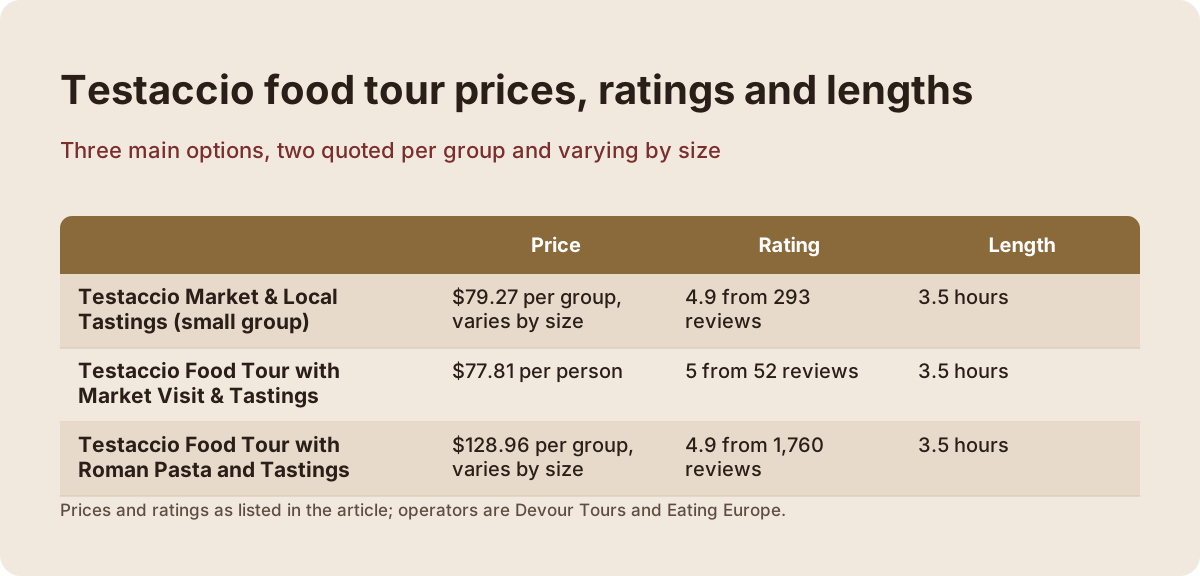
Two of those prices are quoted per group and vary by group size, which makes them look cheaper than they are for a solo traveler and more expensive for a couple than a per-person tour. Check the live listing for your exact party size before comparing. The Eating Europe option carries by far the largest review base, 1,760 reviews at 4.9, and meets at Piazza Testaccio with guides carrying the operator's purple bag. The Devour options meet at Piazza di Santa Maria Liberatrice, by the monument to Testaccio's war dead, which is the neighborhood's main square and a short walk from the market.
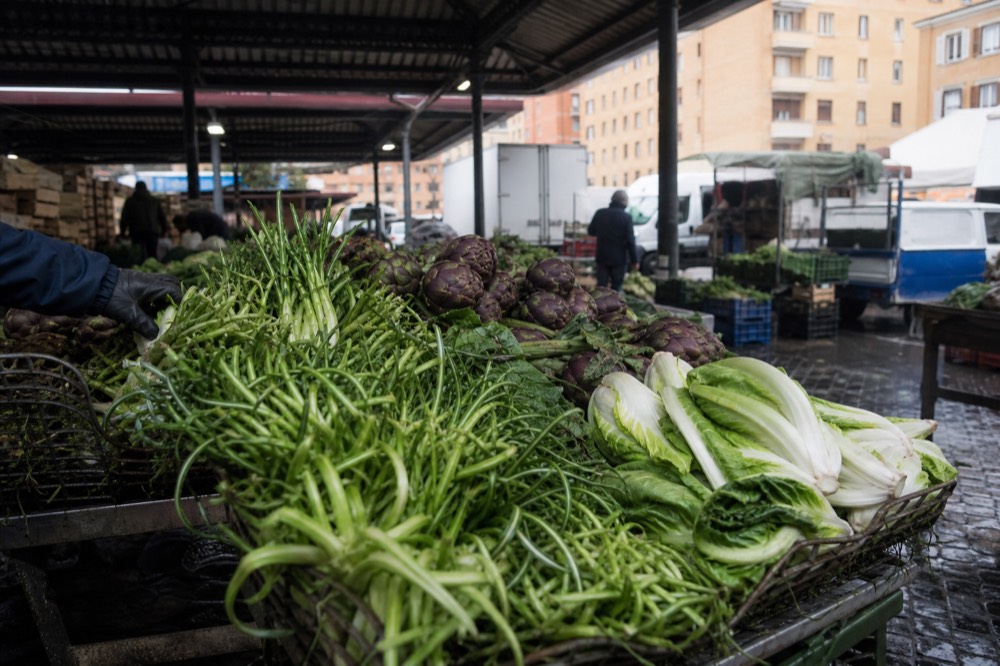
What you taste follows the market's seasons. Roma Capitale's tourism service describes the quarter's stalls as carrying puntarelle, broccoli, misticanza, artichokes and broad beans by season, alongside offal, meat, fish from the coast and traditional cheeses. A winter tour and a spring tour will genuinely differ, and a good guide will tell you which artichoke preparation you are looking at rather than reciting a script.
What is the Mercato di Testaccio like inside?
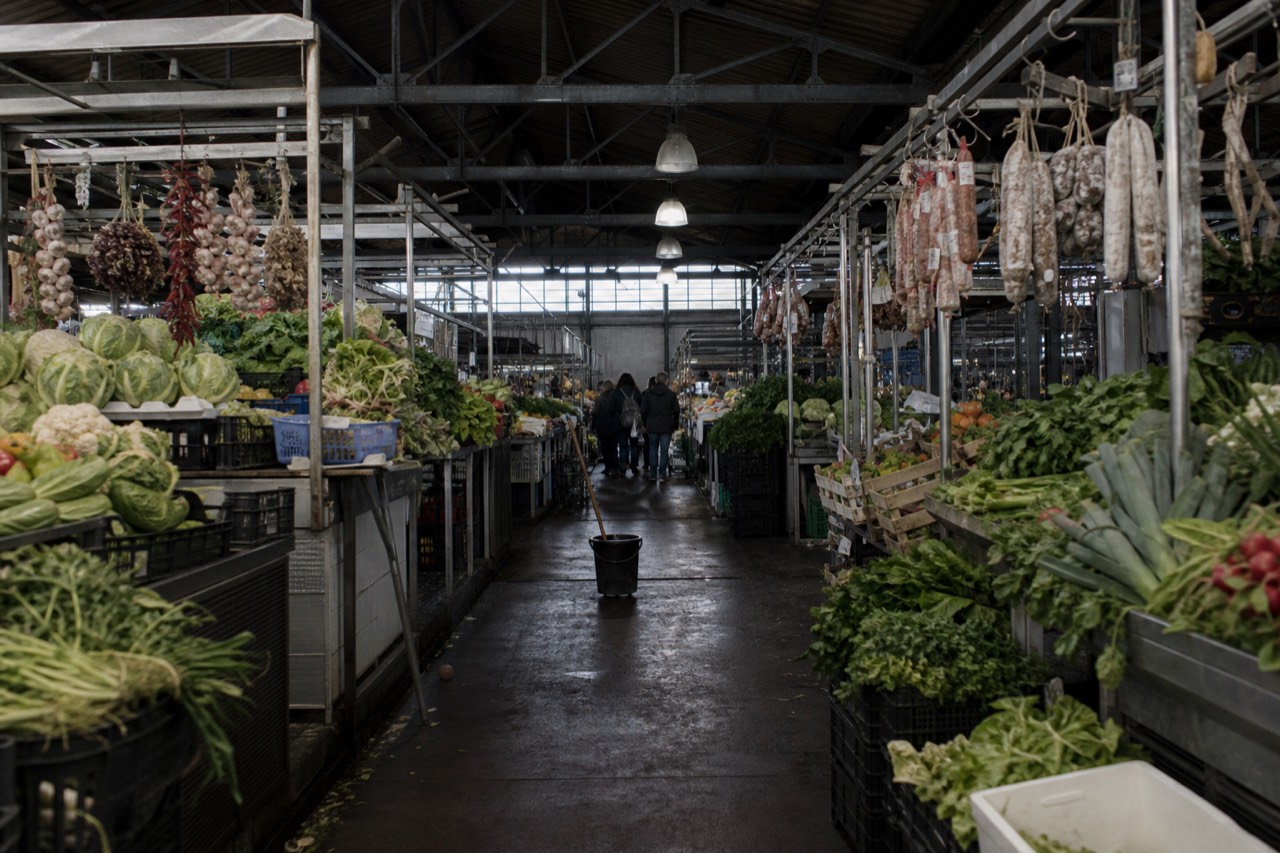
The Mercato di Testaccio is a covered market of about 103 stalls, open Monday to Saturday from roughly 7am to mid-afternoon, selling produce, meat, fish, cheese and prepared food, with street food and vegan stands added in recent years. The market's own site publishes hours of 7:00 to 15:30, while the city's official list says 7:00 to 16:00, so plan around the earlier figure.
Both those figures are official: the market's own info page states 7:00 to 15:30, and Roma Capitale's mercati rionali spreadsheet, the city's master list of its 70 neighborhood markets, lists Testaccio as a plateatico market with 103 stalls and hours of 7:00 to 16:00. When two official sources disagree, the market's own published hours are the safer planning number, and either way this is a morning-to-early-afternoon destination, not an evening one.
| What to look for | Where | Notes |
|---|---|---|
| Puntarelle and misticanza | Greengrocery stalls | Seasonal Roman salad greens; ask how the puntarelle dressing is made |
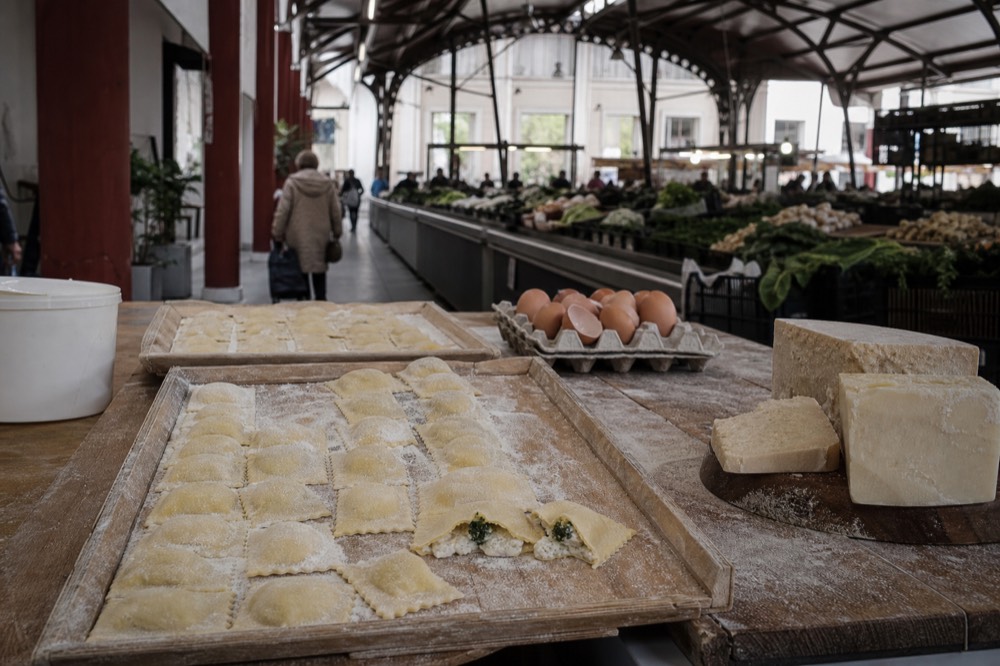
| Fresh pasta | Pasta workshop stalls | Roman shapes for cacio e pepe and amatriciana, often cut to order |
| Offal and quinto quarto cuts | Butcher stalls | Tripe, oxtail, coratella; the district's signature category |
| Pecorino Romano PDO | Cheese stalls | The grating cheese for three of the four Roman pastas |
| Prepared food and street food | Cooked-food stands | The market has added street food and vegan stands in recent years |
The market building has an unusual basement: an excavated ancient Roman horreum, a storage warehouse, still holding hundreds of amphorae, managed by the archaeological superintendency with free guided visits led by the archaeologists who dug it. One honest caveat: the market's own page currently states those underground visits are temporarily suspended for refurbishment works, so do not book a tour, or plan a self-guided stop, on the promise of seeing the horreum itself.
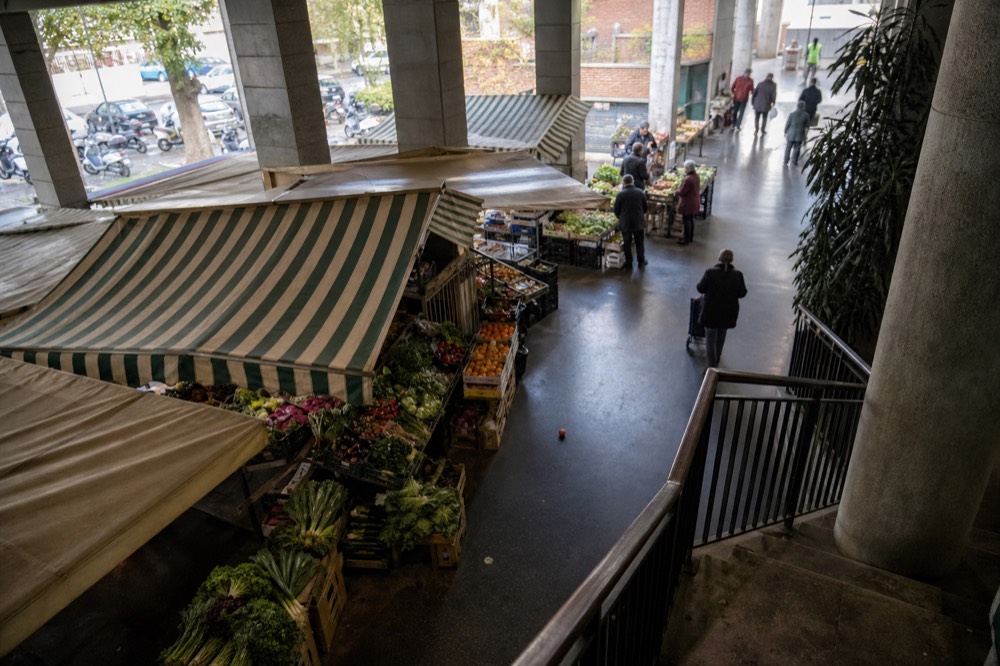
The market has also been extending its hours into the evening. Since 6 March 2026 the Mercato di Testaccio has opened on Friday evenings until 22:00, an arrangement agreed among the operators, the concession holder and local institutions. That is a real change for tour timing: a Friday visitor now has a second window, though the classic stall experience, and the tours built around it, remains a morning thing.
Why is the offal tradition here specifically?
The quinto quarto tradition exists in Testaccio because the Mattatoio, Rome's central slaughterhouse, operated in the quarter from its completion in 1891 until July 1975. Workers were partly paid in, or cheaply bought, the fifth quarter of the animal, the offal no one else wanted, and the neighborhood's trattorias turned it into trippa alla romana and related dishes still served today.
The building's history is well documented by institutional sources. The complex was designed by Gioacchino Ersoch and built between 1888 and 1891 in the workers' quarter of Rome's then-new industrial zone, and it remained in operation until July 1975, when slaughtering moved to a new meat center at Tor Sapienza. Roma Tre University's architecture department, which has studied the complex, records that it was considered a reference model at European level for its layout and construction. Note what that claim is and is not: it is a statement about the building's design reputation, not the oft-repeated blog line that it was the largest slaughterhouse in Europe, which no institutional source supports.
The food legacy is the part a tour makes tangible. Roma Capitale records that tripe, like oxtail, coratella and pajata, belongs to the quinto quarto, and that trippa alla romana is a very old city dish traditionally eaten at Saturday lunch, as still happens in many trattorias of Trastevere and Testaccio. The traditional recipe calls for strictly fresh ingredients, two of them exceptional: pecorino romano and Roman mint. If your tour includes a tripe tasting or a butcher-stall explanation, that Saturday-lunch context is the detail that makes the dish make sense.
| Quinto quarto dish | What it is | Where it fits on a tour |
|---|---|---|
| Trippa alla romana | Tripe with tomato, pecorino and Roman mint | The signature dish; traditionally Saturday lunch |
| Coda alla vaccinara | Oxtail braised with tomato and celery | Often a sit-down course on longer tours |
| Coratella | Heart, lungs and liver of lamb or kid | Seasonal; more common in spring |
| Pajata | Lamb intestine, classically with rigatoni | The most challenging cut; guides usually explain rather than serve it |
The Ex Mattatoio itself is now a cultural complex: Roma Capitale records that restoration ran 2006 to 2010, and the interiors today house the Accademia di Belle Arti and Roma Tre's architecture faculty, with parts managed since 2018 by the city's exhibition body. Two large rooms once meant for the untamed animals are slated to become catering spaces, which would return food, in a new form, to the building where the tradition started.
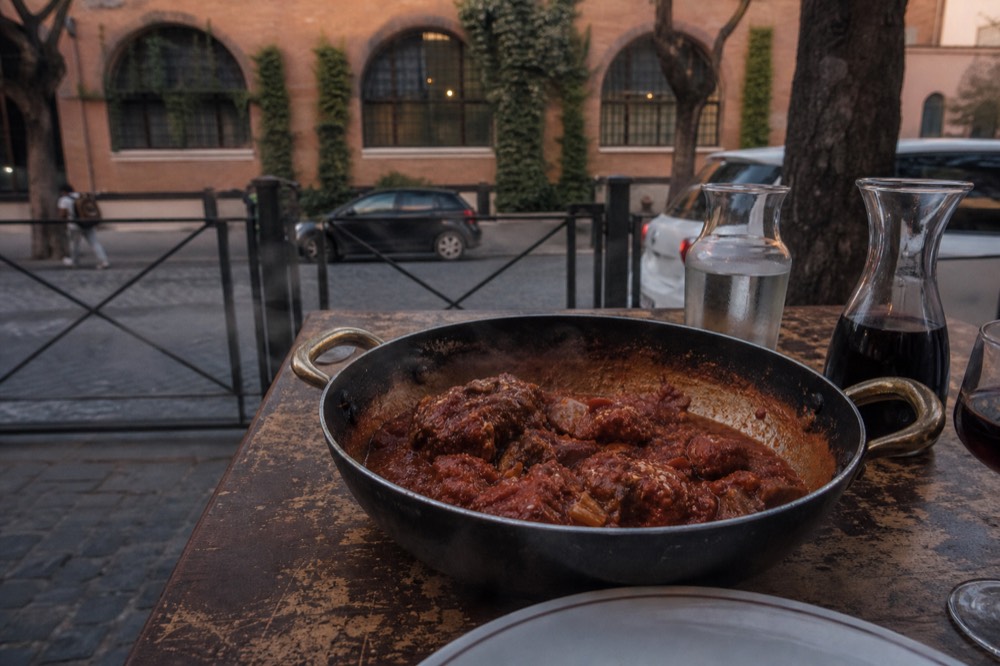
Eating Europe's Testaccio tour is the option that leans hardest on this story, pairing the market walk with Roman pasta and market tastings; the operator runs it at $128.96 per group with the price varying by group size, 4.9 from 1,760 reviews over 3.5 hours.
How does Testaccio compare with Trastevere for a food tour?
Choose Testaccio for market culture, offal cooking and food history, and Trastevere for evening atmosphere, wine-forward tastings and the photogenic old-quarter setting. Testaccio tours run mornings and afternoons around a working market; Trastevere tours cluster at twilight around dinner. They are complements, not competitors, and many visitors do one of each on different days.
The practical differences are stark once you lay them out. Testaccio's market closes mid-afternoon, so its tours are daytime products. Trastevere's tours, like the 4-hour Twilight Trastevere option at $123.04 per person, 4.9 from 6,343 reviews, are built around sunset and dinner, meeting on Tiber Island in the early evening. If your Rome itinerary has only one free evening, Trastevere is the natural fit; if it has a free morning, Testaccio is.
| Factor | Testaccio | Trastevere |
|---|---|---|
| Best time of day | Morning to early afternoon | Evening, around sunset |
| Center of gravity | Covered market and butcher tradition | Piazzas, trattorias, wine bars |
| Signature foods | Quinto quarto dishes, market produce, Roman pastas | Street food, dinner courses, wine |
| Tour price range | $77.81 to $128.96 | $68.45 to $123.04 |
| Crowd level | Local, working neighborhood | Heavy tourist footfall at night |
There is also a character difference worth naming. Trastevere is Rome's largest rione and one of its most visited, which brings both the atmosphere people come for and the movida problems the city has been regulating: an ordinance restricting night-time takeaway alcohol sales in Trastevere and other zones runs until 11 October 2026, and a police operation there in early September 2026 issued over 50,000 euros in fines against venues including a gelateria operating as a pub. None of that touches a normal food tour, but it explains why the quarter feels managed rather than sleepy. Testaccio has no comparable scene; its evenings belong to locals, and its Friday market nights are a recent, deliberately quiet experiment.
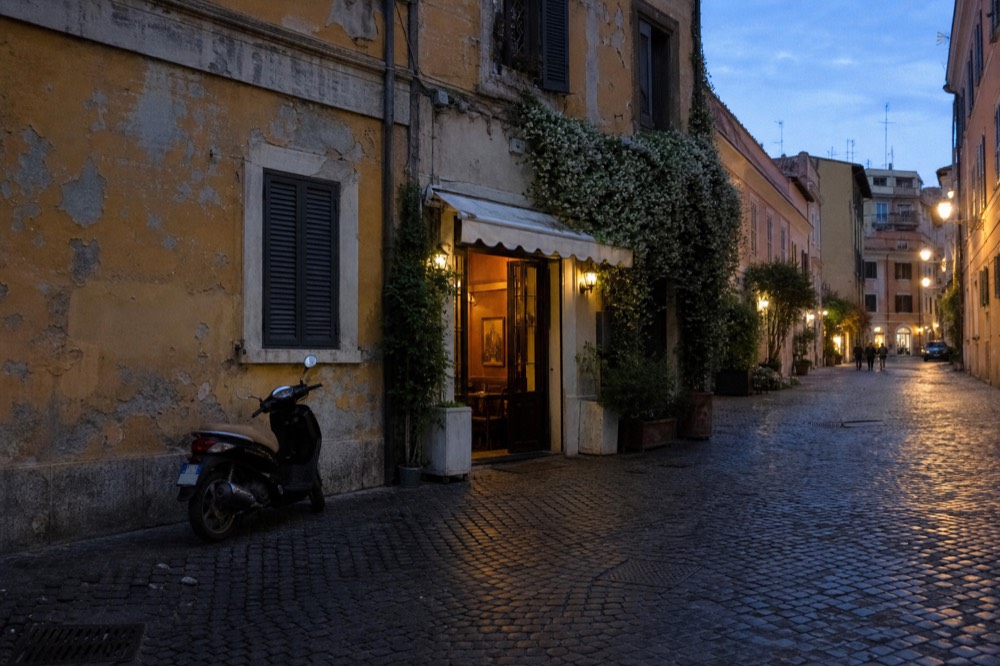
If you can only take one food tour in Rome and want the evening version, the Twilight Trastevere tour is the counterpart to everything described here: 4 hours, $123.04 per person, 4.9 from 6,343 reviews, run by Eating Europe, which also operates the Testaccio option, so the two share a standard of guide training.
For visitors weighing other neighborhoods too, our Jewish Ghetto food tours guide covers the quarter whose fried artichokes and fried salt cod traditions run parallel to Testaccio's offal school, and the evening food tours in Rome guide compares all the after-dark options side by side.
What does Monte Testaccio add to the visit?
Monte Testaccio is an artificial hill built from broken amphorae, the ceramic vessels that shipped olive oil to ancient Rome, with accumulation dated mostly between AD 140 and the mid-3rd century and about three quarters of the fragments from Baetica, in modern Andalusia. It turns the quarter into a two-thousand-year food logistics site, which is why serious tours reference it.
The hill is the reason Testaccio was the port and warehouse district of ancient Rome in the first place, and the reason the slaughterhouse and then the market ended up here: food infrastructure attracts food infrastructure. The city's own account explains that the oil amphorae were not reusable, because oil residue spoiled quickly, so they were stacked with lime and abandoned in a heap that eventually became a hill. Many fragments still carry the maker's stamp on a handle, and some carry painted notes recording the exporter, the contents and the consular date (Roma Capitale, Il Monte dei Cocci).
One number you should not trust anywhere is an amphora count. Official sources give none; blog figures of 53 million and excavation-team figures around 26 million circulate without a fetchable primary source behind either. A good tour says "millions of fragments", which is what the city's own documents say, and moves on. The height is similarly contested between two official bodies, 54 meters per the Sovrintendenza and about 35 meters per Roma Capitale, so treat any single confident figure on a tour or a website with caution.
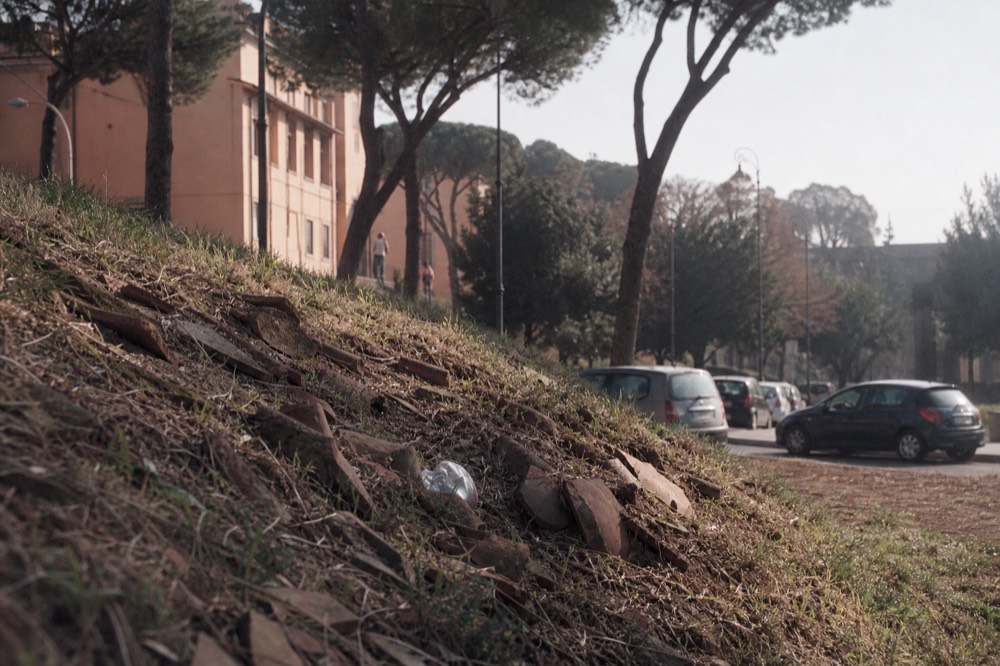
Tours do not climb the hill, and you should not either except through authorized visits, but its presence frames the whole neighborhood: the same streets that received imperial oil shipments received slaughterhouse cattle wagons a century ago and receive market delivery vans today. Devour's small-group Testaccio option, $79.27 per group with the price varying by size, 4.9 from 293 reviews, uses the quarter's layered history as its narrative spine.
How do you plan the practical side of a Testaccio tour?
Plan for a morning start: the market is open Monday to Saturday from roughly 7am to mid-afternoon, tours last 3.5 hours, and meeting points are Piazza Testaccio or Piazza di Santa Maria Liberatrice, both inside the quarter. Book ahead for small-group options, and note that per-group prices change with party size, so check the live listing before comparing.
Getting there is simple on foot or by transit from the center, and the quarter sits outside the daytime restricted driving zones that affect the historic core. One motoring caveat if your plans involve a vehicle: Testaccio has a night-time limited traffic zone, active 23:00 to 03:00 on Fridays and Saturdays, though it is switched off during August. A walking food tour is unaffected either way.
Budget-wise, the tours themselves run $77.81 to $128.96 as described above, and the market is a genuinely cheap place to shop beyond the tour: it is a working rione market, not a tourist bazaar, and prices reflect that. If you want to extend the day, the Garbatella farmers' market, where Lazio farms sell their own produce, opens weekends with tastings, and is a short hop south.
| Planning item | Detail |
|---|---|
| Tour length | 3.5 hours for all three main options |
| Meeting points | Piazza Testaccio (Eating Europe) or Piazza di Santa Maria Liberatrice (Devour) |
| Market hours | Monday to Saturday, roughly 7am to mid-afternoon; Friday evenings until 22:00 since March 2026 |
| Price range | $77.81 to $128.96, with per-group options varying by party size |
| Best season | Winter for artichokes, spring for coratella; the market changes with the seasons |
| Cancellation | Check each operator's live listing; small-group tours often sell out on market mornings |
Timing within the week matters more here than in most of Rome. The artichoke season runs from January into May, weather depending, per the EU's published specification for Carciofo Romanesco del Lazio, so a winter or early-spring tour catches the Roman artichoke at its source. Saturday is the traditional tripe day, which makes a Saturday lunchtime tour the most narratively complete slot if trippa alla romana is on your list.
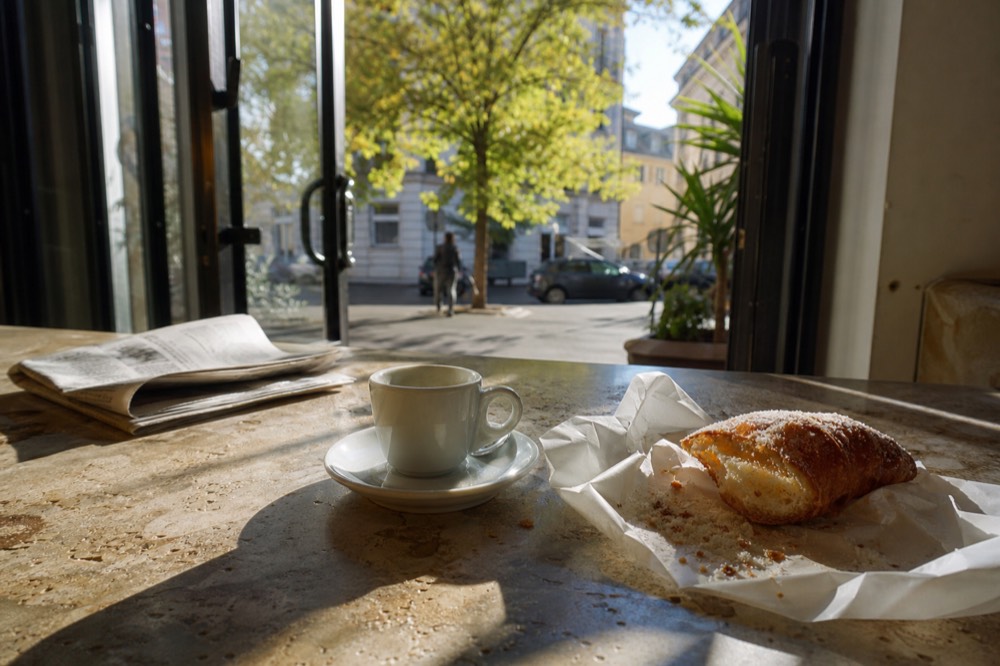
Devour's per-person Testaccio option at $77.81, a perfect 5 from 52 reviews over 3.5 hours, is the newest and smallest-reviewed of the three, which cuts both ways: less crowd-sourced evidence, smaller groups.
Which Testaccio food tour should you book?
Book Eating Europe's Testaccio tour for the largest, best-reviewed option and the fullest pasta-and-market combination; book Devour's small-group version for a tighter group and a lower headline price; book Devour's per-person option if you are traveling solo or as a pair, since per-group pricing penalizes small parties. All three run 3.5 hours and cover the market, so the real choice is group size and price model.
The review base is the most objective signal available. Eating Europe's option carries 1,760 reviews at 4.9, which is a large sample for a neighborhood-specific tour; Devour's small-group option carries 293 at 4.9; Devour's per-person option carries 52 at a perfect 5. A perfect score on a small sample is encouraging but thin; a 4.9 on nearly two thousand reviews is the sturdier bet.
For visitors planning a whole food-focused Rome trip rather than one tour, the natural pattern is a Testaccio morning for the market and the offal tradition, an evening in Trastevere for the twilight walk, and, if time allows, a cooking class to learn the pastas you tasted. Our cooking classes in Rome guide covers that third piece, and this site, Rome Food Tours, reviews every food tour format in the city with the same sourcing standard used here.
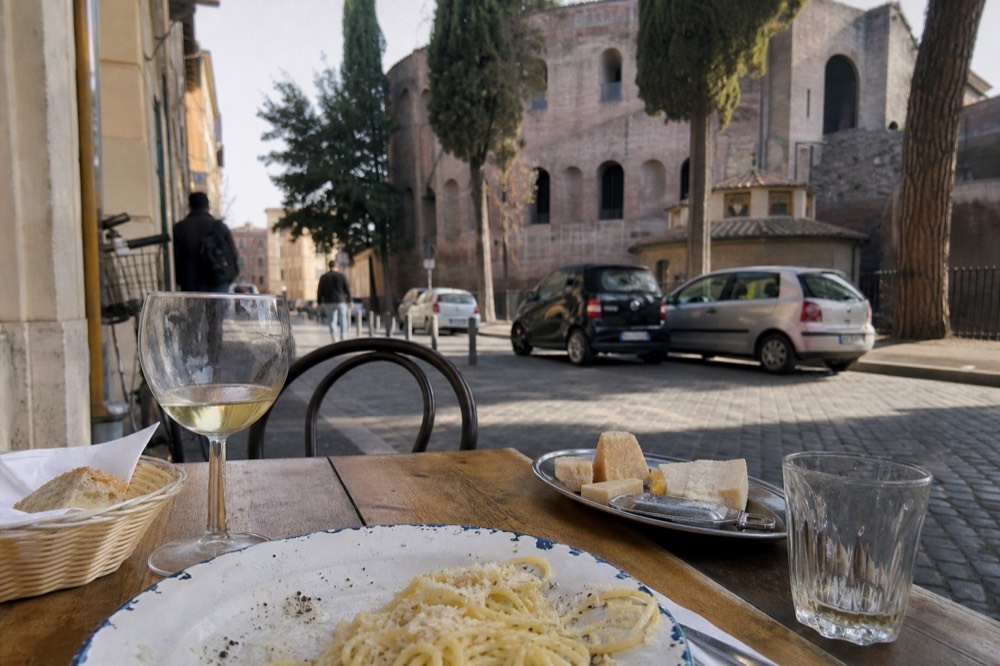
Whichever you choose, book the market-morning slot. Testaccio is at its most itself between 8am and noon, when the stalls are full, the butchers are cutting, and the neighborhood is doing its actual shopping around you. That is the show you came for.
These are the questions readers ask most about touring Testaccio: cost, timing against the market's hours, the Trastevere comparison, the offal tradition behind the quarter's cooking, the closed underground site, and whether picky eaters can manage the stops. Each answer below gives the short version of what the sections above cover in full, with the same figures and the same sourcing.
Common questions about Testaccio food tours
How much does a Testaccio food tour cost?
The three main options run $77.81 to $128.96. Devour's per-person tour is $77.81, its small-group version is $79.27 per group with the price varying by party size, and Eating Europe's tour is $128.96 per group, also varying by size. All three last 3.5 hours and include the covered market.
What is the best time of day for a Testaccio food tour?
Morning. The Mercato di Testaccio operates Monday to Saturday from roughly 7am to mid-afternoon, and the stall experience is at its fullest before noon. Since March 2026 the market also opens Friday evenings until 22:00, but the tours are built around the daytime market.
Is Testaccio or Trastevere better for a food tour?
Testaccio is better for market culture, offal cooking and food history; Trastevere is better for evening atmosphere and wine-forward tastings. They are complements: many visitors take a Testaccio morning tour and a Trastevere twilight tour on different days.
What is quinto quarto and why is it in Testaccio?
It is the "fifth quarter" of the animal, the offal cuts, named for the parts left after the prime quarters were sold. It became Testaccio's signature because the Mattatoio, Rome's central slaughterhouse, operated here from 1891 to 1975 and its workers ate the offcuts. Trippa alla romana, traditionally a Saturday lunch dish, is the best-known result.
Can you visit the ancient amphora site under the market?
Not currently. The market's own page states that visits to the excavated ancient warehouse beneath the building are temporarily suspended for refurbishment works, so do not plan around seeing it. The amphora hill above ground, Monte Testaccio, is visible from the surrounding streets.
Are Testaccio food tours good for picky eaters?
The market and pasta portions are, since Roman pastas and cheeses suit most palates. The quinto quarto tradition is the challenge: tripe and oxtail feature on many stops. Tell the guide at the start; operators in this quarter are used to routing hesitant guests toward the pasta, cheese and pastry stops instead.