Rome Street Food Markets: Campo de' Fiori vs Testaccio vs Trionfale
Rome runs 70 neighborhood markets, but three names dominate every visitor's list. Here is how Campo de' Fiori, Mercato Testaccio and Mercato Trionfale actually compare, hour by hour and stall by stall.
Short answer
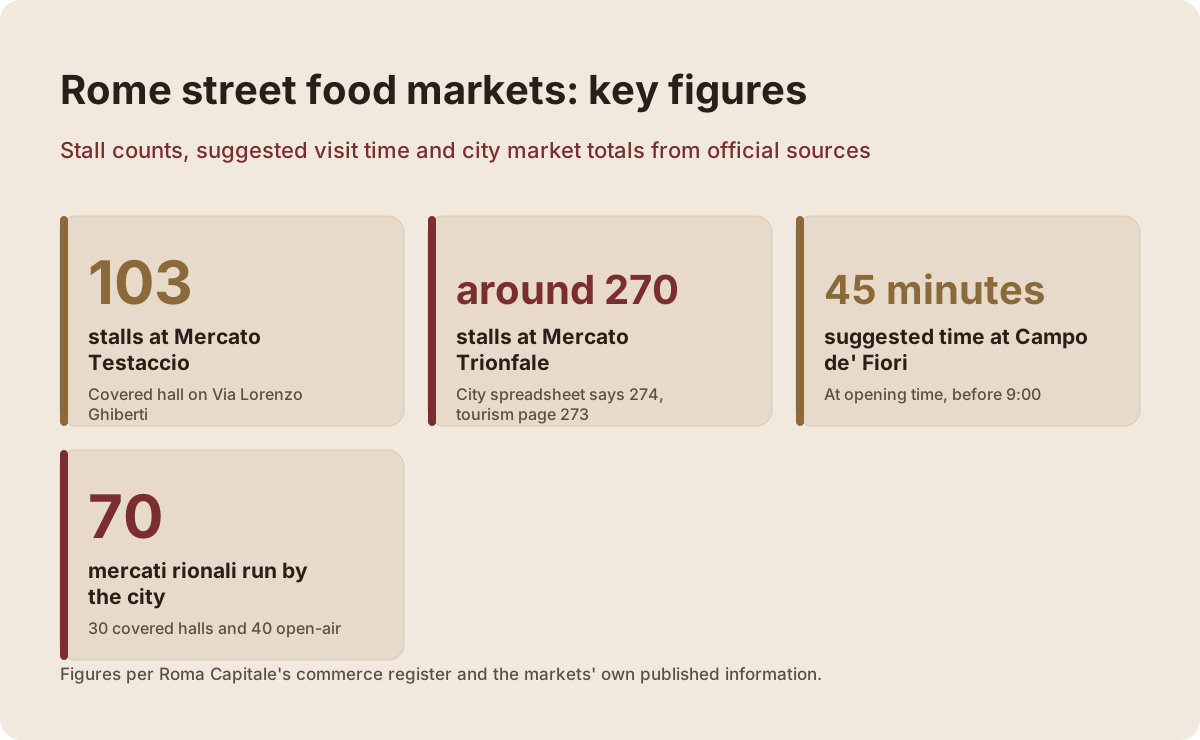
Roma Capitale lists 70 neighborhood markets: 30 covered, 40 open-air. Campo de' Fiori is the photogenic morning market, Testaccio is where Romans shop, and Trionfale is the biggest covered market with around 270 stalls. Testaccio publishes hours of 7:00 to 15:30 Monday to Saturday; Trionfale runs 7:00 to 14:00 four days a week and to 19:00 on Tuesdays and Fridays.
Rome's market culture is older than its tourist industry by several centuries, and the two now share the same squares. The city itself runs 70 mercati rionali, 30 of them covered halls and 40 open-air, according to Roma Capitale's own commerce register. Only a handful sit inside the tourist perimeter, and of those, three names account for nearly every visitor's question: Campo de' Fiori, Mercato Testaccio and Mercato Trionfale. They are not interchangeable. One is a morning postcard that empties by early afternoon, one is a working food destination that has added street-food counters to its butcher stalls, and one is a vast covered hall on the Vatican side of the river that most visitors never hear about.
This guide compares the three on the things that actually decide your day: when they run, what is genuinely local versus what is there to sell you a souvenir, and which guided walks start at which market. The short version, if you are planning around a Rome street food crawl rather than a single stop, is that Testaccio rewards the most time and Campo de' Fiori rewards the earliest start. Everything here is compiled from official city sources and the markets' own published information, the same standard Rome Food Tours applies across all of its guides.
Which Rome street food markets are worth your time?
Testaccio is the market to build a morning around, Trionfale is the one for a serious food shop near the Vatican, and Campo de' Fiori is worth 45 minutes at opening time, not a half-day. Each has a different job, and picking the wrong one for your schedule is the most common mistake visitors make with Rome's markets.
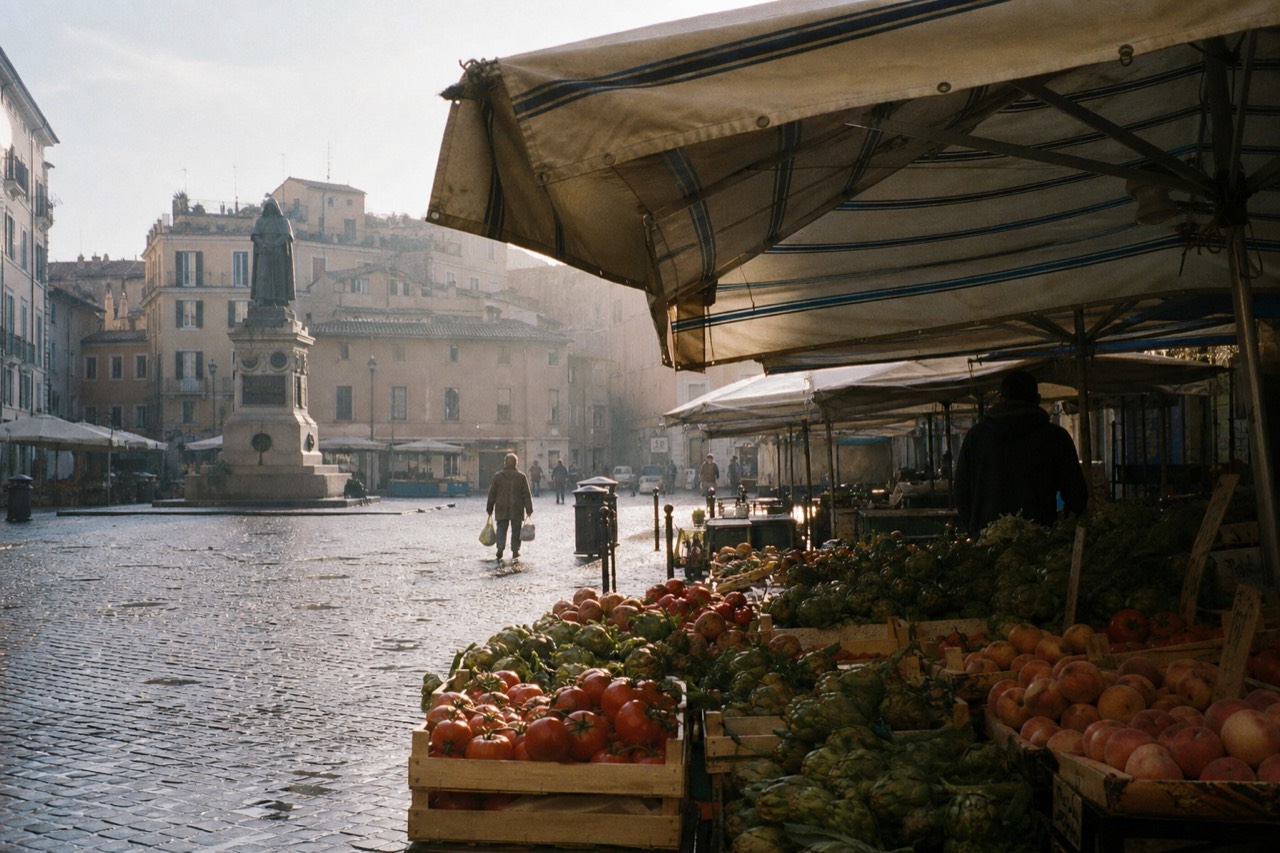
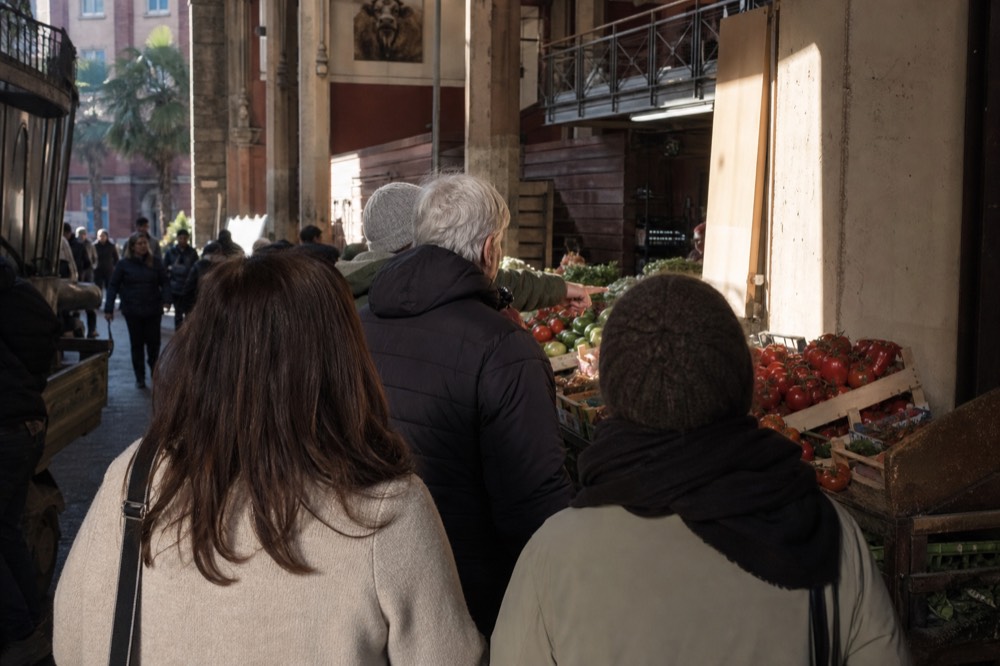
The honest hierarchy is about who the market serves. Campo de' Fiori, in the historic Regola rione, has been a produce market since at least 1869, when Roma Capitale's own tourism portal records it as the center of trade for the vignarole, the women who came in daily from the countryside with herbs and vegetables. Today it also carries meat, fish, flowers, cheeses and cured meats, and it sits inside one of the most photographed squares in Europe. That location is a double-edged sword: it is beautiful, and it draws a crowd that some stalls now cater to with magnets and limoncello rather than puntarelle.
Testaccio, by contrast, sits in a residential working-class rione ten minutes south of the center. Its covered hall on Via Lorenzo Ghiberti holds 103 stalls, per the city's official register, and it has deliberately layered street-food counters, a vegan stand and tasting stalls over the traditional butchers and greengrocers. Turismo Roma describes it as a food destination with showcooking and tastings, which is marketing language for a genuinely accurate fact: this is the market where you can buy a week of groceries and lunch in the same building.
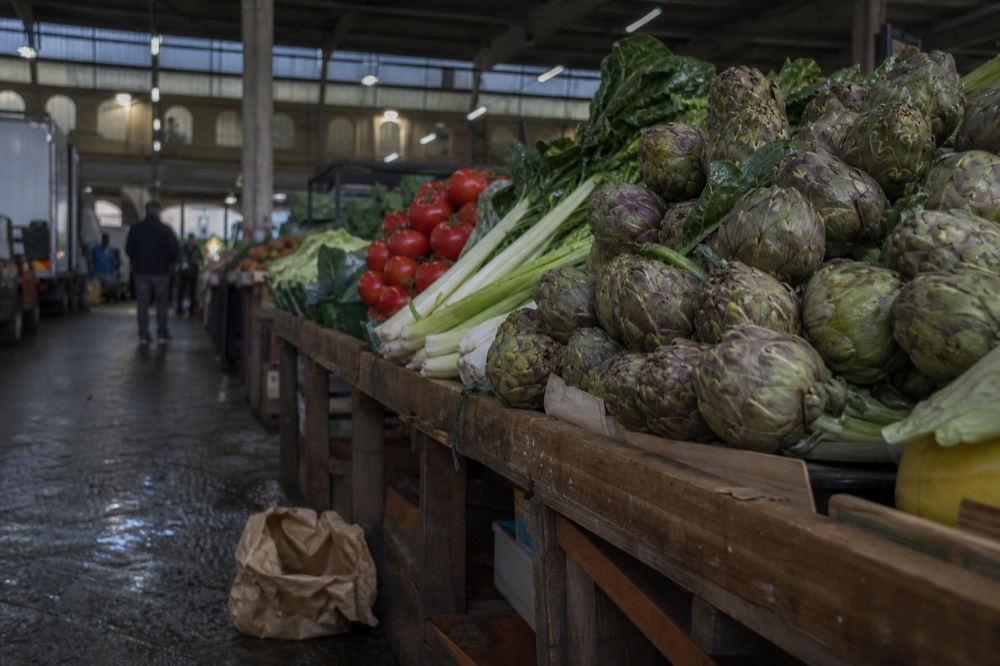
Trionfale is the sleeper. It is a covered market of around 270 stalls on Via Andrea Doria in Prati, a short walk from the Vatican Museums area, and the city considers it one of the first and largest rione markets in Rome. It sells fresh and dried fruit, cereals, fresh fish and baccala, cured meats, cheeses, porchetta, honey and jams. Almost no tourist itineraries include it, which is precisely why the shopping is good.
Campo de' Fiori: the postcard market
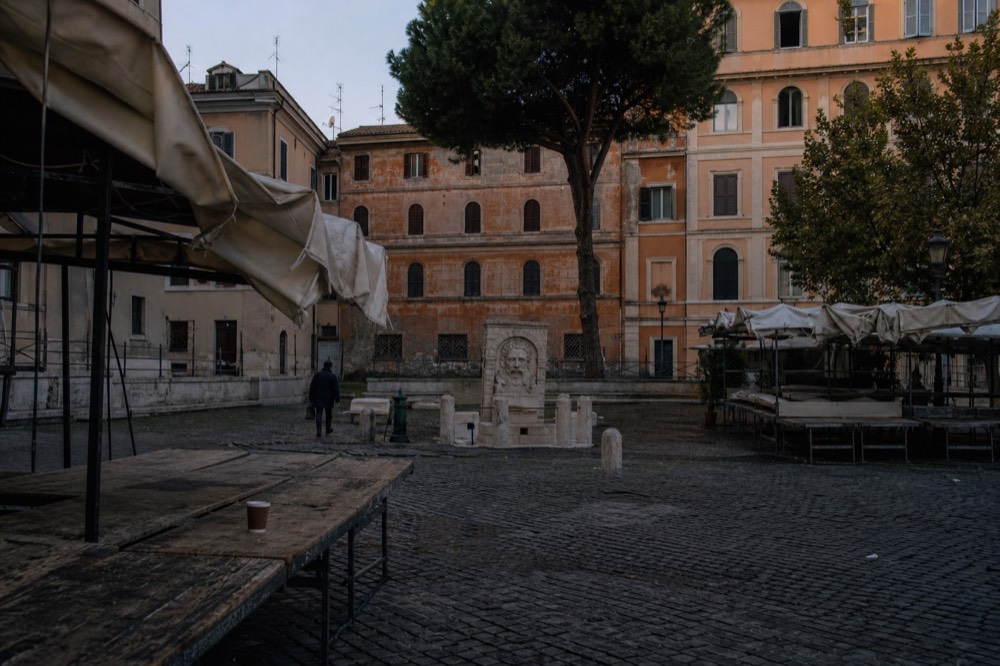
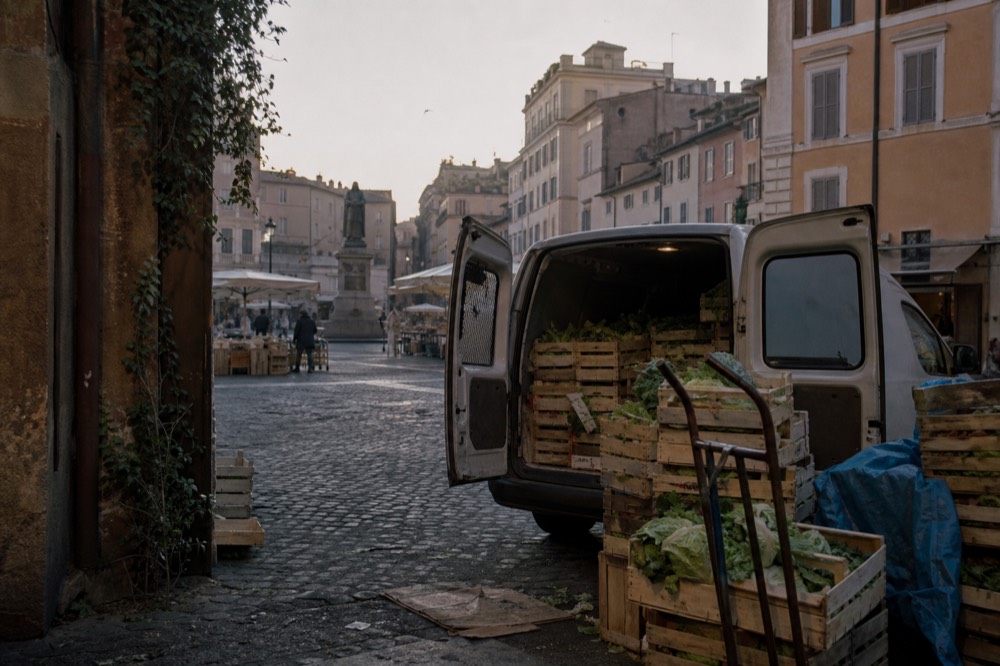
Campo de' Fiori runs as a morning market in the square, with produce, flowers, fish and cured meats, and the stall presence thins sharply after lunch. Roma Capitale publishes no official opening hours for it, directing visitors to check with contacts instead, so treat any fixed schedule you read elsewhere with caution. That official silence is itself the key fact about this market.
The square's market history is real and documented. By 1869 it was already the trading hub for the vignarole, and the city's tourism portal notes it was originally fruit and vegetables only, with the meat, flowers, fish and typical-products stalls arriving later. The stalls themselves are a classic Roman mix: vegetables and fruit, meat, chicken and fish, dried pulses, rice, flowers and dried fruit, per the official Roma Capitale market page.
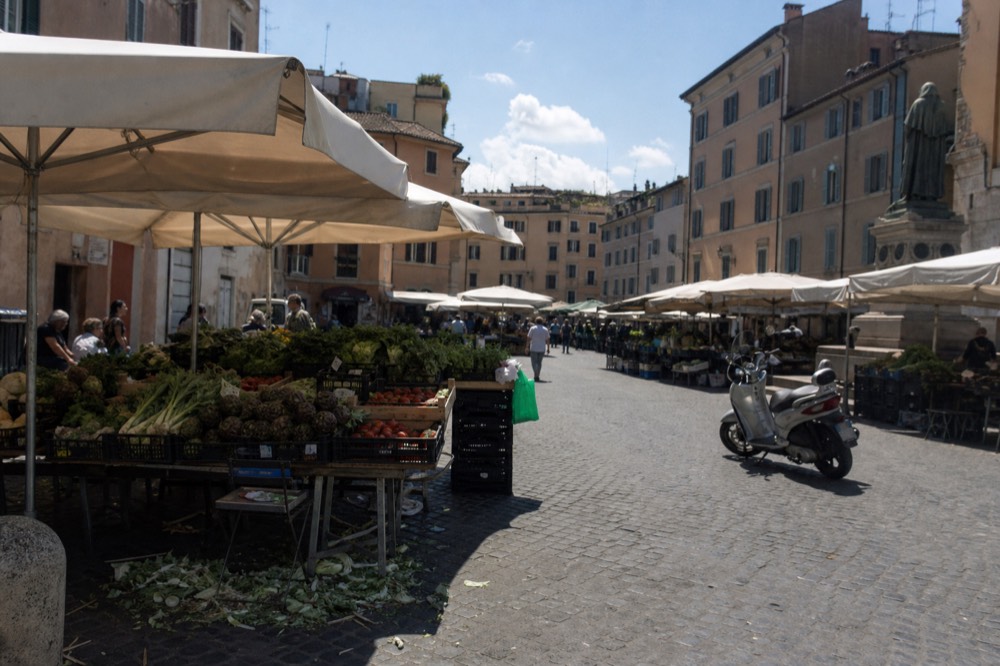
What the official sources do not say, and what an hour on the square will tell you, is that the stall mix has drifted touristward at the edges. The center benches still carry serious produce, seasonal artichokes in winter and spring, herbs, puntarelle when the season allows. The outer ring is where the souvenir creep shows: spice sachets arranged for photographs, limoncello in shaped bottles, pasta gift boxes. None of that is a scam, it is just not the market's original job, and knowing the geography of the square, food in the middle, gifts at the edges, saves you from mistaking one for the other.
The practical advice is simple. Go early, before 9:00 if you can, when the benches are full and the square is still a market rather than a backdrop. Buy your fruit and a snack, look at the statue of Giordano Bruno at the center, and move on. If you want a market where you can sit down and eat a full meal from the stalls themselves, this is not that place, and the next two sections are.
If a guided walk fits your style better than self-navigation, these three options cover the market-and-street-food format at different price points.
Mercato Testaccio: the market Romans actually shop at
Mercato Testaccio publishes hours of 7:00 to 15:30, Monday to Saturday, on its own official site, and since March 2026 it has added Friday evening openings until 22:00. It holds 103 stalls in a covered hall, mixing traditional butchers and greengrocers with street-food counters, and it is the market where locals and visitors genuinely overlap.
The market's own information page is the source of record for hours, and there is a wrinkle worth knowing: Roma Capitale's spreadsheet lists 7:00 to 16:00 while the market itself says 15:30. Both are official. In practice, plan for roughly 7:00 to mid-afternoon, Monday to Saturday, and check on the day. The Friday evening opening, agreed among the operators, the concession holder and local institutions and running since 6 March 2026, is the biggest change to the market's rhythm in years, and it turns Testaccio into a legitimate evening plan one night a week.
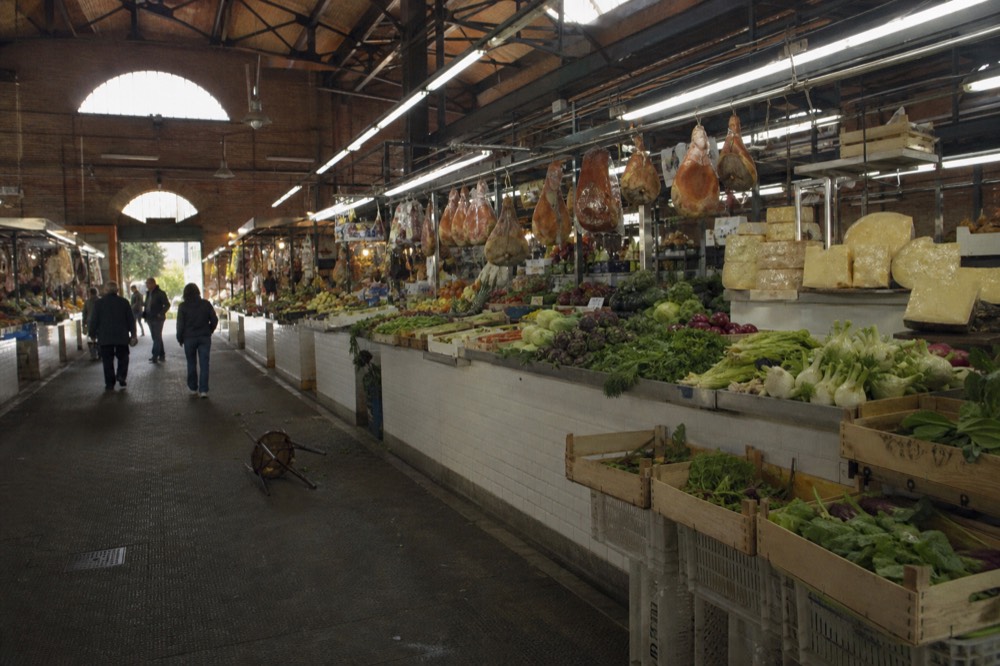
The hall has four entrances, from Via Beniamino Franklin, Via Alessandro Volta, Via Aldo Manuzio and Via Lorenzo Ghiberti, so you can enter from any side of the block. Inside, the layout rewards wandering. The traditional stalls sell exactly what the rione has always bought, and the newer counters sell what visitors want: prepared foods, tastings, sit-down plates. Beneath it all sits an excavated ancient Roman horreum, a storage warehouse still holding hundreds of amphorae, though the market's own page currently lists archaeological visits as temporarily suspended for refurbishment, so do not plan a trip around seeing it.
The neighborhood around the market carries its own weight. Testaccio was Rome's slaughterhouse district, the Mattatoio complex was built between 1888 and 1891 and closed in July 1975, and the offal cooking tradition, the quinto quarto, grew directly out of the workers taking home the least prized cuts. That is why the trattorias near the market serve trippa alla romana by tradition at Saturday lunch, a dish the city's tourism portal documents with pecorino romano and Roman mint among its ingredients. A market visit here is a food history visit, whether you intended one or not.
For most visitors, a small-group tour is the efficient way to unlock this, and the Testaccio small-group market tour is built exactly for it.
The tour meets at Piazza di Santa Maria Liberatrice, a short walk from the market's main entrance, and spends its three and a half hours moving between the hall's stalls and the neighborhood's tasting stops. Because the group size is capped, the guide can tailor the stops to what the market looks good at that day, which is the difference between a market tour and a market route.
Mercato Trionfale: the covered giant on the Vatican side
Mercato Trionfale is a covered market of around 270 stalls on Via Andrea Doria in Prati, running 7:00 to 14:00 on Monday, Wednesday, Thursday and Saturday, and 7:00 to 19:00 on Tuesday and Friday, per the city's official register. It is the largest of the three markets here and the one with the least tourist traffic, which makes it the best pure food shop.
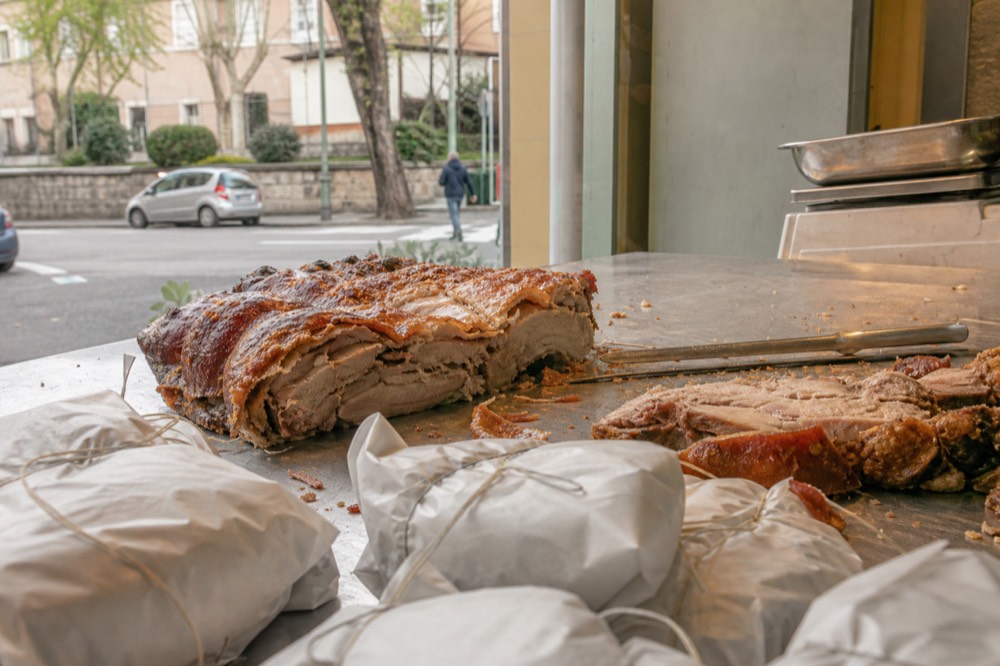
The stall count itself has a small official discrepancy: the city's spreadsheet says 274, its tourism page says 273. Around 270 is the honest figure. What matters more is what is inside: fresh and dried fruit, cereals, fresh fish and baccala, cured meats, cheeses, porchetta, honey, jams, and organic and exotic products, alongside the non-food stalls every rione market carries. Porchetta is worth flagging, since Porchetta di Ariccia is a protected PGI product and Trionfale is one of the places in Rome where you buy it by the slice from people who sell it every day.
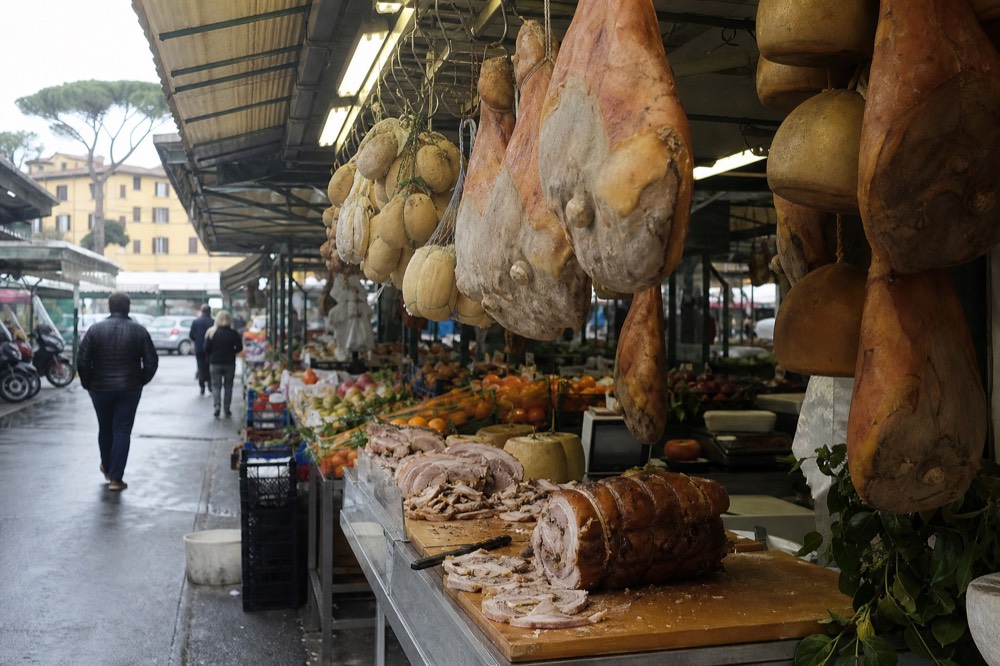
The hours deserve a note of caution. The schedule above comes from Roma Capitale's official market list, but that spreadsheet's own update column reads 31 December 2021, so treat the times as the city's published figures rather than a live timetable and confirm before a dedicated trip, especially for the Tuesday and Friday late openings, which are the ones a visitor can most usefully exploit.
Why does this market barely appear on itineraries? Because it serves Prati, a residential rione of Stile Umbertino apartment blocks instituted in 1921, and because its entrance sits on a workaday street rather than a square anyone photographs. That is the entire reason to go. If you are staying near the Vatican, this is your local market, and it is better than anything you will find by walking toward the monuments.
For a guided version of the Testaccio market experience with tastings built in, the small-group market visit tour covers the same ground in a different format.
Opening hours and days, compared
Testaccio runs Monday to Saturday, 7:00 to 15:30, with Friday evenings until 22:00 since March 2026. Trionfale runs 7:00 to 14:00 on Monday, Wednesday, Thursday and Saturday, and to 19:00 on Tuesday and Friday. Campo de' Fiori has no officially published hours at all, and the city tells you to check with the market's contacts, so plan it as a strict morning stop.
The comparison table below pulls only from official sources: the markets' own sites and Roma Capitale's register. Where the sources disagree, the disagreement is noted rather than smoothed over.
| Market | Location | Type | Stalls | Published hours | Source |
|---|---|---|---|---|---|
| Campo de' Fiori | Piazza Campo de' Fiori, Regola | Open-air | Not published | No official hours; check with contacts | Roma Capitale tourism page |
| Mercato Testaccio | Via Lorenzo Ghiberti, Testaccio | Covered | 103 | Mon-Sat 7:00-15:30; city list says 16:00; Fri evenings to 22:00 | Market's own site; city register |
| Mercato Trionfale | Via Andrea Doria, Prati | Covered | ~270 | Mon, Wed, Thu, Sat 7:00-14:00; Tue, Fri 7:00-19:00 | City register (sheet dated 2021) |
Two planning consequences fall straight out of that table. First, a combined Testaccio and Trionfale day is awkward because their long days do not overlap: Trionfale's late days are Tuesday and Friday, and Testaccio's late day is Friday evening, so Friday is the one day you can do both at full stretch. Second, Campo de' Fiori is a morning-only plan by nature, and pairing it with Testaccio, morning square first, covered hall after, is the sequence that works.
Which stalls are genuinely local, and which are souvenir stalls now?
The produce benches at all three markets are genuinely local, and the drift toward souvenirs is concentrated at Campo de' Fiori's outer ring and in any stall whose main product is a gift box. Testaccio and Trionfale sell food to people who cook dinner that night; Campo de' Fiori increasingly sells atmosphere, with food still present but no longer the whole story.
A stall-by-stall honest verdict, based on what each market officially stocks:
| What you see | Campo de' Fiori | Testaccio | Trionfale |
|---|---|---|---|
| Seasonal vegetables and herbs | Yes, central benches | Yes, traditional stalls | Yes |
| Butcher, fishmonger, cheese | Yes, but fewer | Yes, core of the hall | Yes, extensive |
| Prepared food and street food counters | Limited | Yes, a growing layer | Limited |
| Flowers and dried fruit | Yes, officially listed | No | No |
| Spice displays and limoncello bottles | Present at the edges | Rare | Rare |
| Souvenir-adjacent gift stalls | Present | Very rare | Very rare |
The tell is simple: look at what the person ahead of you in line is buying. At Testaccio and Trionfale, it is groceries. At Campo de' Fiori on a Tuesday morning in shoulder season, it often is too, and the market deserves credit for that. On a Saturday in July, the balance tips, and the same benches serve a crowd that will photograph the produce and buy the magnets. Neither market is fake, but only two of the three still primarily feed their own neighborhood.
There is also a quality signal worth knowing. In the 50 Top Pizza 2025 guide, Frumentario by Alessandro Santilli ranked first in Italy for pizza al taglio, with Pizzarium second, and Rome placed 12 venues in the overall ranking. Gambero Rosso's Street Food 2026 guide covers 685 addresses with 121 new entries. Rome's street-food layer is deep enough that you do not need to eat at any stall that feels aimed at your camera, and the markets with local customers are where that layer is thickest.
Which market food tours start where?
Testaccio is the hub for guided market food tours: the small-group Testaccio market tour and the Testaccio food tour with market visit both meet at Piazza di Santa Maria Liberatrice in Testaccio, while the VIP golf cart tour meets at Piazza di San Francesco d'Assisi and drives between stops. No major tour operator meets inside Campo de' Fiori or Trionfale markets themselves.
That meeting-point geography is not an accident. Tour operators follow the local foot traffic, and Testaccio is where the market, the street food and the neighborhood history sit within a few blocks of each other. If your priority is a guided experience rather than a self-guided shop, the tour table below maps the formats.
| Tour | Format | Duration | Meeting point |
|---|---|---|---|
| Small-Group Testaccio Market & Local Tastings | Walking, small group | 3.5 hours | Piazza di Santa Maria Liberatrice, Testaccio |
| Testaccio Food Tour with Market Visit | Walking, tastings | 3.5 hours | Piazza di Santa Maria Liberatrice, Testaccio |
| VIP Golf Cart Food Tour | Driven, with pasta and gelato | 4 hours | Piazza di San Francesco d'Assisi, Trastevere side |
| Roman Pasta & Market Tastings (Testaccio) | Walking, full meal | 3.5 hours | Piazza Testaccio |
The golf cart format deserves a word of explanation, because it solves a real Rome problem: the three markets in this guide are not close to each other, and a vehicle tour stitches together neighborhoods that would otherwise cost you most of a day in transit. The VIP golf cart tour runs four hours with pasta and gelato built in, and it suits travelers with limited walking capacity or a packed schedule. Prices for all of these are on the operators' live listings, and they vary by group size and season.
For travelers comparing the walking formats, the choice usually comes down to group size and how much of a meal you want the tour to be. Our Testaccio food tours guide breaks the neighborhood's options down in more detail.
Getting there, and when to go
Testaccio is reached by tram or bus along the river side of the rione, Trionfale is a short walk from the Prati side near the Vatican Museums area, and Campo de' Fiori is walkable from anywhere in the historic center. Go before 9:00 to any of them, and in August expect the city's rhythm, not the markets' rules, to set your schedule.
Transport notes, kept honest. Campo de' Fiori sits at the heart of the centro storico, and no one should take a vehicle to it; the walk through the Jewish Ghetto or from Piazza Navona is part of the point. Testaccio's market block is bounded by four entrance streets, and the rione sits across the river from Trastevere, which makes a combined Trastevere morning and Testaccio lunch a natural pair, one reason our Trastevere food tours guide pairs so well with this one. Trionfale is the one market where proximity matters: it serves Prati, and if you are staying near the Vatican it is genuinely your neighborhood market.
August deserves its own warning, and the warning is not what most guides say. There is no legal August closure for Rome's restaurants; Lazio law leaves opening hours to each operator, who must display them. The chiuso per ferie signs are a custom, not a rule. What is official is that the city's night traffic restrictions are switched off during August while the daytime ones keep their normal hours, a sign that the center genuinely runs differently that month. Check individual stall days, go early, and expect a thinner but not empty market.
The three markets, then, sort cleanly by job. Campo de' Fiori is a morning scene worth seeing once, early. Testaccio is a food destination that earns half a day and now one evening a week. Trionfale is the working market for anyone based near the Vatican, and the one to send a serious cook to. Whichever you pick, the same rule applies as everywhere in this city: the stall with the line of locals is the stall that deserves your money.
If you would rather have a guide handle the choosing, these are the three formats worth comparing.
These are the questions visitors ask most about Rome's three main food markets, answered from the same official sources used throughout this guide: the markets' own published hours, Roma Capitale's market register, and the city's tourism portal. Each answer below keeps to what is documented rather than what gets repeated on travel forums, including the Sunday question, where the official schedules are clearer than most guidebooks suggest.
Common questions about Rome street food markets
What are the opening hours of Campo de' Fiori market?
Roma Capitale publishes no official hours for Campo de' Fiori; its own market page directs visitors to check with the market's contacts. In practice it runs as a morning market, with the fullest benches before 10:00 and a sharp thinning after lunch. Plan it as an early stop, not an afternoon one.
Which is better, Campo de' Fiori or Mercato Testaccio?
They do different jobs. Campo de' Fiori is a photogenic open-air square market in the historic center, best for a quick early visit. Testaccio is a covered market where Romans shop, with 103 stalls and street-food counters where you can eat a full meal. If you have time for only one and food is the priority, Testaccio wins.
Is Mercato Trionfale worth visiting?
Yes, if you want the largest covered market of the three with the least tourist traffic. Around 270 stalls sell fresh fish, cured meats, cheeses, porchetta and produce to Prati residents, and it runs until 19:00 on Tuesdays and Fridays. It is the best market for an actual food shop near the Vatican.
Do Rome markets open on Sunday?
The three markets in this guide do not. Testaccio publishes Monday to Saturday hours, Trionfale's official schedule runs Monday to Saturday, and Campo de' Fiori's market is a morning, non-Sunday affair. Roma Capitale's tourism page describes the Trastevere market at Piazza San Cosimato as open every morning except Sunday, so Sunday is the day to plan for trattorias and street food instead.
Which market tours in Rome start at a market?
The Testaccio-based tours do. The small-group Testaccio market tour and the Testaccio food tour with market visit both meet at Piazza di Santa Maria Liberatrice in Testaccio, minutes from the market hall. No major operator meets inside Campo de' Fiori or Trionfale.
Can you eat a full meal at Rome's markets?
At Testaccio, yes: its covered hall layers street-food counters, tasting stalls and prepared-food stands over the traditional market, and Turismo Roma describes it as a food destination with showcooking and tastings. Campo de' Fiori offers snacks and produce rather than a sit-down meal, and Trionfale is primarily a shopping market with prepared foods available but not a dining destination.