is trastevere, rome worth visiting?
An honest answer to whether Trastevere deserves your time, which streets are still worth it, which to skip, and how to eat well there without falling into a tourist trap.
is trastevere, rome worth visiting?
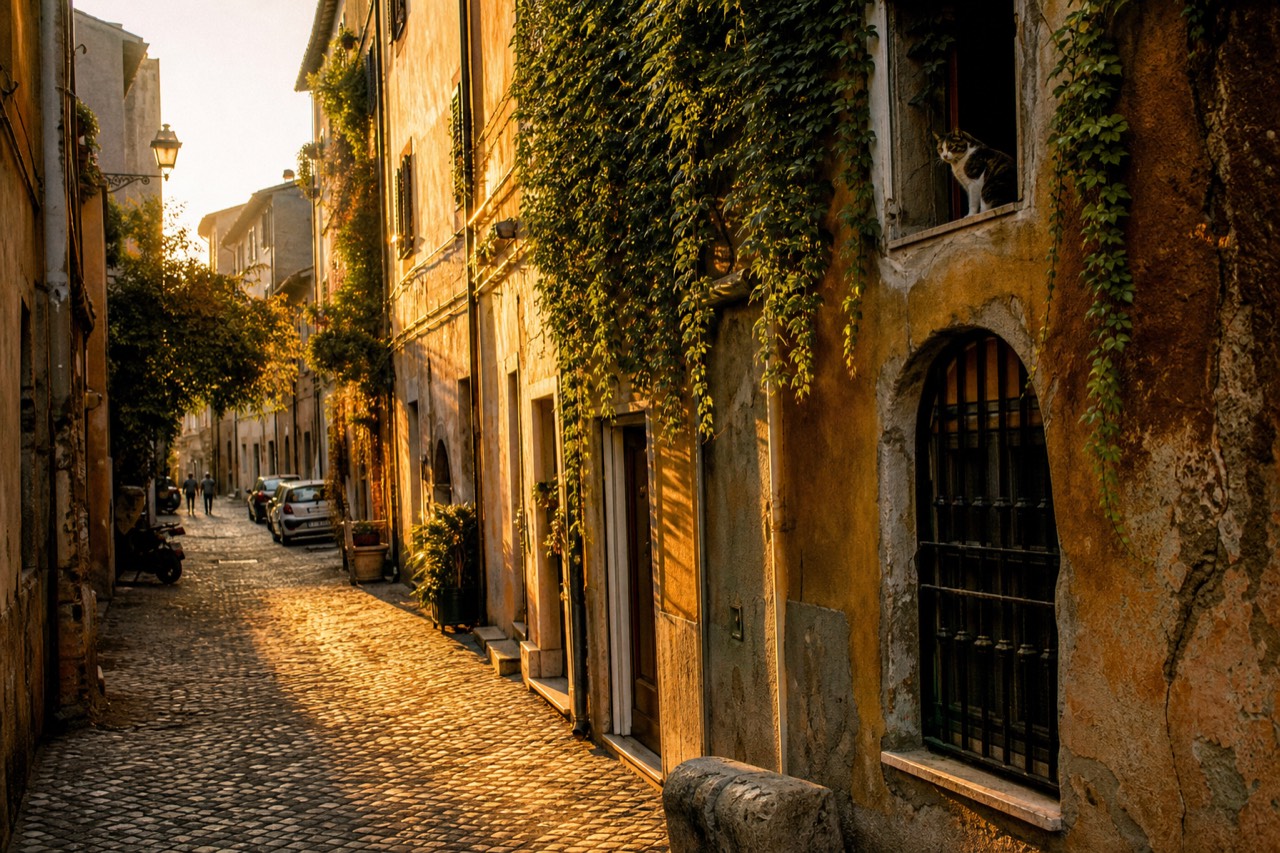
Yes, Trastevere is absolutely worth visiting, as long as you give it more than a rushed photo stop. The neighbourhood rewards travelers who wander past the first few crowded lanes near the river and stay into the evening, when locals reclaim the squares and the trattorias fill up. Spend a full night here rather than a quick daytime pass, and Trastevere becomes one of Rome's most memorable districts. The area around Piazza Santa Maria in Trastevere is among the most visited in the city, and the restaurants facing the square are priced and portioned accordingly. But Rione XIII is also the largest rione in Rome, and most of it sits well beyond the postcard blocks. The streets west of Viale di Trastevere, and the stretch toward Piazza San Cosimato, still hold the trattorias, markets and workshops that made the neighbourhood famous in the first place.
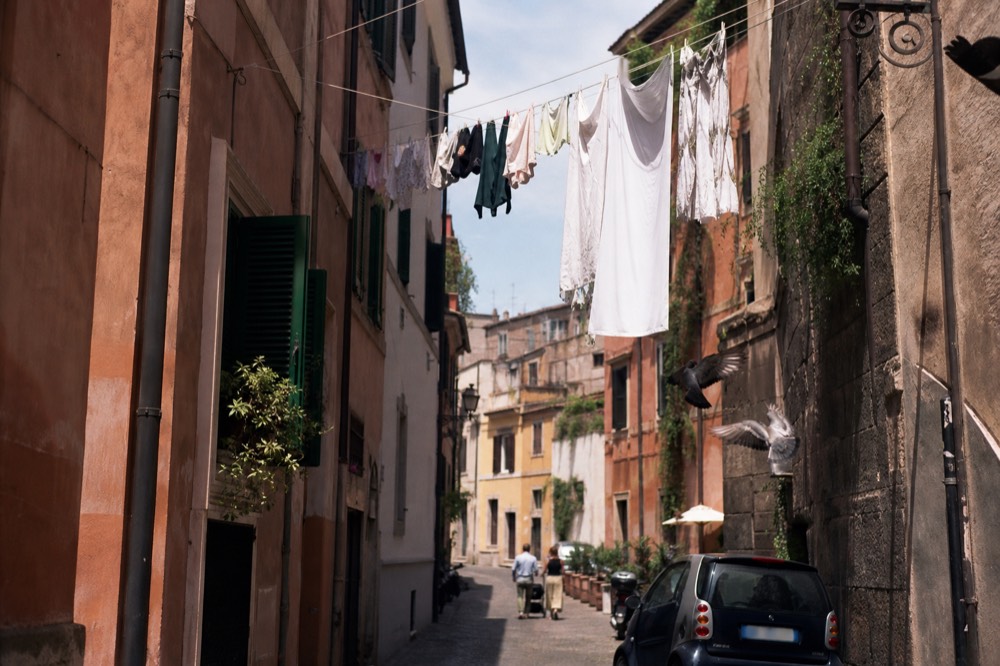
Roma Capitale's own tourism portal describes Trastevere as the largest of Rome's rioni, its name surviving from the Latin trans Tiberim, "beyond the Tiber", the label the ancient Augustan city gave the bank opposite its heart (Turismo Roma). That history matters because it explains the shape of the place. Trastevere was the workers' bank of the river for most of two thousand years, and its food culture, its dense low houses and its evening noise all descend from that. It was never a museum district. The tension a visitor feels today, between a living neighbourhood and a nightlife zone, is real and worth understanding before you go.
The honest framing is this: Trastevere rewards the walker and punishes the follower. Anyone who stops at the first restaurant with a laminated photos menu facing the basilica will pay center-of-Prati prices for food cooked for turnover. Anyone who walks ten more minutes, crosses Viale di Trastevere, and picks a street with a fruit shop and a bar full of locals will eat some of the best casual food in Rome. Both experiences happen in the same square kilometre.
If food is the reason you are considering the trip, a guided walk solves the filtering problem in one evening. These are the three Trastevere food tours that best match different budgets and styles:
What makes Trastevere worth the walk?
Trastevere rewards the crossing of the river because it concentrates what Rome spreads thin elsewhere: a walkable medieval street plan, a dense cluster of trattorias and wine bars, and a genuinely local residential population that still shops, eats, and argues there daily. The rione's street pattern predates most of the city's grand planning, and its food scene grew out of that density rather than being installed for visitors. The result is a neighbourhood where a 15 minute walk crosses a bakery, a trippa stall, a natural wine shop and a 1904-era market square. Few districts in any European capital still work that way at this scale.
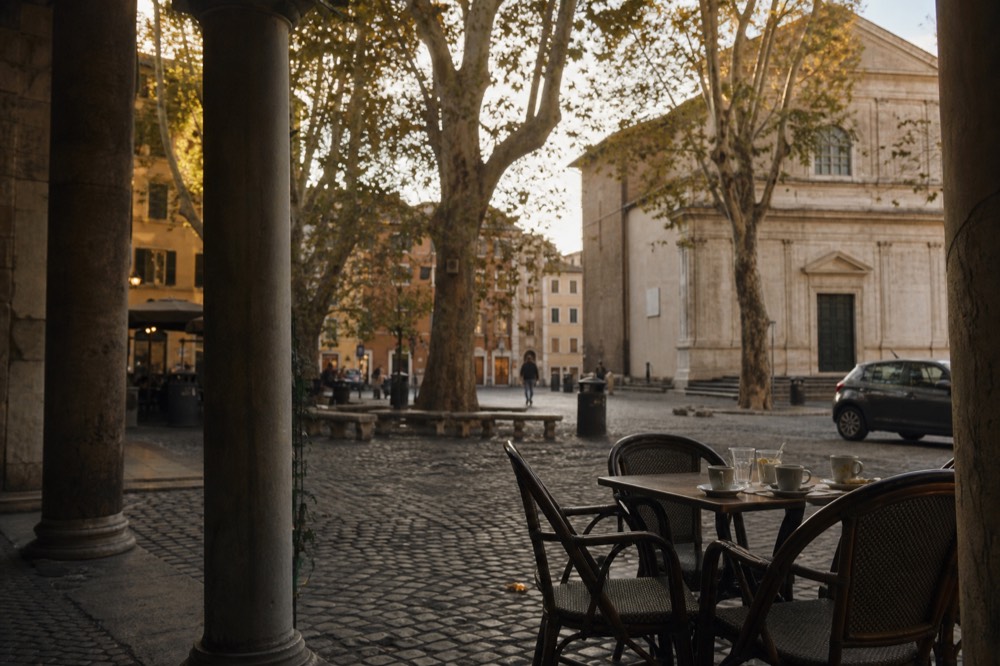
Start with the geography. The neighbourhood sits on the west bank of the Tiber, connected to the historic center by Ponte Sisto, a pedestrian bridge that puts the Pantheon side of the river within an easy walk. Because the core is largely pedestrianised and the lanes are narrow, the place rewards arriving on foot. A car-based visit is the worst version: the ZTL Trastevere restricts unauthorised vehicles, with a daytime window from 06:30 to 10:00 Monday to Saturday and a night window from 21:00 to 03:00 that runs Friday and Saturday, and from May to October also Wednesday and Thursday (Roma Servizi per la Mobilita). Walk in over Ponte Sisto and the neighbourhood opens up at the pace it was built for.
The market tradition is the second reason. The rione market at Piazza San Cosimato dates from the early 20th century, and Roma Capitale's place page describes stalls carrying mainly food with a clear preference for local produce: puntarelle, broccoli, misticanza, artichokes and broad beans by season, plus offal, meats, coastal fish and traditional cheeses. A neighbourhood that still runs a daily food market for its own residents is a different proposition from one that only runs restaurants for strangers. You can read more about the district's food landscape in our Trastevere food tours guide, and the same filtering logic runs through everything we publish at Rome Food Tours.
The third reason is the evening itself. Since 1904, below the Janiculum Belvedere, three soldiers have fired a blank cannon shot at exactly midday every day, a tradition that began under Pius IX in 1847 as a single official time signal for the city. Trastevere has always kept its own clock. Its restaurants fill late, its squares stay animated after midnight, and its food culture is built around the passeggiata, the evening walk that ends in a chair at a table. That rhythm is the neighbourhood's real product, and no other rione in Rome offers it at this density.
Which Trastevere streets are still worth it?
Walk Via della Lungaretta only to pass through, then spend your time on Via San Francesco a Ripa, Via Benedetta, Via del Moro's western end, and the lanes around Piazza San Cosimato, where kitchens still cook for the neighbourhood rather than for the weekend crowd. The rule of thumb is simple: the closer a restaurant's front door is to Piazza Santa Maria, the more its menu was written for someone who will never return. The streets below the viale, toward the river bend at Piazza Trilussa and the quiet blocks behind Santa Cecilia, hold the places Romans actually book.
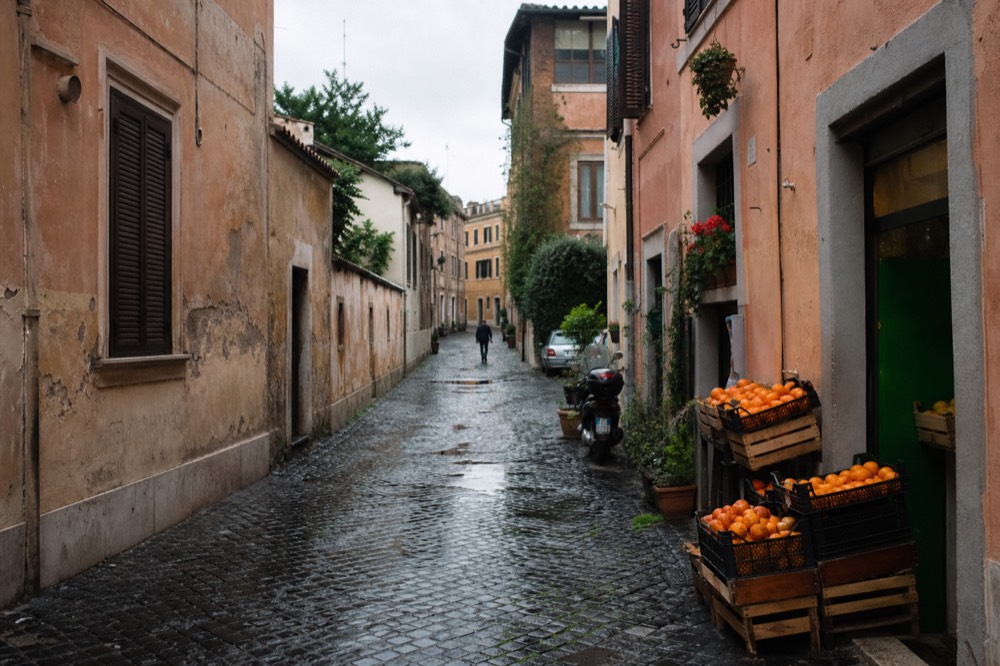
The neighbourhood has also kept renewing itself, which is a good sign for visitors who worry it has frozen into a theme park. The sustainable gelateria Un Gelato a Roma opened on Via Benedetta in February 2026, run by the well known gelato maker Eugenio Morrone. Seu Pizza reopened after renovation on Via Angelo Bargoni in October 2025, and Osteria della Trippa introduced new tasting menus after its own restyling in spring 2026. These are openings aimed at the city, not just at the weekend crowd, and they cluster in the western and southern lanes rather than on the postcard axis.
The filtering problem is exactly what a small-group walk is designed to solve. A guide who lives in the neighbourhood walks you past the laminated menus and into the places that do not need a host on the street:
For context, the small-group format runs 3 hours at $78.97 per person, wine included, and carries a 4.9 rating from 3,592 reviews. It meets at Piazza Mastai, on the western side of the viale, which tells you something on its own: the tour starts where the neighbourhood starts, not where the souvenir shops do.
Here is the honest street-by-street split:
| Street or square | Verdict | Why |
|---|---|---|
| Piazza Santa Maria in Trastevere | See it, do not eat on it | The basilica facade is worth the walk; the facing restaurants price for one-time visitors |
| Via della Lungaretta | Walk through | The main pedestrian axis, busy and photogenic, thin on kitchens worth booking |
| Via del Moro, western end | Worth it | Bars and trattorias mixed with local shops; quality holds up |
| Via San Francesco a Ripa | Worth it | Long street of neighbourhood restaurants away from the postcard core |
| Via Benedetta | Worth it | Home to a 2026-opened artisan gelateria and quieter dining rooms |
| Piazza San Cosimato | Worth it | The rione market square, family playground, and the starting point of several food walks |
| Vicolo del Cinque | Skip at night | At the center of the movida enforcement zone; see the safety section below |
Is Trastevere safe at night?
Yes, Trastevere is generally safe at night for visitors who use normal city caution. The area is lively well into the evening, with restaurants and bars keeping streets busy. The realistic risks are pickpocketing and tourist overcharging rather than violent crime, so keep an eye on belongings, watch bar and restaurant bills, and stick to well-lit, populated streets when walking late. The neighbourhood is heavily policed precisely because its nightlife economy is so busy. In September 2026 a single Questura operation in Trastevere issued over 50,000 euros in fines against venues including a gelateria operating as a pub at night and minimarkets selling high-alcohol drinks without proper licences (la Repubblica). That is a crackdown on businesses, not a warning to visitors.
The enforcement has teeth behind it. A bottega in Vicolo del Cinque was ordered closed for 15 days in late August 2026 for repeated illegal alcohol service, and the mayor renewed the anti-malamovida ordinance in January 2026, extending it to 11 October 2026 and adding Viale di Trastevere to the night-time takeaway alcohol ban (Canale Dieci). For a visitor the practical reading is straightforward: after 22:00 you cannot buy alcohol to carry away in the mapped zones, and drinking in the street from glass is prohibited. Sitting at a table inside or on a licensed terrace is unaffected. The rules target the street drinking economy, not dinner.
What this means for your evening is mostly positive. The heavy-handed enforcement has pushed the worst of the street-party scene down, and the restaurant core remains busy, watched and family-friendly until late. The real safety risks have not changed in years: keep a hand on your bag in the crowded lanes around Ponte Sisto and Piazza Santa Maria, and do not leave a phone on a table edge at an outdoor terrace. We cover the after-dark question in more detail in is it safe to walk around Trastevere at night?
One structural point worth knowing: the night ZTL in Trastevere runs from 21:30 to 03:00, Friday and Saturday, and from May to October also Wednesday and Thursday, with a 30 km/h limit inside. It is not active during August. If your evening plans involve a taxi, none of this affects you; taxis and NCC hire cars are exempt. It affects the private car you were considering renting, and the answer is: do not.
When is the best time to visit Trastevere?
The best time to visit Trastevere is late afternoon into evening, ideally on a weekday, and in shoulder season if you have the choice, because the neighbourhood only fully becomes itself after the day trippers leave and the locals reclaim its lanes for their own passeggiata. Trastevere is a morning market district and a night dining district, and the hours in between are when it looks emptiest and least like itself. Arrive around 17:00, walk the western lanes while the light is low, and let the evening build. That is the rhythm the place was built around.
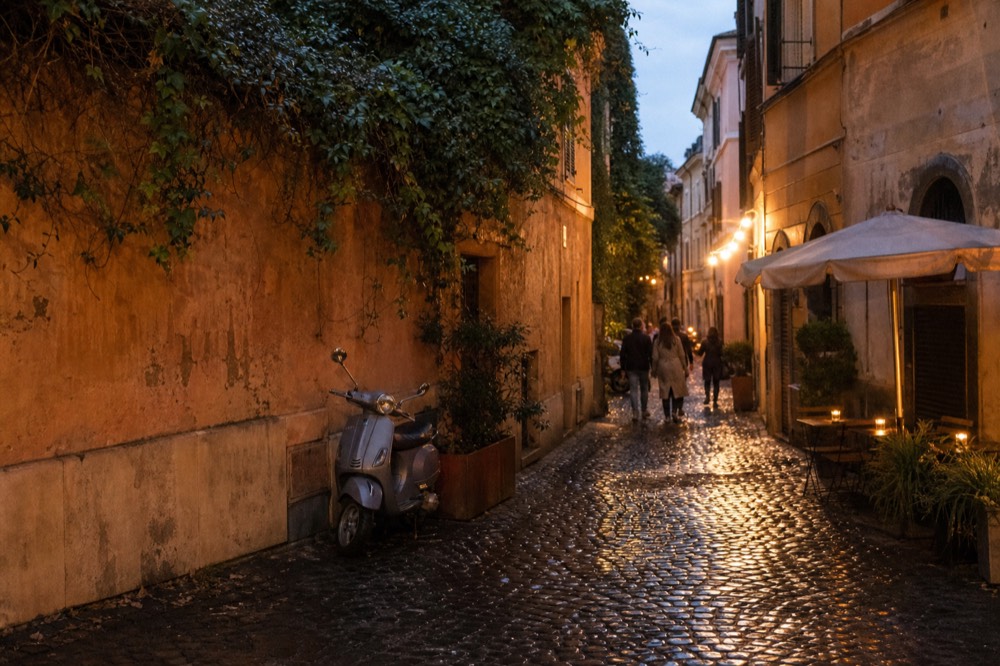
The twilight window is also when the neighbourhood's food offering is at full stretch. The classic Roman dinner hour is late by northern standards, and Trastevere's kitchens hit their stride as the day trippers thin out. A tour built around that window, like the 4-hour Twilight Trastevere walk, is timed to catch the neighbourhood at the moment it changes character:
That evening walk runs $123.04 per person and carries a 4.9 rating from 6,343 reviews, meeting on Tiber Island at the center of the piazza, by the monument with the cross on top. The meeting point is itself a small argument for the format: Tiber Island is one of the most atmospheric arrival points in Rome, and crossing from there into Trastevere at dusk is the correct way to enter the rione.
On timing within the week, the difference between a Tuesday and a Saturday is large. Friday and Saturday nights bring the ZTL night window, the movida crowds and the street-drinking enforcement zone to its busiest. Midweek evenings give you the same kitchens, the same lights and roughly half the crowd. Within the year, the standard Rome logic applies: winter is quiet and atmospheric, spring and autumn are ideal, August thins the residential population and switches off the night ZTL, though many restaurants close for holidays as a custom, not a legal requirement. If your dates are flexible, aim for a midweek evening in April, May, late September or October.
How to eat in Trastevere without getting trapped?
Book a table ahead instead of picking a restaurant off the street, skip any menu with photos of the dishes, stick to the Roman classics, and check the price list before you order, since the law requires the restaurant to show you one. Lazio regional law prohibits a separate coperto charge in food service establishments, with fines from 2,500 to 7,500 euros for violations, and any table service charge must appear on the price list you can read before ordering. That is the rule on paper; a tourist-facing restaurant on a busy square is where you are most likely to meet its edges.
The dishes to order are the Roman four: cacio e pepe, gricia, carbonara and amatriciana, plus the offal tradition that belongs specifically to this side of the river. Roma Capitale documents the quinto quarto tradition directly: tripe, oxtail, coratella and pajata are the least prized parts of the animal, historically eaten by the poorest families and above all by the workers of the Testaccio slaughterhouse, who topped up their wages with the offcuts. Trastevere trattorias carried that cooking across the river, and trippa alla romana, by tradition a Saturday lunch dish, still appears on menus here with pecorino romano and Roman mint.
For wine, the neighbourhood's enotecas lean local, and with good reason: Lazio's 2025 harvest produced 764,000 hectolitres of wine, up 5 percent on 2024, and the region's producers have been collecting national recognition, including 11 Tre Bicchieri awards for Lazio wines in the Gambero Rosso 2026 guide. A Frascati or a Cesanese from the Castelli Romani is the historically correct pairing with Roman food, and any good Trastevere wine bar will pour both by the glass.
If you would rather not do the filtering yourself, the guided options cover the spread. The budget-conscious walker can take the small-group tour at $78.97; the evening-format walker the twilight tour at $123.04; and the splurge option is the luxury walk at $147.89 per person, a 4-hour, 5-rated format with free-flowing fine wine, meeting outside Trapizzino at Piazza Trilussa. All three solve the same problem, which is knowing which door to walk through.
Trastevere versus the alternatives
Trastevere is the right choice for a first-time visitor who wants atmosphere, walkability and a dense food scene in one evening, while Testaccio beats it for market-and-trattoria authenticity and Monti beats it for a quieter, more central base. The honest comparison matters because Rome's food neighbourhoods are not interchangeable, and the wrong one for your trip can color a whole evening. Each district sells a different version of the city, and knowing which version you want is half the decision.
Testaccio, across and down the river, is the slaughterhouse district turned food destination: the ex-Mattatoio complex, built between 1888 and 1891 and closed as a working slaughterhouse in July 1975, now houses art and architecture faculties, while the market and the trattorias around it kept the neighbourhood's working-class food culture. It has fewer postcard lanes and more kitchens per square meter. Monti, by contrast, sits steps from the Forum, and Roma Capitale describes it as full of art galleries and wine bars, one of the districts of Roman nightlife, with the smaller and calmer footprint. Our Testaccio food tours guide covers that side of the river in detail.
Trastevere's edge over both is the complete evening in one place: bridge, lanes, basilica, market square, trattorias and wine bars, all walkable, all lit, all late. Its weakness is that its own success has inflated the front row. The verdict, then, is not a yes or a no but a conditional: Trastevere is worth visiting if you treat it as a neighbourhood to walk and eat through with a plan, and it will disappoint you if you treat it as a square with restaurants attached.
Whether you go guided or alone, the three formats below cover the neighbourhood's food from a $78.97 small-group walk to a $147.89 luxury evening:
Common questions about visiting Trastevere
is trastevere, rome worth visiting?
Yes, if you walk past the postcard blocks around Piazza Santa Maria and spend your evening in the lanes west of Viale di Trastevere, around Via San Francesco a Ripa, Via Benedetta and Piazza San Cosimato. The neighbourhood's restaurants, market and late rhythm are still genuinely worth the trip; its front-row tourist menus are not.
How many hours should I spend in Trastevere?
Plan on a full evening, roughly four hours from late afternoon to after dinner. The neighbourhood changes character at dusk, and its kitchens hit their stride as the day trippers leave. A quick one-hour walk through the main lanes shows you the postcard and none of the substance.
Is Trastevere too touristy?
The blocks immediately around Piazza Santa Maria and along Via della Lungaretta are heavily touristed, and their restaurants price accordingly. But Trastevere is the largest rione in Rome, and most of it west of the viale is still residential, with a daily market at Piazza San Cosimato and trattorias that cook for the neighbourhood.
What should I avoid in Trastevere?
Avoid restaurants with photo menus facing the main square, street drinking after 22:00, which is prohibited in the mapped movida zones, and driving into the neighbourhood, which is restricted by the night ZTL from 21:30 on weekends. Book a table instead of picking one off the street, and check the price list before you order, which the law requires.
Can I walk to Trastevere from central Rome?
Yes, and you should. Ponte Sisto is a pedestrian bridge that connects the Campo de' Fiori side of the river to Piazza Trilussa at the neighbourhood's northern edge, and the walk across it at dusk is one of the best free experiences in the city.
Which food tour is best for Trastevere?
For most visitors the small-group tour with wine at $78.97 per person is the best fit: 3 hours, a 4.9 rating across 3,592 reviews, and a local guide who filters the neighbourhood for you. If you want the full evening format, the 4-hour twilight tour at $123.04 is the upgrade, and the luxury walk at $147.89 with free-flowing fine wine is the splurge option.