Where does Rick Steves recommend to eat in Rome?
Rick Steves' published Rome eating advice, where his guidebook picks meet the current restaurant scene, and how to plan a food-focused visit around his philosophy.
Where does Rick Steves recommend to eat in Rome?
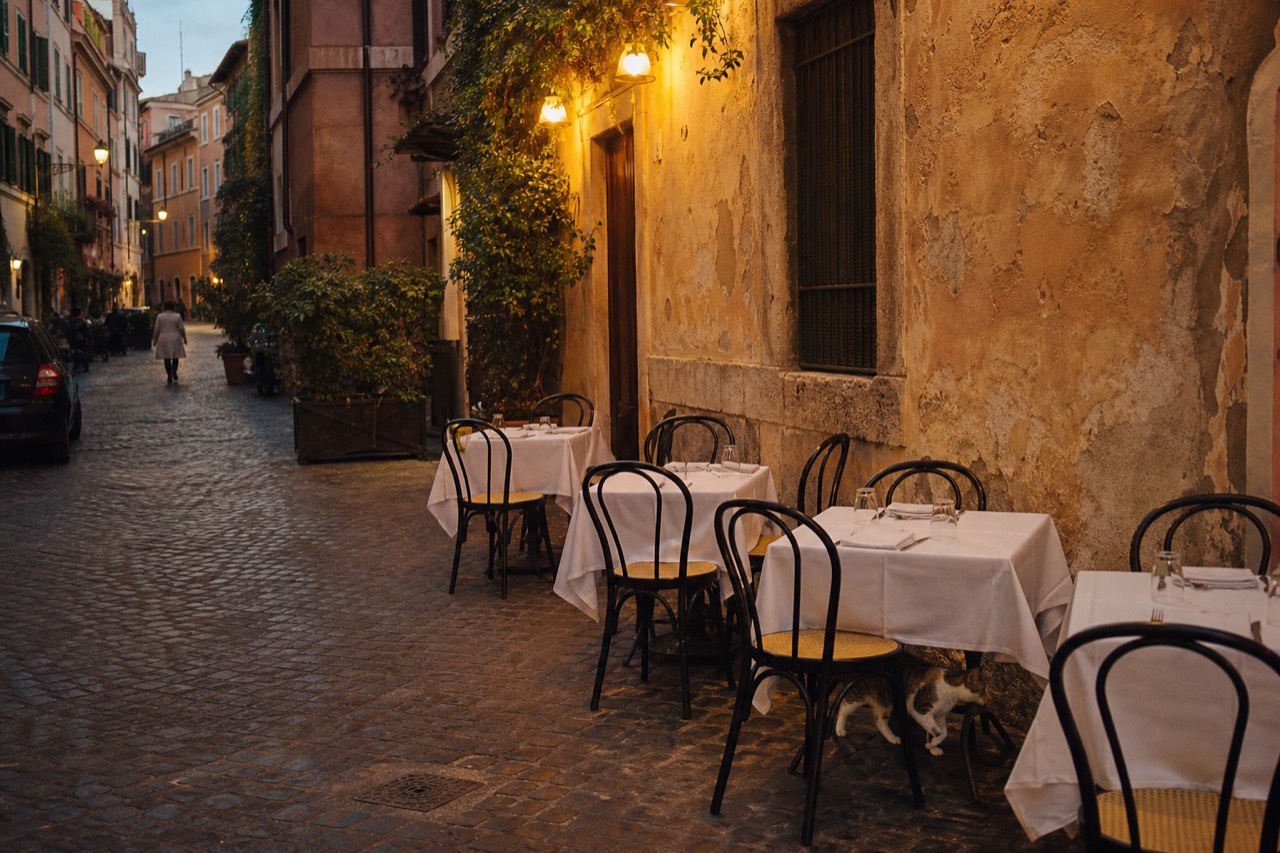
Rick Steves recommends eating in Rome in family-run trattorie and osterie away from the big sights, ordering the regional classics rather than the tourist menu, and treating dinner as the evening's main event. His current books, the Italy guidebook in its 28th edition and the Rome, Florence & Venice guidebook in its 6th edition, both carry Rome restaurant recommendations, and his online community forum ranks in the top ten results for "rome food tours."
The honest starting point is what his published material is and is not. Steves' Rome eating advice is a philosophy first and a list of addresses second. The Italy guidebook, whose 28th edition was published in June 2025, covers Rome restaurant recommendations alongside the rest of the country, and the dedicated Rome, Florence & Venice volume, 6th edition published October 2025, does the same in more depth. Both are available through his own travel store, which lists the current editions and their publication dates.
What the books consistently push, edition after edition, is a set of habits rather than a secret shortlist. Eat where the menu is short and in Italian. Eat the four Roman pastas, carbonara, cacio e pepe, gricia and amatriciana, because they are the city's own. Eat later than feels natural to many American visitors, because Roman dinner service ramps up from around 8pm and peaks later. And spend your food time in neighborhoods that still have a resident population: Trastevere, Testaccio, Monti and the Jewish Ghetto are the quarters his advice keeps circling back to, the same quarters where most of Rome's best-reviewed food tours now operate.
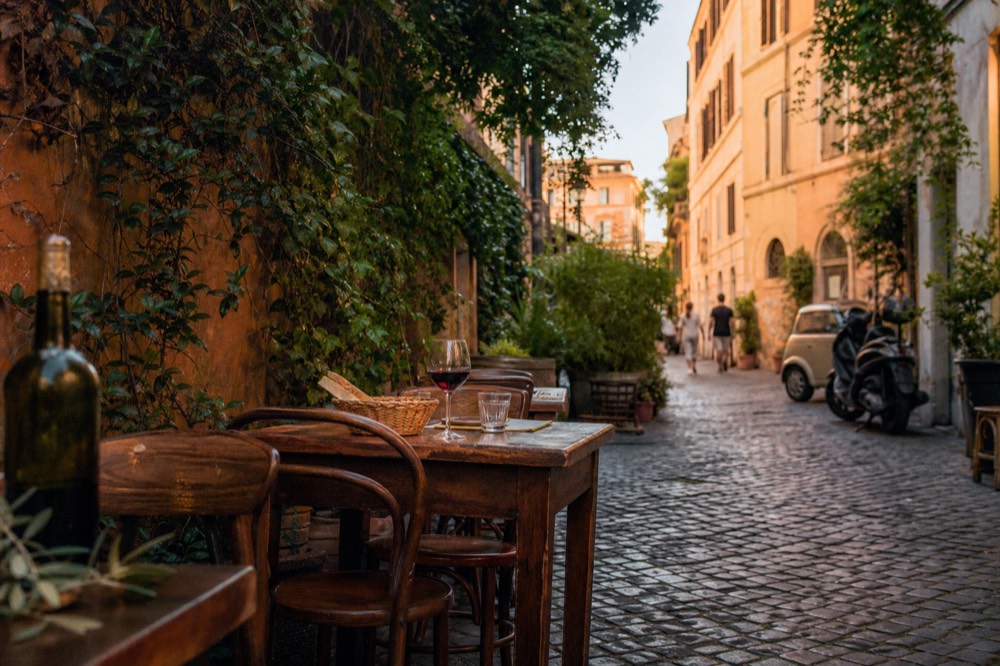
That last point deserves emphasis, because it is where a guidebook traveler and a tour traveler end up in the same places. Steves has sent readers across the river to Trastevere for so long that the neighborhood now carries both his readers and half the guided food walks in the city. A reader following his advice and a guest on a guided tasting walk will often be standing on the same street within an hour of sunset.
The gap between the two is what the walk adds: a guide who can read the room, tell you which counter sells the good supplì and which one has stopped trying, and explain why the fried artichoke in the Ghetto costs what it costs. Steves leans toward Trastevere, and the Trastevere food tour options cover it in depth. If you prefer another critic's shortlist, see where Stanley Tucci eats in Rome.
What is Rick Steves' eating philosophy for Rome?
Steves' core advice is to eat like a temporary local rather than a spectator: choose small, family-run places over restaurants with photo menus, order the regional specialties, sit down for a proper dinner at Roman hours, and make meals the memorable part of the day. He also tells readers, repeatedly, that a bad meal in a tourist zone costs more than a great meal three streets away.
That philosophy has a practical shape. In his Rome chapters the guidance clusters around a few rules of thumb that have barely changed across editions, because they are structural to the city rather than tied to any one address. Menus photographed and laminated, translated into four languages and propped on the street, mark restaurants that have stopped depending on repeat customers. A short menu written only in Italian marks a kitchen that shops daily and cooks a handful of things well. House wine by the liter carafe is not a compromise in Rome, it is the normal way wine is drunk with dinner, and the local bottles from the Lazio region have improved enough that sommeliers now take them seriously.
The second pillar is timing. Steves tells American readers to push dinner later than instinct suggests, which matches how the city actually works, and our piece on what time Romans eat dinner covers the same ground from the local side. Lunch remains the cheap meal of the day, pizza al taglio by the slice, a panino at a counter, or a full pranzo at a workers' trattoria for less than any dinner in the center.
The third pillar is neighborhood selection, and this is the part a first-time visitor can act on immediately. Steves' Rome eating advice effectively says: sleep near the center, eat where Romans live. Testaccio is the classic example, the old slaughterhouse district whose working-class cooking gave Rome its quinto quarto tradition of tripe, oxtail and offal dishes, documented by Roma Capitale itself as the food of the Mattatoio workers who topped up wages with the least prized cuts of the animal. Trastevere is the other, the largest rione in the city, whose name comes from the Latin trans Tiberim, beyond the Tiber.
Where the philosophy gets expensive is Trastevere after dark, and this is where a guided option earns its price. The Devour Rome food and wine walk of Trastevere, a 3 hour 30 minute small-group tour from $89.92 per group rated 4.9 across 665 reviews, covers exactly the ground Steves sends his readers to, but with a guide who knows which of the dozens of restaurants on those lanes still cooks and which has become a nightlife venue with a kitchen attached.
The tour meets at Piazza di San Cosimato, the piazza that holds the neighborhood's own rione market, a market Roma Capitale describes as carrying seasonal local produce like puntarelle, artichokes and broad beans alongside offal, coastal fish and traditional cheeses. That is the Trastevere Steves is describing in his books, and the evening hours are when the quarter shows both faces at once.
Where does his advice and today's Rome diverge?
The main divergence is churn and enforcement. Guidebook addresses go stale between editions, restaurants he praised have closed or changed hands, and Trastevere, the neighborhood he sends the most readers to, is now the target of night-time alcohol restrictions and a police crackdown on venues operating outside their licenses, with over 50,000 euros in fines issued to Trastevere businesses in a single September 2026 operation.
The churn problem is structural to print. A guidebook researched for a June 2025 edition describes a restaurant scene that is already months old when the book ships, and Rome's restaurant layer turns over fast. The celebrity-food track record makes the point concrete: the sandwich shop Stanley Tucci visited for the Lazio episode of his series, aired May 2025, had already been rebranded and relocated by the time viewers went looking for it, reopening as Fratelli Trecca at Via dei Cerchi in March 2025. A television crew and a guidebook author face the same lag; only the dates differ.
The enforcement problem is newer and less widely reported. Rome's mayor renewed the anti-malamovida ordinance in January 2026, extending it to 11 October 2026 and adding viale Trastevere and other areas to the night-time ban on takeaway alcohol sales. In that environment the casual advice to "grab a bottle of wine and sit by the river" that older guidebook editions could imply is no longer just inadvisable, it can be against the specific rules for those zones, which restrict takeaway alcohol sales from 22:00 and public drinking from 23:00 in the mapped nightlife areas. A police operation in Trastevere in September 2026 issued over 50,000 euros in fines, including to a gelateria operating as a pub at night and to minimarkets selling high-alcohol drinks without the right licenses. One bottega in Vicolo del Cinque was ordered closed for 15 days for repeated illegal alcohol service.
None of this makes Steves' neighborhood advice wrong. It makes the execution more demanding. The Trastevere that rewards a visitor is still there: Bar San Calisto, the beloved grungy institution in Piazza San Calisto, reopened in February 2026 after 45 days of maintenance; Seu Pizza, one of the city's respected pizzerias, reopened after renovation on via Angelo Bargoni in October 2025; the sustainable gelateria Un Gelato a Roma opened on via Benedetta in February 2026. The quarter keeps generating good food faster than the movida can swallow it. The difference from the guidebook era is that a visitor now benefits from knowing which side of that line any given address sits on, which is precisely the local knowledge a food walk supplies. Our guide to Trastevere food tours and what they cover breaks the neighborhood down stop by stop.
The other divergences are quieter but hit the wallet. Steves' budget guidance was written for a cheaper city. Restaurant services inflation in Italy ran at +3.2% in 2025 per the industry association FIPE, and the average espresso at the bar in Rome came in at 1.35 euros in December 2025 per FIPE's ISTAT-based data, with the national average up 24.2% since 2021. A medium gelato cone in central Rome reached up to 4 euros in July 2025. The advice to eat standing at the bar and pay the counter price remains correct; the numbers underneath it are simply higher than older editions imply.
How do his picks compare with other famous food recommendations?
Steves is the pragmatic, budget-conscious voice among the big three celebrity recommenders. Stanley Tucci's Rome picks skew toward old-school trattorie like Trattoria Etruria, where he ate cacio e pepe and carciofi alla romana on television, Anthony Bourdain's was a single enduring favorite, Osteria dal 1931, and Steves' advice is the only one of the three that comes with a full methodology for finding places yourself rather than a list of places to copy.
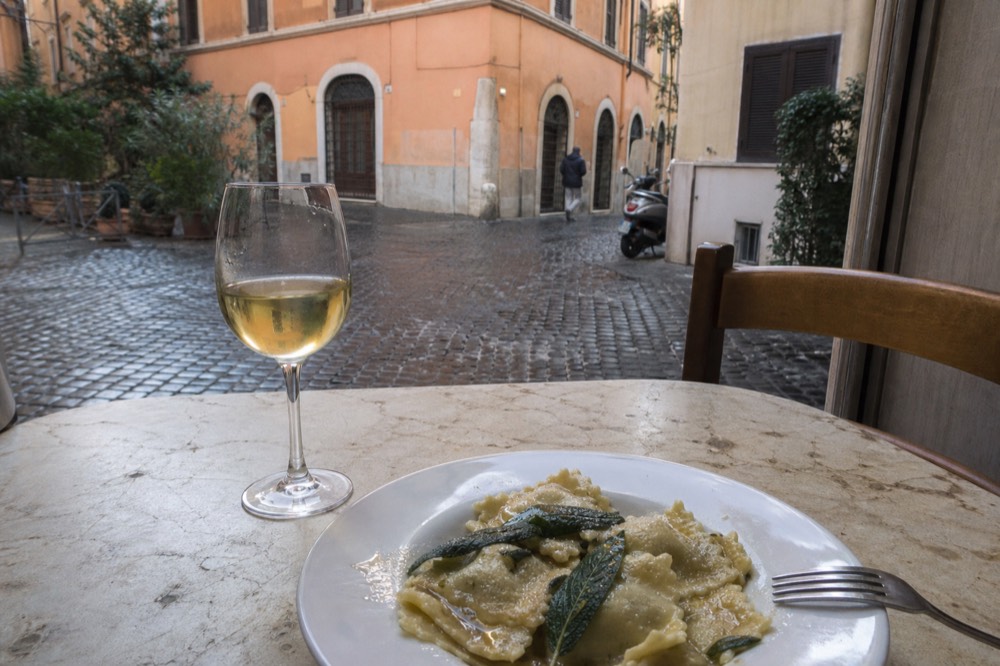
The comparison is instructive because each recommender answers a different question. Tucci answers "where is the essence of this city on a plate," which is why his Lazio episode, aired May 2025, went to Trattoria Etruria for Roman staples and to a sandwich shop for smoked tongue he called one of the most delicious things he had eaten. Bourdain answered "where would I actually eat," and his Rome pick, Osteria dal 1931, was still serving the ravioli burro e salvia he praised for 13 euros in June 2026, a genuinely rare case of a television recommendation surviving a decade of attention with its prices and character intact.
Steves answers "how do you eat well without anyone's list," and that is why his recommendations age better than most. A named restaurant is a perishable asset; a method is not. His method also happens to converge with what the data says visitors actually enjoy: culinary tours rank as the second most popular experience type for American travelers in industry research, at 40%, ahead of nearly every other activity category. People do not just want the address, they want the understanding that produces the address.
If you want to follow the celebrity trail specifically, the reading order is our pieces on where Stanley Tucci recommends eating in Rome and Anthony Bourdain's favorite Rome restaurant, then this page for the budget-and-method layer that sits underneath them. The three lists overlap less than you would expect, and the overlap is itself informative: the places all three would endorse are small, family-run, in residential quarters, and serve the Roman canon without apology.
| Recommender | What they publish | Best-known Rome pick | Where to find it today |
|---|---|---|---|
| Rick Steves | Italy guidebook, 28th edition, and Rome, Florence & Venice, 6th edition, plus an active reader forum | A method: trattorie off the main drags, Roman classics, late dinner | Current editions via his travel store; forum ranks top ten for "rome food tours" |
| Stanley Tucci | Tucci in Italy, Lazio episode aired May 2025 | Trattoria Etruria for cacio e pepe and carciofi alla romana | Episode and coverage online; the sandwich shop he visited now trades as Fratelli Trecca, Via dei Cerchi 55 |
| Anthony Bourdain | Parts Unknown Rome episode | Osteria dal 1931, ravioli burro e salvia | Still open, same dish on the menu for 13 euros |
The table is the whole story in miniature. Two of the three picks are checkable today; the third, the method, is the one that never goes out of print.
How do you eat well in Rome without following any list?
Eat the Roman canon in the quarters that cook it, at Roman hours, at the counter when you can and at the table when it matters. Know the two rules that protect your wallet, that Lazio law prohibits a separate coperto charge and that bar prices are lower standing than sitting, and accept that in a city where restaurant inflation ran above 3% in 2025, the cheap meal is a decision rather than an accident.
The canon is small and learnable in an afternoon. The four pastas, carbonara, cacio e pepe, gricia and amatriciana, share a family tree: pecorino romano, guanciale, and in amatriciana's case tomato, with the traditional sauce specified at EU level as Amatriciana Tradizionale TSG, a registered traditional speciality that requires 18 to 30% cured pork jowl and states plainly that the sauce has always been made with pork jowl, never bacon or pancetta. Around the pastas sit the fried artichokes of the Jewish Ghetto, the offal tradition of Testaccio, pizza al taglio by the slice at lunch, and supplì, the fried rice balls that are the city's default street snack.
The wallet rules are legal, not folklore. Lazio regional law n. 21/2006, article 16, prohibits adding a separate coperto charge and requires any service component to be shown on the price list before you order, with fines from 2,500 to 7,500 euros for breaches; the trade press confirms the rule remains in force. The bar rule is simpler still: the same espresso costs less standing at the counter than at a table, and the counter is where Romans drink it anyway, at an average of 1.35 euros in Rome per FIPE's December 2025 reading.
The hours matter more than the addresses. Breakfast in Rome is a cornetto and a cappuccino standing at a bar, never a sit-down affair, and dinner starts late and runs long. If you want the structure without the research, a guided walk compresses the learning: the Trastevere evening tour above covers the neighborhood canon, and for a fuller sit-down experience the gourmet dinner walk with Barolo wine pairing, from $75.95 per person and rated 4.9 across 2,676 reviews, runs 3.5 to 4 hours through the same logic a guidebook teaches, eat local, drink local, sit down for the meal that counts.
The deeper point, and the one Steves' whole approach rests on, is that Rome rewards attention rather than money. The city's own institutions document its food culture in extraordinary depth, from the EU-registered specifications of its cheeses and sauces to the archaeological record of Monte Testaccio, an artificial hill made of broken amphorae from the olive oil trade of the Roman empire, with a circumference of about one kilometre. Eating carbonara a short walk from a mound of ancient oil jars is not a coincidence; the city has been a food town for two thousand years, and the guidebook, the tour and the trattoria are all just the current layer. This page is part of Rome Food Tours, where the same reporting covers every neighborhood and format in the city.
For travelers who want one decision instead of twenty, the three options below cover the Steves-endorsed territory at three price points and two formats.
Steves' published Rome advice boils down to a method: short Italian menus, family-run kitchens, the Roman canon of four pastas, residential neighborhoods and late dinner hours. The questions below cover where that method comes from, how well it survives contact with today's city, and whether a guided walk or a guidebook serves a first-time visitor better.
Common questions about Rick Steves' Rome restaurant recommendations
Where does Rick Steves recommend to eat in Rome?
His current guidebooks, the Italy guidebook in its 28th edition and Rome, Florence & Venice in its 6th edition, recommend family-run trattorie and osterie away from the main sights, in neighborhoods like Trastevere, Testaccio, Monti and the Jewish Ghetto, with short Italian menus and the Roman classics on them. His advice is a method for choosing, more than a fixed list of addresses.
Does Rick Steves have a food tour of Rome?
His company sells guidebooks, tours and travel accessories rather than food walks, but his reader community forum is active on Rome eating questions and ranks in the top ten results for "rome food tours." For a guided tasting experience in the neighborhoods he recommends, independent operators run the walks themselves.
Is Rick Steves' Rome advice still accurate?
The method ages well; specific addresses do not. Restaurants close or change hands between editions, prices have risen faster than older editions imply, with restaurant inflation above 3% in 2025, and Trastevere now has night-time alcohol restrictions under the city's anti-malamovida ordinance. Cross-check any printed address against a current source before you walk to it.
What neighborhoods does he send readers to for food?
Trastevere, Testaccio, Monti and the Jewish Ghetto are the recurring four. All are residential quarters with their own markets and trattorie rather than sightseeing corridors, and all are also where the best-reviewed guided food walks in the city operate.
Should I book a food tour or just use his guidebook?
They solve different problems. The guidebook gives you the method and the freedom to wander; a guided walk gives you current local knowledge, which matters in a neighborhood like Trastevere where the restaurant layer turns over fast and night-time rules have tightened. Many travelers use the book at lunch and a walk for the first evening, then explore on their own.