What time do Romans eat dinner?
Romans eat dinner between 20:00 and 21:30, and kitchens before then are genuinely quiet. Here is why the Roman clock runs late, what fills the gap, and how to plan an evening around it.
What time do Romans eat dinner?
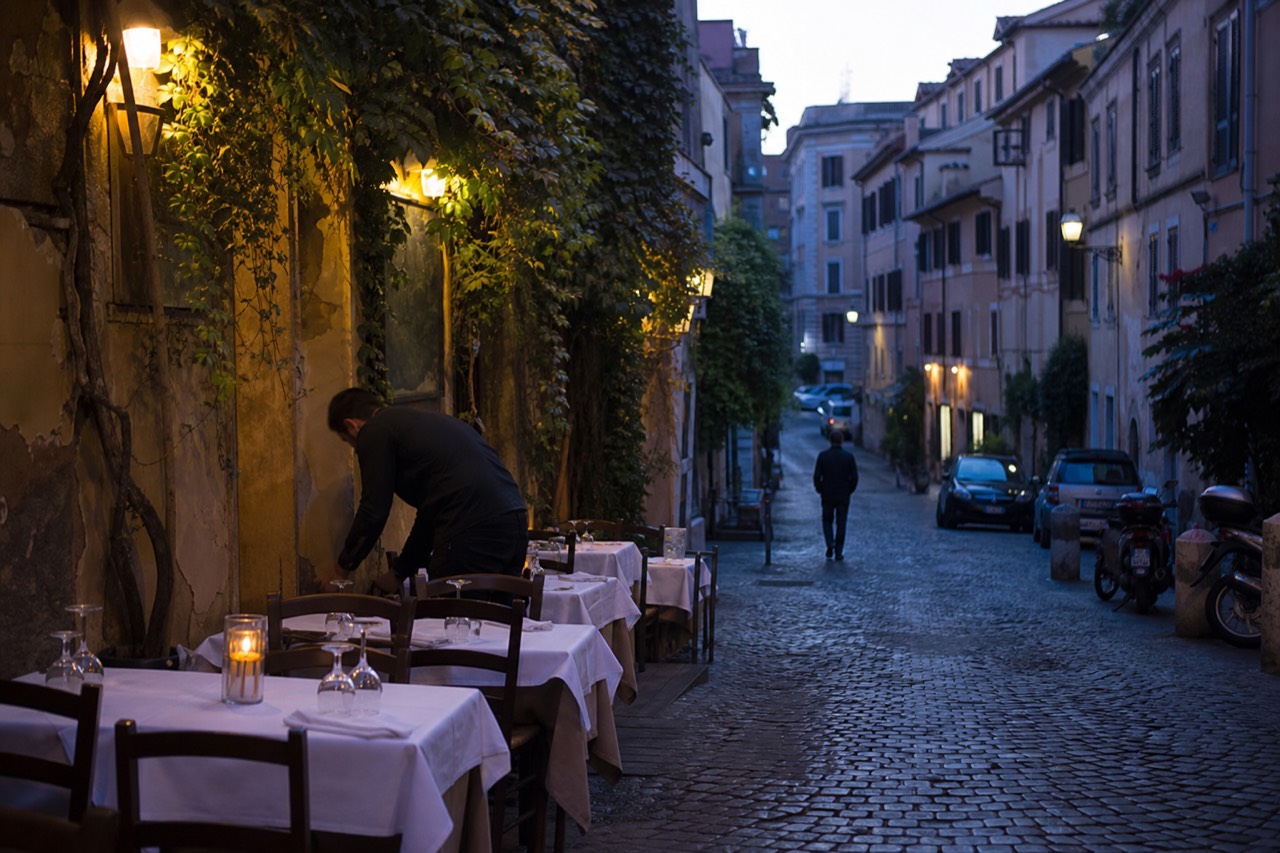
Romans eat dinner between 20:00 and 21:30, with 21:00 roughly the peak of the sitting. Walk into a trattoria at 18:30 and you will likely have the room to yourself, because that hour belongs to aperitivo, not dinner. Kitchens fire up in earnest after 19:30, and the last orders in many places come well past 22:00.
That is the practical answer, and it is worth understanding why the clock works this way, because the reasons shape the whole evening. The Roman day runs later than a northern European one. Lunch is a real meal, often not finished until 14:30 or later, and the afternoon stretches out with a pause in it. Dinner cannot simply follow four hours after a late lunch, so it drifts into the evening. Work schedules matter too: plenty of Romans finish work at 19:00 or later, commute home, and only then think about eating. A 21:00 dinner is not a special occasion in Rome, it is Tuesday.
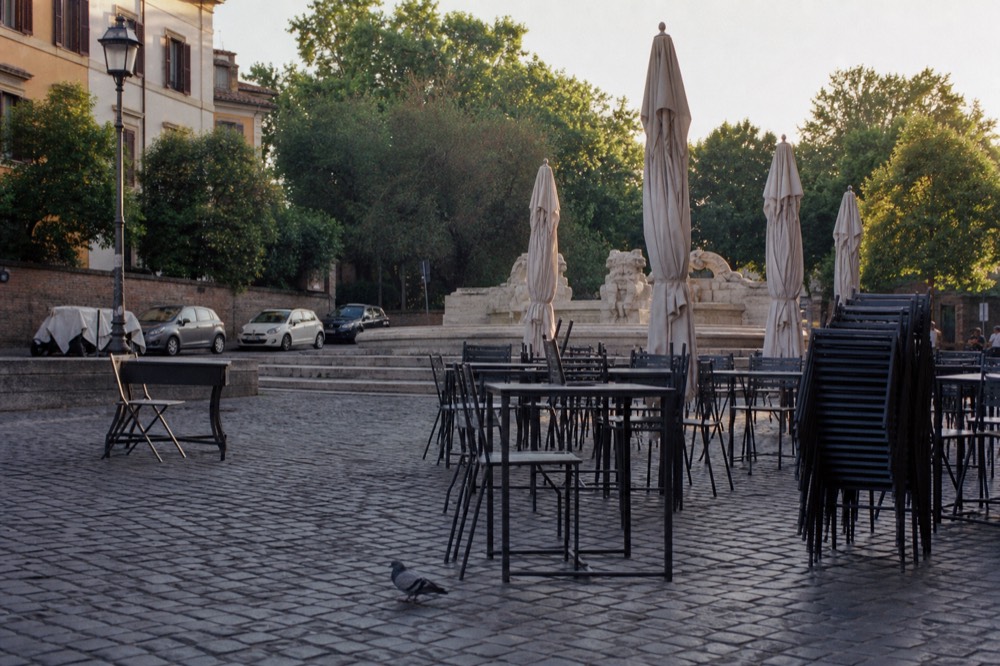
Visitors often misread the empty dining room at 18:30 as a bad sign. It is not. A restaurant that is full at 18:30 in the historic center is usually full of other visitors, not Romans. The room that fills at 20:45 is the one where the neighbourhood actually eats. If you want to eat alongside Romans rather than beside jet-lagged travellers, the single most effective thing you can do is push your reservation back by ninety minutes. Your stomach will protest for two nights, then adjust, the way it always does.
There is also a structural reason the late dinner survives. Italian restaurant and bar consumption reached 100 billion euros in 2025, a sector worth 59.3 billion euros in value added, according to the FIPE Rapporto Ristorazione 2026. The sector is built around the evening: staff rosters, kitchen prep and deliveries all assume a late sitting. A Roman kitchen that opened for full service at 17:00 would be running against the grain of its own supply chain and its own staff's meal times, since the staff eat their family dinner before service, around 19:00.
If you are planning an evening around this rhythm, a guided walk is the easiest way to hit the right hours without guessing. These three evening formats all run on the Roman clock, so the tour does the scheduling for you.
Why Roman kitchens run late
A Roman kitchen at 18:30 is not being lazy, it is between meals. Service staff eat their own dinner before the shift, prep finishes around 19:30, and the first genuine dinner orders arrive from 20:00. The gap you experience as hunger, Romans experience as the natural pause between lunch and the evening.
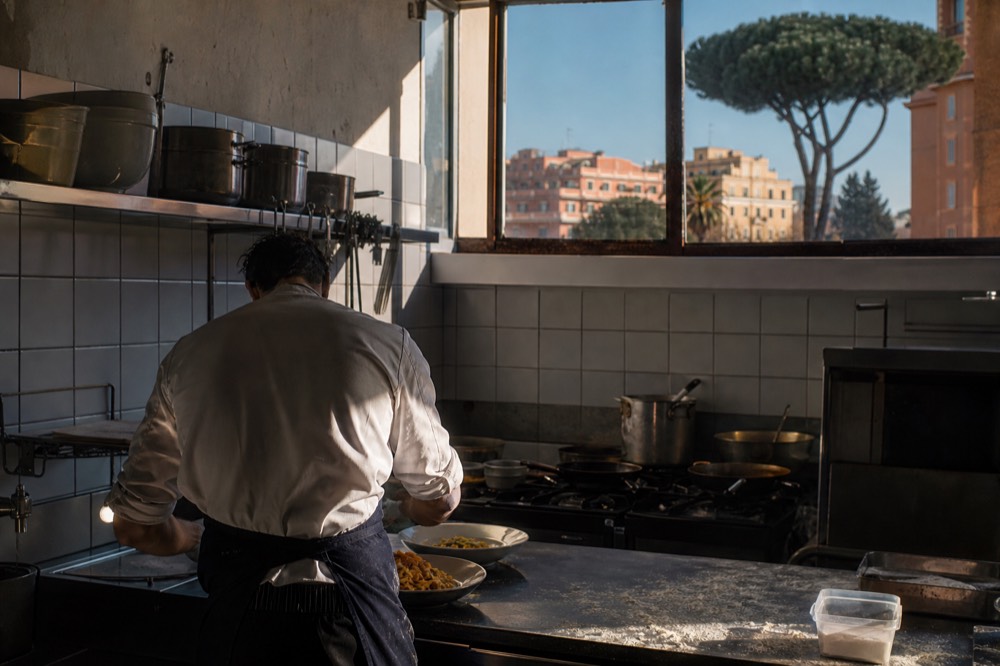
The mechanics are unglamorous and worth knowing. Fresh pasta is rolled and cut in the afternoon. Fish deliveries are processed and iced. The guanciale for tomorrow's carbonara is portioned, the puntarelle cleaned, the artichokes trimmed while they are still crisp. A kitchen that has done all this by 19:00 has nothing to gain from firing dishes at 18:30 for an empty room, and everything to gain from keeping its brigade sharp for the 21:00 peak. This is why "the kitchen is closed" at 18:30 usually means exactly that, not that the staff are being difficult.
There is a cultural layer too. Dinner in Rome is a social event, not a refuelling stop. A table of four Romans at 21:00 will order slowly, talk a lot, and hold the table for two hours. Restaurants plan for that turnover rate: two sittings a night, not three or four. The economics of a slow, late, convivial dinner are baked into menu prices and staffing. FIPE's tracking data shows the rhythm shifting at the margins, with visits for colazione in Italian bars and restaurants falling 2% in 2025 while pranzo rose 0.4%, but dinner remains the anchor meal of the sector.
One more practical point that surprises visitors: the coperto. In Lazio, regional law 21/2006 prohibits restaurants from adding a separate coperto charge, and any service component must be shown on the price list before you order, with fines from 2,500 to 7,500 euros for breaches. So the long Roman dinner is not padded with cover charges the way it can be elsewhere in Italy. What you pay for is the food, plus a service line only if it was declared up front. More on what actually appears on the bill in what is typically on a trattoria menu.
If your body clock refuses to move dinner to 21:00, the workaround is not to fight the culture, it is to eat where the schedule bends. Hotel restaurants and the restaurants facing major sights serve earlier, because their customers demand it. You will be eating well but not eating locally, and knowing that trade-off is the honest way to make it.
What aperitivo fills the gap
The gap between the end of the afternoon and dinner belongs to aperitivo, roughly 18:00 to 20:00: a drink, some snacks, and conversation, priced and portioned so it takes the edge off hunger without replacing the meal. It is the reason Romans can eat at 21:00 without misery, and it is the single easiest Roman habit for a visitor to adopt.
Aperitivo is not a free buffet, despite what some travel content implies. It is a drink, usually a spritz or a glass of wine, served with the bar's snack board: olives, crisps, sometimes bruschetta or a small warm item. Mercato Centrale Roma formalised its own version, Aperitivo Centrale, in September 2025: a drink plus selected snacks for 12 euros, daily from 17:00 to 20:00. That price is a fair planning range for the center, though individual bars vary and you should check the room before assuming anything is included.
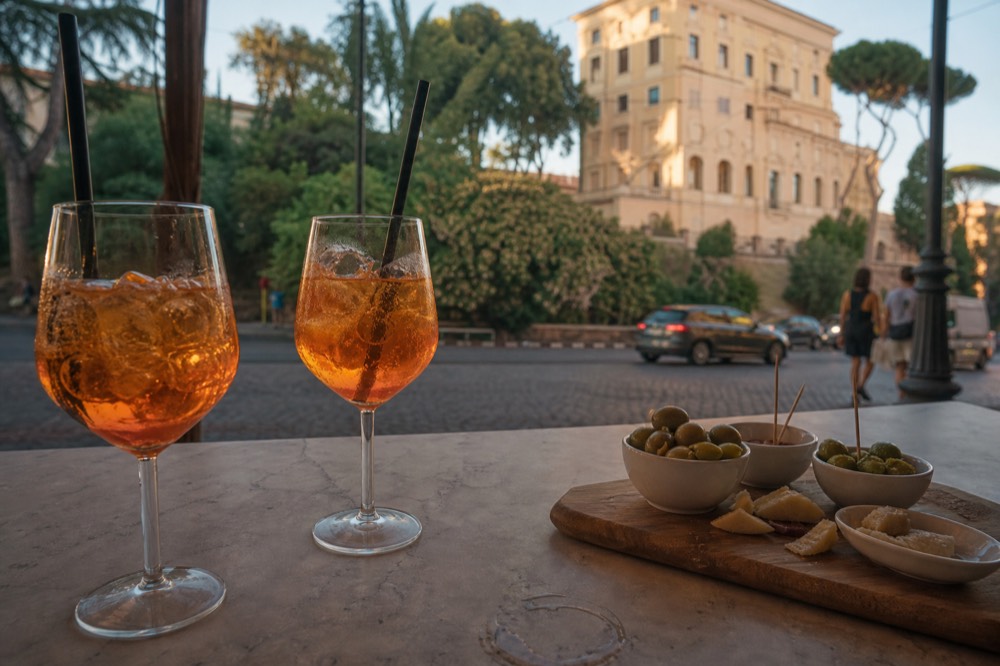
The timing logic is worth spelling out. Aperitivo starts as work ends and ends as dinner begins, so it functions as a deliberate bridge. Eating a real snack at 18:30 means the 20:30 or 21:00 reservation stops feeling like an ordeal. Skipping aperitivo and arriving at a Roman dinner hour on an empty stomach is the classic first-night mistake, and it is why so many visitors end up ordering badly, too fast, and too much. The aperitivo hour also has a social function: it is where friends meet before dinner, where plans get made, and where the evening's pace gets set.
Aperitivo has a legal edge in the nightlife zones, which is worth a passing mention here. The city's urban police regulation restricts takeaway alcohol sales and street drinking late at night in the central zones, and an ordinance renewed in January 2026 extends the night-time takeaway ban in the movida zones, Trastevere included, until 11 October 2026. None of this touches sitting at a bar table with a spritz at 18:30. It matters only if you are tempted to buy bottles to carry around after 22:00, which in those zones you cannot.
For visitors, the cleanest way to experience the bridge hour with a guide who knows the neighbourhood is an evening food and wine walk. The Sunset Trastevere tour by Devour Italy runs 3.5 hours, rated 4.9 from 665 reviews, and is built exactly around the transition from aperitivo snacks to a proper Roman dinner in the neighbourhood where the evening is loudest. If you are weighing whether Trastevere itself is worth the hype, the honest breakdown is in is Trastevere Rome worth visiting.
Dinner times by venue type
Not every Roman venue keeps the same clock. A trattoria, a pizzeria, a wine bar and a fine dining room each run their own hours, and knowing which is which lets you eat early without feeling like a tourist. Pizzerias and wine bars open earliest, traditional trattorias run the latest sittings, and the peak for nearly all of them lands between 20:30 and 21:30.
The table below is a planning guide, not a promise: hours are set by each operator, and Lazio law leaves opening hours to the free determination of the business, which must display them. Treat the ranges as what is typical in the center, and always check the door or the listing.
| Venue type | Typical opening | Peak dinner hour | Last orders (typical) | Notes for visitors |
|---|---|---|---|---|
| Trattoria / osteria | 19:00 to 19:30 | 21:00 | 22:30 or later | The most Roman dinner; slow pace, two sittings |
| Pizzeria | 18:30 to 19:00 | 20:30 | 23:00 | Families with children eat early here, from 19:30 |
| Wine bar / enoteca | 17:30 to 18:00 | 20:00 | 23:00 | Doubles as aperitivo ground, so the earliest option |
| Fine dining | 19:30 | 21:00 | 22:00 | Reservations usually come with fixed seating times |
| Restaurant near major sights | 17:30 to 18:00 | 19:00 | 21:30 | Runs on visitor schedules, not Roman ones |
Two patterns in that table repay attention. First, the pizzeria is the exception that proves the Roman rule: it is the one place you will see Roman families with small children eating at 19:30, because pizza is the casual weeknight option and children's bedtimes bend the schedule. Second, the sight-adjacent restaurant is not a scam, it is just serving a different population. If you genuinely cannot face a 21:00 dinner, an early table near a major sight is the honest compromise, and nobody will judge you for it.
The wine bar deserves a special word. Because it opens early and serves grazing food rather than full menus, it is the best venue for a visitor who wants to eat at 19:00 without breaking the local rhythm. Order a couple of glasses, a cheese board, some cured meats, and you have had a legitimate Roman evening even if you never make it to a proper sitting.
How the seasons shift dinner
Roman dinner hours move with the calendar, though less than visitors expect. Summer pushes sittings slightly later, terraces fill the streets, and the hottest weeks see some neighbourhood spots close for the chiuso per ferie custom. Winter pulls dinner slightly earlier and indoors, but the 20:00 to 21:30 core window holds all year.
Summer is the season that most changes the feel of the evening. Tables spill into the streets, the passeggiata before dinner gets longer, and a 21:30 table on a warm night is a pleasure rather than a chore. August is the caveat month. There is no legal closure, Lazio law leaves hours to each operator, but the chiuso per ferie tradition means a slice of neighbourhood restaurants genuinely do shut for two or three weeks, and the ones that stay open lean harder on visitors. One official sign of how August runs differently: the night-time limited traffic zones, including Trastevere's, are switched off during August, while daytime ones keep their normal hours, so driving and parking patterns change even if dinner hours mostly do not.
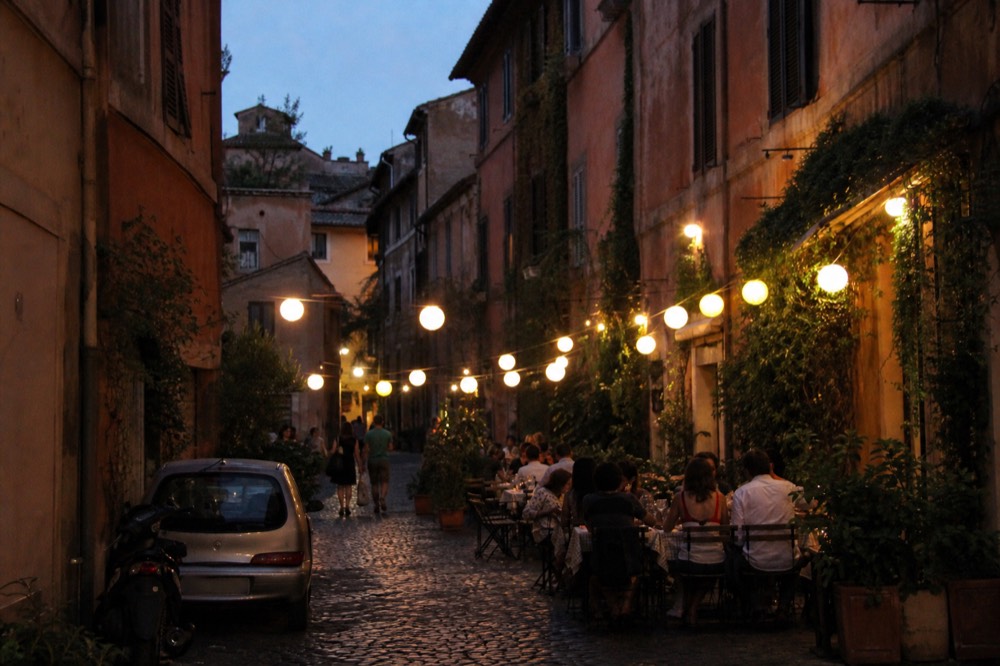
Winter does the opposite. The sitting tightens by half an hour or so, terraces close or get heaters, and the 20:00 reservation becomes more common than the 21:30 one. What does not change is the refusal to eat at 18:00. Even on a cold February Tuesday, a Roman trattoria at 18:30 is a quiet room with a football match on the television and staff eating their own dinner in the corner.
Seasonal produce moves the menu more than the clock. The Carciofo Romanesco del Lazio PGI harvest runs from January into May, so spring menus carry the Roman artichokes, fried alla giudia or braised alla romana. Autumn brings the truffle windows and the porchetta festivals in the Castelli. If you are planning around the calendar, the evening food tours in Rome guide breaks down which walks work best in which season, and the wine tasting in Rome guide covers the tasting rooms that keep the earliest evening hours of all.
For a dinner-hour question, though, the season matters less than the neighbourhood. Trastevere and Testaccio keep the most stubbornly Roman clocks, because their customers are locals as well as visitors. The compact center around the Pantheon runs earliest, because its audience is most transient. Choosing where to eat is often choosing when to eat.
Booking an evening food tour around Roman dinner time
An evening food tour solves the timing problem by outsourcing it: the guide books the venues, paces the stops, and lands you at the dinner hour Romans actually keep, usually 19:00 to 22:30. It is the one format where showing up hungry at the start is correct, because the tour is built to bridge aperitivo and dinner in one continuous evening.
The Sunset Trastevere food and wine tour by Devour Italy is the clearest example. It runs 3.5 hours, meets at Piazza di San Cosimato, is rated 4.9 from 665 reviews, and is priced per group with the figure varying by group size, so check the live listing for your party. Because it starts in the early evening and moves through the neighbourhood's bars and kitchens, it hits the aperitivo window and the dinner window in sequence, which is precisely the rhythm this article has been describing.
A dinner-with-wine format works too, if you would rather sit than walk. The Gourmet Food Tour with Dinner & Barolo Wine by Cooking Italy runs 3.5 to 4 hours, rated 4.9 from 2,676 reviews at $75.95 per person, and starts from La Nicchia Cafè. It is a seated, structured evening rather than a moving one, which suits travellers who want the late dinner experience without three hours on their feet.
If walking any distance is the obstacle, the VIP golf cart format covers the same hours on wheels. The VIP Golf Cart Food Tour by Eating Europe runs 4 hours, rated 4.9 from 268 reviews, priced per group, and moves you between neighbourhoods with pasta and gelato stops along the way. One practical note for any tour with a vehicle: pickups in the center and Trastevere happen inside limited traffic zones, so the driver handles the permits, and you simply show up at the church of San Francesco d'Assisi meeting point as instructed.
Whatever you book, the same rule applies as for booking a restaurant: the later the start time, the more Roman the evening. A tour that begins at 19:00 and ends at 22:30 gives you the full arc. A tour that ends at 20:30 gives you a pleasant early evening and a city that is only just waking up for dinner, with a couple of hours left to fill afterwards. Rome Food Tours keeps the full evening roster, so you can match the format to your energy rather than your appetite.
The questions below are the ones visitors ask most about the Roman dinner clock, answered with the same figures used throughout this article: the 20:00 to 21:30 dinner window, the aperitivo hour that fills the gap before it, and the venue types that bend the schedule earliest. Read the summary line, open the detail you need, and plan your evening around it.
Common questions about Roman dinner times
What time do Romans eat dinner?
Romans eat dinner between 20:00 and 21:30, with the peak of the sitting around 21:00. Anything before 19:30 is aperitivo territory, and a restaurant that is busy at 18:30 in the center is busy with visitors rather than locals. Push your reservation back ninety minutes and you will eat alongside Romans instead.
What time do restaurants open for dinner in Rome?
Most traditional trattorias open between 19:00 and 19:30, though kitchens often only start firing dinner orders from 20:00. Wine bars and enotecas open earlier, from around 17:30 or 18:00, because they serve the aperitivo crowd first. Restaurants near major sights open earliest of all, often from 17:30, running on visitor schedules.
Is it rude to eat dinner early in Rome?
No, it is not rude, it is just conspicuous. Nobody will refuse you a table at 18:30, and hotel restaurants and sight-adjacent places exist precisely for that demand. What you lose is atmosphere: the room will be quiet and the kitchen will be in its pre-service rhythm. Eat early if your body demands it, but know you are trading the Roman evening for convenience.
What is aperitivo and when does it happen?
Aperitivo is the drink-and-snacks ritual that fills the gap between the afternoon and dinner, roughly 18:00 to 20:00. A spritz or a glass of wine comes with the bar's snack board. At Mercato Centrale Roma the formalised version costs 12 euros for a drink plus selected snacks, daily from 17:00 to 20:00, which is a fair planning range for the center.
Do Romans eat dinner later in summer?
Slightly, yes. Summer pushes sittings a bit later, toward 21:00 and beyond, as terraces fill and the pre-dinner passeggiata stretches. Winter pulls dinner a little earlier and indoors. The core 20:00 to 21:30 window holds in every season, and August's chiuso per ferie closures are a bigger practical factor than the shift in hours.
What should I do if I get hungry before Roman dinner time?
Do what Romans do: have an aperitivo. A drink with olives and a snack at 18:30 takes the edge off and makes a 21:00 reservation comfortable. Alternatively, eat at a pizzeria or wine bar, the two venue types that legitimately serve earlier, or join an evening food tour that bridges both windows in one walk.