what is a must eat in rome?
The dishes you should not leave Rome without eating, from carbonara and cacio e pepe to supplì, pizza al taglio, carciofi alla giudia and gelato, with where each one is actually good.
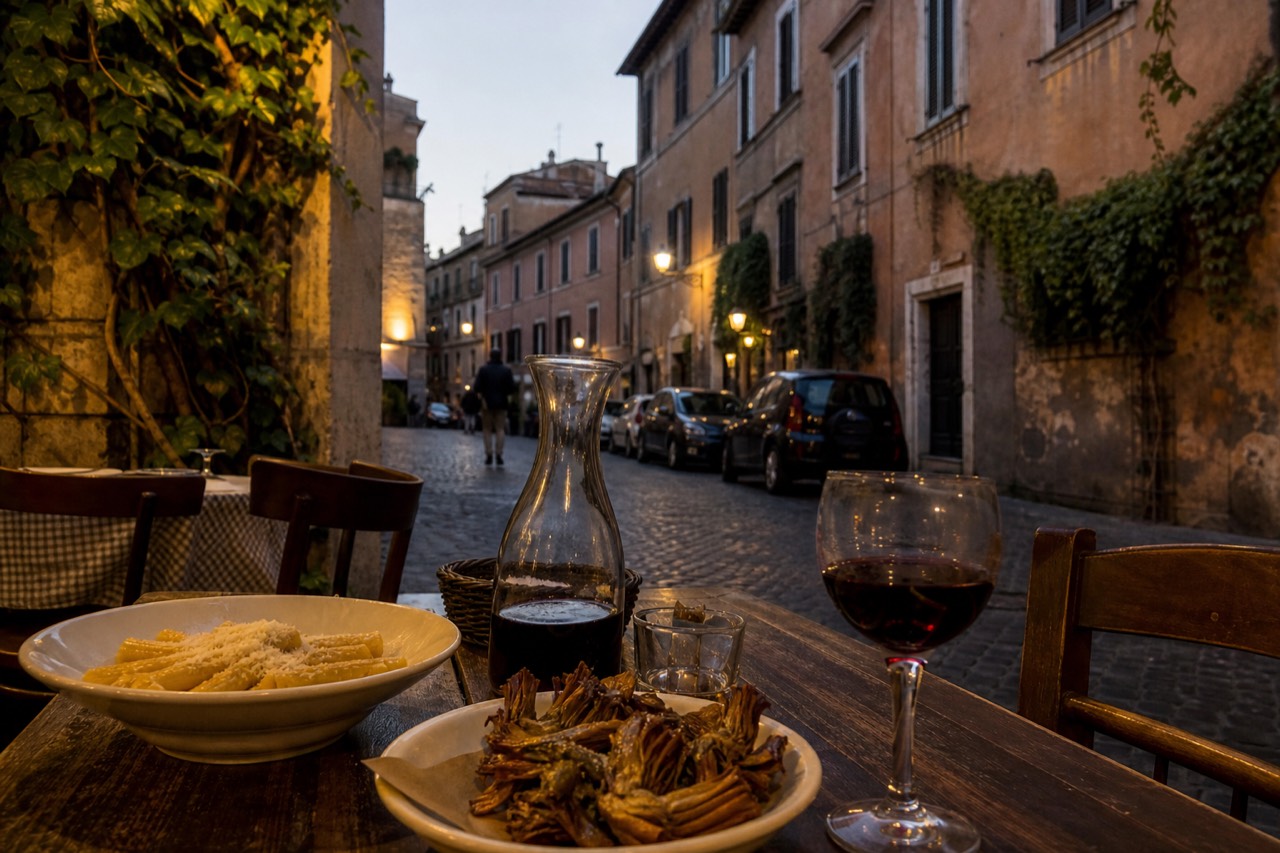
Rome does not have a long menu. It has a short one, executed with a stubbornness that borders on religion, and the city's cooks have spent two centuries arguing about the correct way to make roughly a dozen dishes. That narrowness is the visitor's good fortune: you can eat the entire canon in a weekend if you plan it, and most of it costs less than a museum ticket. On 10 December 2025 UNESCO went further than any guidebook ever dared and inscribed Italian cooking, in its entirety, on the Representative List of the Intangible Cultural Heritage of Humanity, the first national cuisine to receive the designation. Rome's corner of that inheritance is the subject of this page.
The Italian government has already treated the recognition as an economic instrument, announcing plans to use it to protect products from imitation, with industry estimates projecting up to 8 percent tourism growth and 18 million additional overnight stays within two years. Rome recorded 22.9 million arrivals and 52.9 million overnight stays in 2025, so the city you will be eating in is busy, and the tables worth sitting at are worth booking.
what is a must eat in rome?
The five non-negotiables are the four classic Roman pastas (carbonara, cacio e pepe, gricia and amatriciana), fried artichokes in the Jewish Ghetto, supplì and pizza al taglio from a street counter, porchetta, and gelato from a shop that makes its own base that morning. Add tripe if you are adventurous, and an espresso standing at a bar, which averaged 1.35 euros at the counter in Rome in late 2025.
Everything else on this page is a footnote to that list. The pastas share a single logic: no cream, no shortcuts, and a fat-and-cheese engine that Roman cooks treat as engineering rather than inspiration. The street foods are what the slaughterhouse workers of Testaccio ate with their hands. The fried artichoke is the signature of the oldest Jewish community in Europe, and the gelato is the dessert course of a city that takes its coffee almost as seriously.
The list is also geographically convenient, which matters when you only have a few days. The pastas live in Testaccio and Trastevere, the street foods are scattered across every market counter in the center, the artichokes belong to four blocks around Via del Portico d'Ottavia, and the gelato is everywhere but only excellent in about a dozen places. You will not need to cross the city for any of it.
If you want to compress the whole list into one evening rather than hunt each dish down yourself, a guided walk does the routing for you.
The three options above bracket the price range. The 20-tastings Trastevere walk is the deep dive, the sunset small-group tour is the mid-length version with wine, and the 2.5-hour street food walk is the budget sampler at $52.26 per person. All three concentrate on the same short list this page describes, so the choice is really about depth, pace and budget rather than content.
What is the must-eat food in Rome?
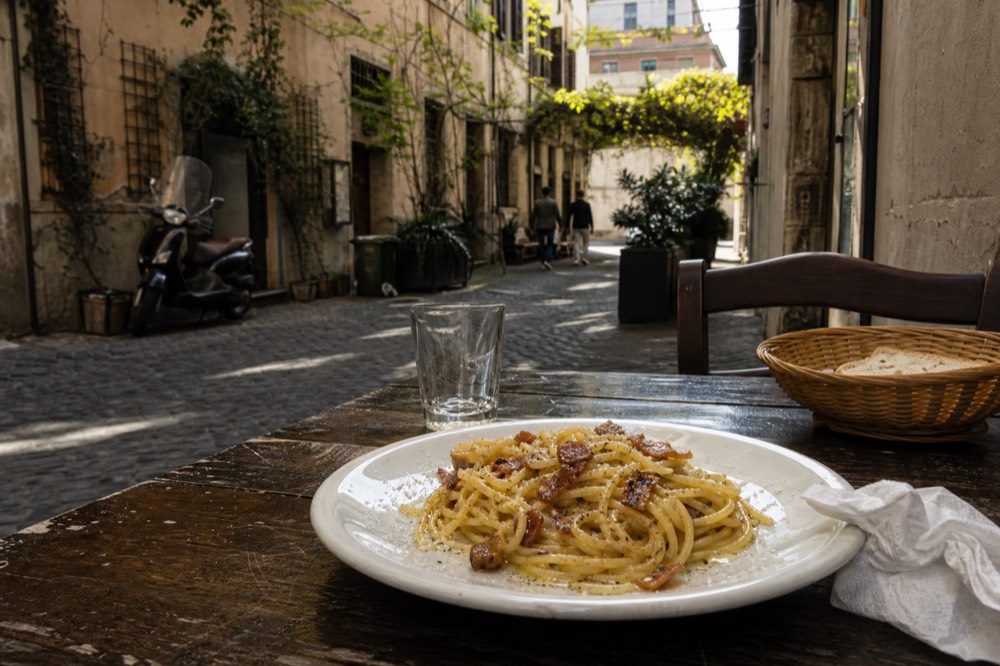
If you only order one thing, make it carbonara. A 2026 survey of 1,004 Italians found 46.1 percent named carbonara their favorite pasta dish, and TasteAtlas ranked Rome's carbonara the best spaghetti dish in the world in its November 2025 ranking. The true version is guanciale, egg, Pecorino Romano and pepper, with no cream anywhere near the pan.
The dish is younger than most tourists assume, but its ingredients are ancient. Pecorino Romano is a registered PDO, protected at EU level since 1996, made exclusively from sheep's milk in Sardinia and Lazio and matured at least five months for table cheese, eight for grating. The 2024/2025 production campaign totaled 39 million kg, with 60 percent exported. Guanciale, cured pork jowl, is the fat that carries the whole thing. If a menu in Rome offers carbonara, order it; the city's trattorie almost never get it wrong, and the ones near the major sights sometimes do.
Where it is actually good: Testaccio and Trastevere, at trattorias where the pasta is listed by name and the waiter does not ask if you want parmesan on it. A guide to Trastevere food tours covers the neighborhood's most reliable tables, and a good evening walk will put a correct carbonara in front of you within the first hour.
The 20+ tastings Trastevere tour is built around exactly this kind of eating: twenty-plus stops, free-flowing wine, four hours, $120.78 per person, rated 4.9 across 1,708 reviews. The operator's live listing has current dates and availability.
One reassurance before you commit: this operator, like most on the roster, runs with free cancellation up to 24 hours before the start, so booking early costs you nothing if your plans shift. That flexibility matters in a city where a rainy evening can move a whole itinerary indoors.
The four classic Roman pastas, ranked by how badly tourists get them wrong
Cacio e pepe is the one most often ruined, because it is nothing but pasta, Pecorino Romano and black pepper, and the cheese clumps the moment the pan temperature is wrong. Gricia is carbonara without the egg. Amatriciana is gricia plus tomato, and it is the only one of the four with a confirmed EU registration, as Amatriciana Tradizionale TSG. Carbonara, for all its fame, has no PDO or PGI at all.
The amatriciana registration is worth reading, because it settles arguments. The EU specification, registered by Implementing Regulation (EU) 2020/395, requires a sauce of 18 to 30 percent Amatrice pork jowl, cured at least 30 days, and states plainly that the sauce "has always been made with pork jowl, never bacon or pork belly." The cheese must be grated Amatrice pecorino or Pecorino Romano PDO from Lazio. Tomatoes entered the rural recipe only in the early 19th century, and the dish reached Rome through the Amatrice people who moved to the capital and worked in catering, carrying their sauce with them. So when a Roman waiter tells you pancetta does not belong in amatriciana, he is quoting European law, not just his grandmother.
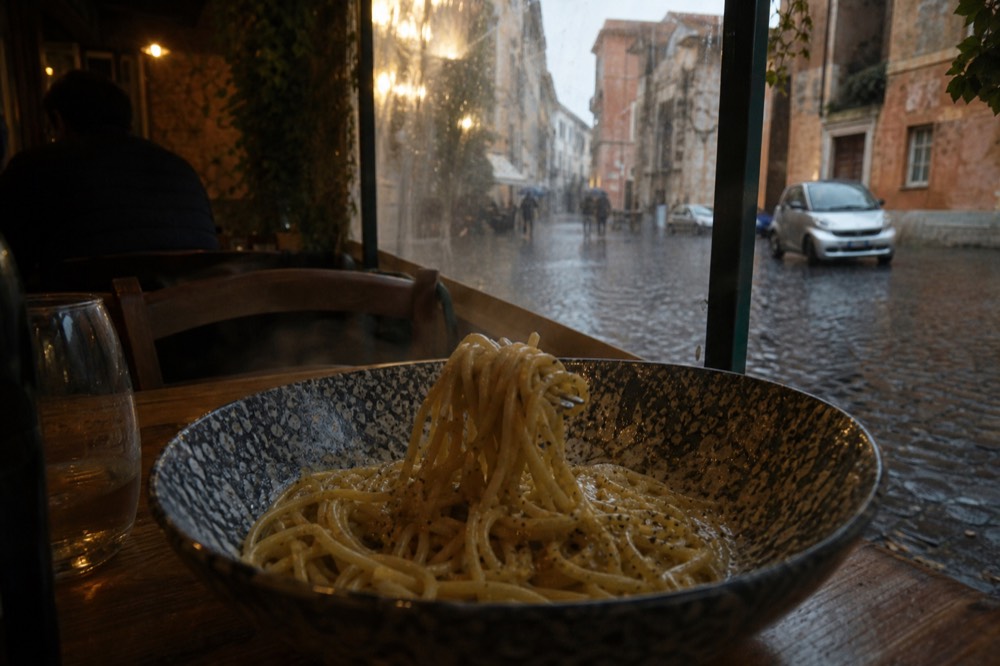
Ordering strategy matters more than restaurant choice. Cacio e pepe is best at lunch, when the kitchen is quiet enough to give the emulsion attention. Carbonara is forgiving. Amatriciana is nearly indestructible and travels well, which is why it appears on every menu in the city. Gricia is the insider's order: ask for it and the waiter knows you know the canon.
| Pasta | Core ingredients | Difficulty to execute | Where it is reliably good |
|---|---|---|---|
| Cacio e pepe | Tonnarelli or spaghetti, Pecorino Romano, black pepper | Very high, the cheese clumps | Testaccio trattorias, Monti |
| Gricia | Guanciale, Pecorino Romano, pasta | Medium | Testaccio, Trastevere |
| Carbonara | Guanciale, egg, Pecorino Romano, pepper | Medium | Almost anywhere serious |
| Amatriciana | Guanciale, tomato, Pecorino Romano | Low | Everywhere, including the Ghetto |
If you want the full anatomy of the most famous one, the four ingredients in carbonara and the mistakes that ruin it break the technique down step by step.
A note on pasta shapes, because Romans care. Cacio e pepe is traditionally made with tonnarelli, a square-cut fresh egg spaghetti whose rough surface grips the sauce. Carbonara and amatriciana take spaghetti or bucatini, the latter a hollow strand that amatriciana's TSG specification explicitly allows. Gricia works with almost anything. None of this is worth an argument with a waiter, but knowing the words helps you read a menu faster.
Supplì, pizza al taglio and the street food canon
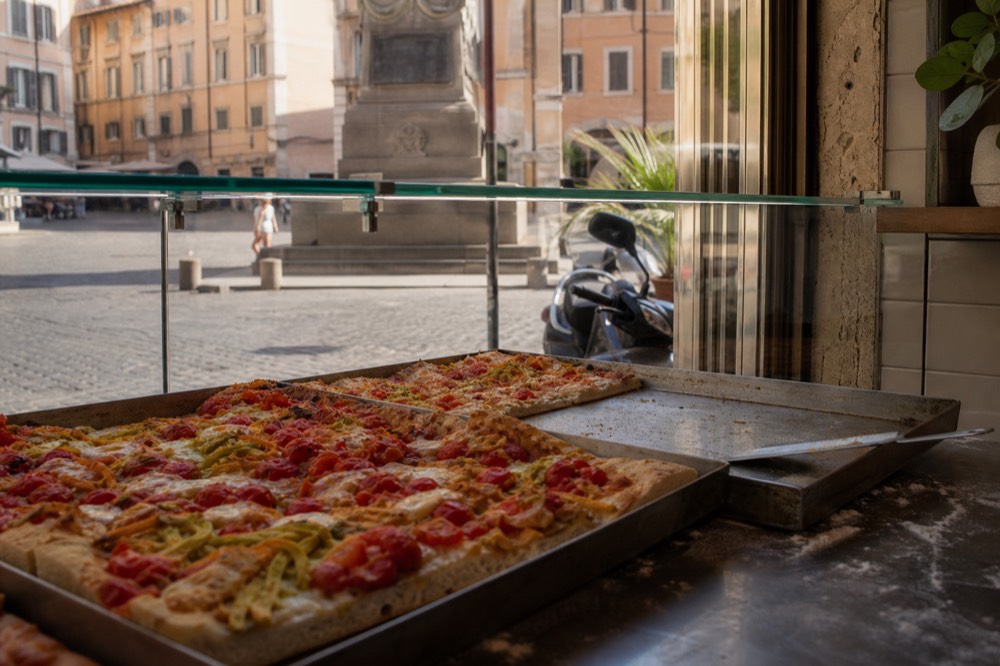
The must-eat street foods are supplì, the fried rice croquette with a mozzarella heart; pizza al taglio, sold by weight and cut with scissors; and trapizzino, a pizza-dough pocket stuffed with braised Roman dishes. Add porchetta di Ariccia, the garlicky roast pork of the Castelli Romani, which has held PGI status since 2009. Together they are lunch for under ten euros.
Rome's street food scene earned its own chapter in the Gambero Rosso Street Food 2026 guide, which lists 685 addresses nationwide including 121 new entries. The city's single most decorated street item is pizza al taglio: in the 50 Top Pizza 2025 guide, Frumentario by Alessandro Santilli ranked first in the world for the format, with Pizzarium second, and Rome placed 12 venues overall. The Roman standard is a light, airy base that holds its structure when folded, and toppings that change with the market: zucchini flowers in summer, artichokes from January into May.
The supplì is the item most visitors miss, and it costs about two euros. The name is a corruption of "surprise," from the French, and the surprise is the strand of mozzarella that stretches when you break the croquette open. The tomato sauce is close to amatriciana without the cheese. Testaccio's covered market, Mercato di Testaccio, is one of the best places to eat a whole run of these in one visit, with traditional stalls alongside street food and vegan counters. The market publishes its own hours as 7:00 to 15:30 Monday to Saturday, though the city's official list says 16:00, so treat mid-afternoon as the safe cutoff. Since March 2026 the market has also opened on Friday evenings until 22:00, which makes it one of the few places in the city where a late grazing dinner at a counter is officially sanctioned.
Porchetta deserves its own sentence because it is the one must-eat that comes to the city from outside it. The herb-stuffed, boneless roast pork of the Castelli Romani towns south of Rome has been made around Ariccia for centuries and carries PGI protection. It arrives in Rome sliced from a whole pig displayed in a shop window, piled into a rosetta roll, and eaten standing up. The 73rd Sagra della Porchetta di Ariccia runs 4 to 6 September 2026 with free entry if your trip happens to coincide.
A street food walk is the cheapest guided way to cover this category, and the 2.5-hour tour with a local guide at $52.26 per person, rated 4.8 from 4,201 reviews, is built around the counters rather than restaurants. The street food and markets guide maps the rest of the city's grazing route.
Carciofi alla giudia and the Jewish Ghetto plates
In the Jewish Ghetto the must-eat is the carciofo alla giudia, a whole Roman artichoke flattened and deep-fried until it opens like a golden chrysanthemum. Alongside it, order filetti di baccalà, fried salt cod, and the sour cherry and ricotta crostata. Roma Capitale's own tourism portal names all three as the quarter's giudaico-romana specialities.
The artichoke itself is a protected product. Carciofo Romanesco del Lazio is a registered PGI, grown from the Castellammare and Campagnano cultivars in named municipalities of the provinces of Viterbo, Rome and Latina, with harvest starting in January and running into May depending on the weather. That window is the reason carciofi alla giudia is a winter and spring dish, and the reason a fried artichoke in August is a frozen one. The frying is done twice, the second time at high heat so the leaves crisp and splay outward, and it is one of the few fried dishes in the world that tastes of the vegetable rather than the oil.
The quarter around Via del Portico d'Ottavia is the physical remnant of the ghetto created by papal bull on 14 July 1555 and abolished with the end of the Papal State in 1870. Eating there is not a themed experience; the restaurants are the continuation of the oldest Jewish community in Europe, and the kitchens along that street have been frying artichokes for Roman tables since long before anyone called it a food scene. The Jewish Ghetto food tours guide lists which tables take walk-ins and which need booking.
The crostata deserves as much attention as the artichoke. Visciole, the small sour cherries of Lazio, are cooked down with a little sugar into a jam whose acidity cuts the sheep's ricotta spread beneath it, and the combination is one of the oldest dessert formulas in the region. Filetti di baccalà, whips of salt cod in a light batter, are the quarter's other street-corner classic, sold from a window on the same street since before the war. Order all three and you have eaten the quarter properly.
One practical note for sit-down meals anywhere in the city: Lazio regional law prohibits a separate coperto charge, and any service charge has to appear on the price list you can see before ordering. Fines run from 2,500 to 7,500 euros, so the law has teeth, though compliance is a restaurant-by-restaurant matter. If a coperto appears on your bill, you are entitled to question it.
Quinto quarto: the offal tradition of Testaccio
The adventurous must-eat is trippa alla romana, tripe simmered with tomato and finished with Pecorino Romano and Roman mint, traditionally eaten at Saturday lunch. It belongs to the quinto quarto, the fifth quarter of the animal, the least prized cuts that the slaughterhouse workers of Testaccio once took home in place of wages.
Rome's own city government documents this history directly: tripe, oxtail, coratella and pajata are the off-cuts that poor families and above all the Mattatoio workers ate, because the butchers were partly paid in the parts nobody else wanted. The slaughterhouse operated from its construction between 1888 and 1891 until July 1975, and the neighborhood around it still cooks the inheritance. This is not a museum cuisine. Trattorias in Testaccio and Trastevere serve tripe on Saturdays because the tradition says so, and the dish is still on menus because the menus never came down.
Ordering quinto quarto is easier than it sounds. Coda alla vaccinara, braised oxtail, is the entry point, rich and sweet and unmistakably meaty. Trippa is next. Pajata, the milk-fed lamb intestine, is for the committed. All three reward a trattoria with a short menu and a handwritten price list, and Testaccio has the densest concentration of them. The Testaccio food tours guide covers the market-plus-trattoria combination that makes the neighborhood the single best eating district in the city.
The same district supplies the city's other seasonal vegetables, and the Trastevere market at Piazza San Cosimato, which Roma Capitale describes as a morning meeting place every day except Sunday, carries puntarelle, broccoli, misticanza, artichokes and broad beans by season, alongside offal, coastal fish and traditional cheeses. Puntarelle, the crisp shoots of a Roman chicory served with anchovy dressing, is the salad to order alongside any quinto quarto main, and it is on this list of must-eats in its own right whenever it appears.
Gelato, coffee and the sweet finish
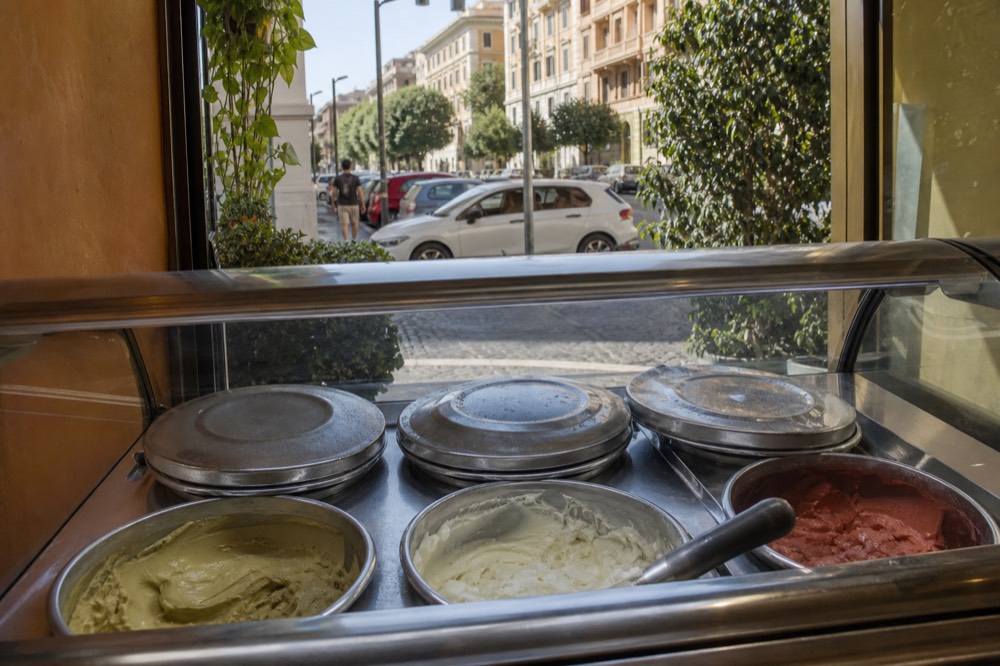
The must-eat dessert is gelato from a shop that makes its own base daily, judged by the pistachio: if it is bright green, walk out, because real pistachio gelato is dull brown. The artisanal gelato sector in Italy turned over 3.1 billion euros in 2025, and the Gambero Rosso Gelaterie d'Italia 2027 guide awarded its top Tre Coni rating to six Lazio shops, including Torcè and Otaleg! in Rome.
The city's gelato culture rewards the same instincts as its pasta culture. Look for covered steel tins rather than open plastic tubs, a small flavor list, and a shop that does not have a cartoon mascot. A medium cone in central Rome ran up to 4 euros in mid-2025, which is the planning number. Global artisanal gelato sales reached 16.5 billion euros in 2025, up 8.5 percent, and the competitive center of that market is exactly the kind of small Roman shop where the owner is behind the counter.
Coffee is the other mandatory ritual, and it is standing at the bar, not sitting at a table. The average espresso at the counter in Rome was 1.35 euros in December 2025 per ISTAT data in the FIPE Ristorazione 2026 report, and the price is the same whether you drink it in one sip or three. Romans do not order cappuccino after about eleven in the morning, and no law requires you to obey this, but the waiter will remember you fondly if you do.
The pairing that closes a Roman day is gelato plus a passeggiata, the evening stroll. Trastevere's gelaterias sit on the route, and the neighborhood's newest name is Un gelato a Roma, opened by Eugenio Morrone in Via Benedetta in February 2026 with a sustainability-focused setup. For the sweet end of a full eating day, the gelato tours guide maps the shops worth crossing the city for, and the aperitivo guide covers the pre-dinner drink that Rome treats as its own small meal.
How to fit the whole list into one trip
Plan one anchor dish per meal and one neighborhood per day: pastas in Testaccio or Trastevere at dinner, street food counters at lunch, the Ghetto for one long lunch, and gelato twice a day. A four-day trip covers the entire canon without repeating a restaurant. Most visitors fail by eating near the monuments, where rent, not cooking, sets the menu.
The geography is on your side. Testaccio, Trastevere, the Ghetto and Monti sit within a short stretch of the city center, and each has a distinct specialty, so the walking between meals is itself sightseeing. Book the sit-down dinners, walk in for lunch, and treat the market counters as your between-meal course. Mercato Trionfale on the Prati side, with around 270 stalls, is the largest covered option and pairs naturally with a Vatican morning, though its official hours differ by day, so check before you go.
A sample four-day skeleton looks like this: day one, Trastevere, carbonara and cacio e pepe at dinner; day two, the Ghetto at lunch for the artichoke and baccalà, Monti for the evening; day three, Testaccio, the market at lunch and quinto quarto at dinner; day four, Prati and the Trionfale market, with pizza al taglio as you walk. Gelato slots into every afternoon, and espresso into every transition. This site, Rome Food Tours, exists to make that kind of plan executable, and the neighborhood guides linked throughout this page carry the restaurant-level detail.
If you would rather have a local route the whole canon in a single evening, these three walks each solve the problem differently, from the 20-tastings marathon to the budget street food sampler.
The short answer to every version of this question is the same short list: the four Roman pastas, the fried artichoke of the Jewish Ghetto, the street counter classics, porchetta and artisanal gelato. The details below cover the most common follow-ups, from artichoke season to the coperto rule, each answered in a sentence or two.
Common questions about must-eat food in Rome
what is a must eat in rome?
The four Roman pastas, fried artichokes in the Jewish Ghetto, supplì and pizza al taglio, porchetta, and artisanal gelato. If you only order one dish, make it carbonara; if you only have one afternoon, do the street food counters and finish with gelato.
What is the must-eat food in Rome?
The same short list: carbonara, cacio e pepe, gricia, amatriciana, carciofi alla giudia, supplì, pizza al taglio, porchetta and gelato. Trippa alla romana is the adventurous addition, traditionally served at Saturday lunch.
What pasta is Rome famous for?
Carbonara, cacio e pepe, gricia and amatriciana. Amatriciana is the only one with a confirmed EU registration, a TSG held since 2020, whose specification requires guanciale and prohibits bacon or pancetta.
When is artichoke season in Rome?
The Carciofo Romanesco del Lazio PGI harvest starts in January and can run into May, depending on weather. Fried carciofi alla giudia are a winter and spring dish; outside that window the artichokes on Roman menus are usually frozen.
Is street food in Rome cheap?
Yes. Supplì cost around two euros, pizza al taglio is sold by weight for a few euros a slice, and a medium gelato cone in central Rome ran up to 4 euros in mid-2025. A full street food lunch is possible for under ten euros.
Do restaurants in Rome charge a coperto?
Lazio regional law prohibits a separate coperto charge, with fines from 2,500 to 7,500 euros for violations. Any service charge must appear on the price list before you order. If a coperto appears on your bill, you are entitled to question it.