What to avoid when visiting Rome?
The food-side traps in Rome: menu turistico boards, photo menus, coperto surprises, fountain rules and Trastevere at night, plus how a market walk sidesteps most of them.
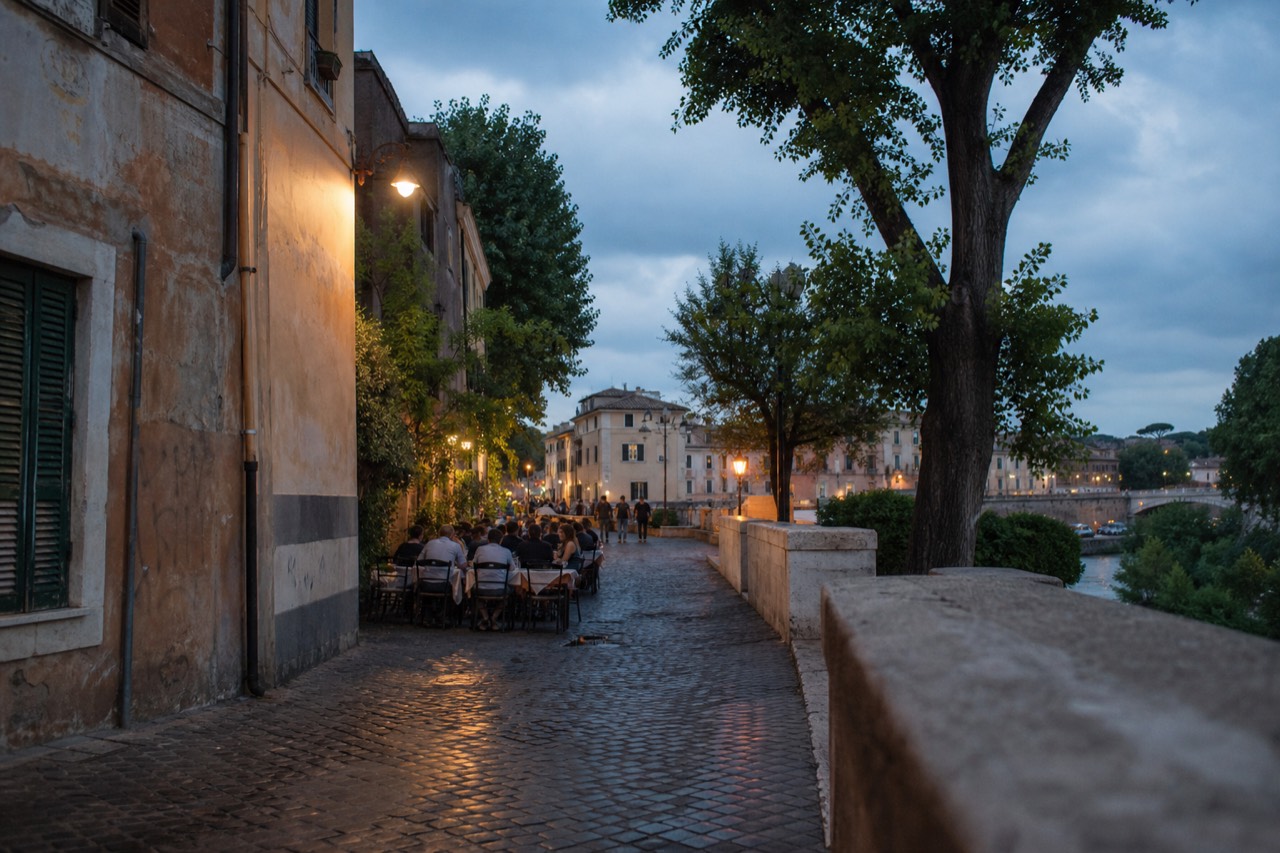
What to avoid when visiting Rome?
Avoid eating within sight of a major monument, avoid any restaurant with a photo menu or a host calling you in from the street, and avoid assuming the bill works like home. Rome's worst food experiences cluster in the tourist corridors, and most of them are avoidable with two habits: walk three streets further, and let a local show you the first table. The traps have a geography, and the geography is predictable.
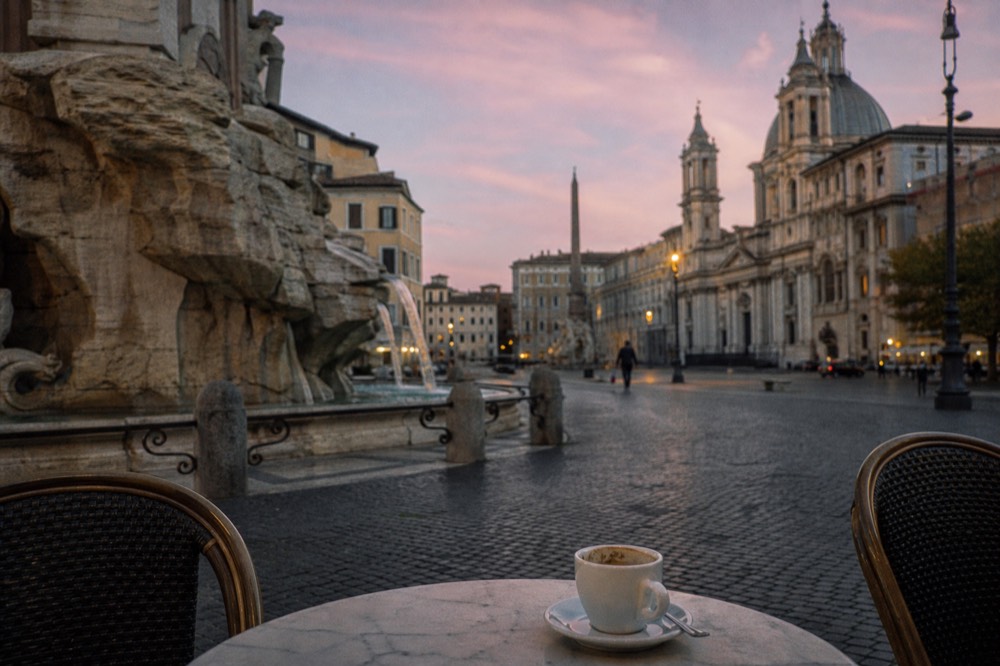
Rome recorded 22.9 million tourist arrivals in 2025, a record year, and the businesses that depend on that flow have divided themselves into two economies. One feeds residents and the travellers who found it. The other feeds the crowd that never walks more than two minutes from the Pantheon or the Colosseum. Prices, portions and honesty diverge sharply between the two.
The pattern is old enough to have a name in the industry: the menu turistico. A laminated board in four languages, a host on the doorstep, a location with a view of something famous, and a kitchen that never has to see the same customer twice. The food is not dangerous, it is simply indifferent, and priced as if the view were on the plate.
The alternative does not require insider knowledge so much as a willingness to move. Cross the river to Trastevere's side streets, head to Testaccio, or walk into a market hall where the prices are posted for people who shop there every week. A guided walk compresses that learning curve into a single afternoon, which is why the format has boomed: culinary tours now rank among the most popular experience types for American travellers in industry booking data.
If you want the short version of this whole article, it is these three tours, a market walk, a market-and-pasta combination, and a golf cart option for tired feet.
Which restaurant warning signs should you walk past?
Walk past any restaurant with a host actively recruiting from the pavement, a photo menu, a laminated menu in five languages, a "tourist menu" heading, or a location directly facing a major monument. Also treat with suspicion a wine list you cannot see before ordering, since Lazio law requires prices to be visible up front. These five signs catch most of the bad meals in Rome.
The photo menu deserves its own sentence, because it is the most reliable single indicator. A restaurant that needs photographs to sell its food is a restaurant whose food cannot be sold any other way. Roman cooking is simple and its best practitioners know it: the dish descriptions are short because there is nothing to hide behind.
The doorway host is the second reliable sign. In neighbourhood trattorias nobody stands outside calling customers in, because the customers are already inside. Recruiting from the street is a strategy for businesses whose location, not their kitchen, is the product.
There is also a legal angle worth knowing. Lazio's regional law on food service, Legge Regionale 21/2006, requires prices to be displayed inside the premises and, for restaurants, also outside or legible from outside, with the wine list as the only exception. Where service is at the table, any service component must appear on the price list you can read before ordering. You can read the coordinated text of the law on the Consiglio Regionale del Lazio site. A restaurant that hides its prices is not just rude, it is out of compliance.
Here is the checklist in table form, ordered roughly by how reliably each sign predicts a bad meal:
| Warning sign | Why it matters | What to do instead |
|---|---|---|
| Photo menu | Food cannot sell itself on description | Choose a place with a short handwritten or chalkboard menu |
| Host recruiting at the door | Location is the product, not the kitchen | Walk on; good places do not need to fish |
| "Menu turistico" heading | Fixed tourist formula, often with quality shortcuts | Look for the day's dishes listed separately |
| Tables directly facing a monument | You are paying rent on the view | Go three streets in any direction |
| No visible price list | Contrary to Lazio price display rules | Ask for the list before sitting, or leave |
If reading menus and judging rooms sounds like work, that is exactly the work a guided food walk does for you. The operator has already vetted the stops, and the stops know the operator's guests are coming back, which changes how they cook.
Will you be charged a coperto in Rome?
In Lazio, a separate coperto charge is prohibited by regional law, article 16 of Legge Regionale 21/2006, with fines from 2,500 to 7,500 euros for breaches. A servizio, or service charge, is legal but must be shown on the price list before you order. If a Rome bill carries a coperto line, you can point to the law and ask for it to be removed.
This is one of the most misunderstood rules among visitors, largely because the coperto is standard in other Italian regions and many travellers have paid it in Florence or Naples without complaint. Rome is different. The regional law here says, plainly, that adding costs for coperto is forbidden, and that where table service is charged, the price list available before ordering must make the total clearly understandable.
Two honest caveats. First, the law is the rule, not a guarantee of compliance; a minority of restaurants near the monuments still try it, counting on visitors who do not know the local rule. Second, do not confuse a clearly displayed servizio with an illegal coperto. A service charge that was on the menu when you sat down is legitimate; a surprise "pane e coperto" line that was not is not.
The practical script is short. Point at the line, say that in Lazio the coperto is not permitted, and ask for it to be removed. In the rare case the staff push back, paying and noting the restaurant's details is more productive than an argument; the fine structure exists precisely because the region wants these reports. For a fuller picture of what a legitimate Roman menu looks like, see our guide to common osteria menu items, which lists the dishes and price structures you should expect.
What are the rules about fountains, steps and street food?
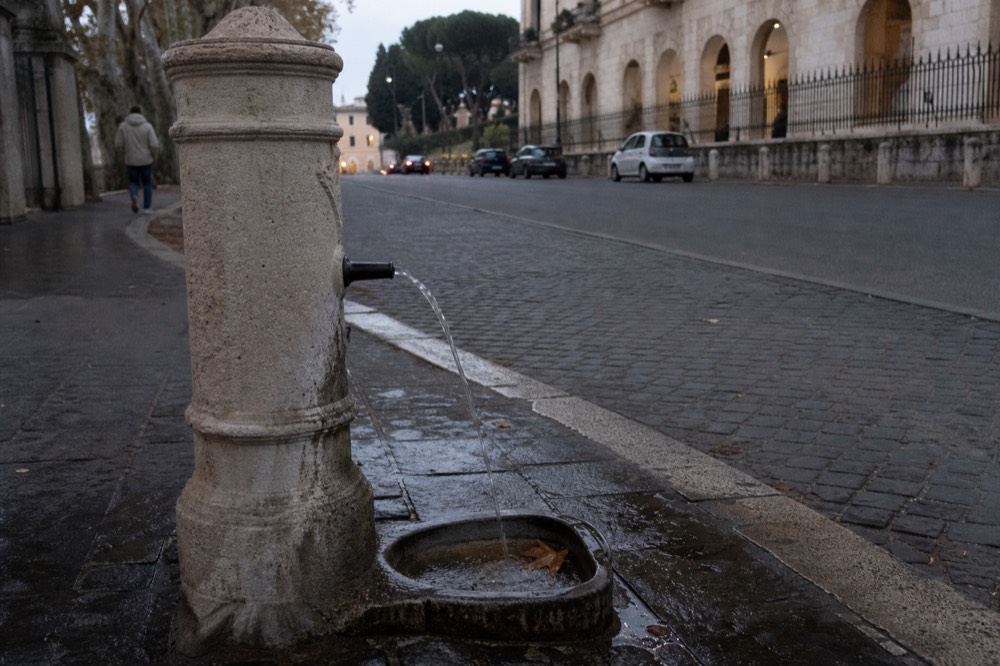
Rome's urban police regulation bans sitting, including while eating or drinking, on monuments, fountain steps and archaeological remains, with a reduced-payment fine of 250 euros. Drinking from the small spout of a nasoni drinking fountain is allowed; mouth contact with the main spout is not. Throwing coins into the Trevi remains explicitly permitted.
The 2019 regulation, Deliberazione dell'Assemblea Capitolina n. 43, is the source here, and its article 4 is broader than most visitors expect. Sitting on the Spanish Steps with a slice of pizza, perching on a fountain's base with a beer, or picnicking on any archaeological remnant all fall under the ban, and the reduced-payment amount attached to those behaviours is 250 euros. The rule does not ban eating in public generally; it bans eating while seated on heritage, and sitting on public ground outside equipped areas.
The fountain rules have a friendly exception built in. Article 8 of the same regulation explicitly states that the tradition of throwing coins into certain central fountains is not covered by the prohibition. So the Trevi coin toss is fine, and always was. What is not fine is climbing on any part of a monumental fountain, including its steps.
One newer item belongs on the avoidance list too: since early February 2026 a 2 euro access fee applies to non-residents approaching the Trevi Fountain basin, though the piazza itself remains free to enter. The fee is small, but queues at peak times are not, so early morning remains the sensible window.
For evening walkers there is a second layer. In the mapped nightlife zones, including Trastevere, retail and takeaway alcohol sales are prohibited from 22:00 to 07:00, and drinking alcohol in public spaces is prohibited from 23:00 to 07:00. Sitting at a table inside or on a licensed terrace is unaffected; the street bottle is what the regulation targets.
What should you avoid in Trastevere at night?
Avoid buying takeaway alcohol on the street in Trastevere after 22:00, avoid the venues with touts on viale Trastevere, and avoid assuming the neighbourhood's night traffic rules match the daytime ones. The night ZTL operates from 21:30 to 03:00 on Fridays and Saturdays, and from May to October also on Wednesdays and Thursdays. August suspends the night ZTL entirely.
Trastevere is Rome's most visited food neighbourhood and, in 2026, its most heavily policed nightlife zone. The mayor renewed the anti-malamovida ordinance in January 2026, extending it to 11 October 2026 and adding viale Trastevere to the areas where night-time takeaway alcohol sales are banned. Enforcement is real: a single police operation on 6 September 2026 issued over 50,000 euros in fines across the district's venues, including a gelateria operating as a pub and minimarkets selling high-alcohol drinks without the right licences.
What does that mean for a visitor who just wants dinner? Very little, if dinner is the plan. Restaurants, trattorias and licensed terraces operate normally. What the ordinance and the enforcement target is the street drinking economy, the late-night bottle shops and the venues operating outside their licence. Eat seated, at a place with a visible price list, and none of this touches you.
The ZTL detail matters for anyone arriving by car or taxi-adjacent arrangement. Roma Servizi per la Mobilita publishes the full zone and hour details on its official ZTL page: the Trastevere daytime zone runs 06:30 to 10:00 Monday to Saturday, and the night zone 21:30 to 03:00, with a 30 km/h speed limit inside. Taxis and licensed hire cars are exempt; a rental car is not. Walking tours, which is most food tours, are unaffected by all of it.
For more on the neighbourhood itself, including whether it deserves its crowds, our piece on whether Trastevere is worth visiting weighs the case. The short version for this article: worth it, on the side streets, before 21:00 or after midnight, and never for the first restaurant you see on the main drags.
How does a market walk sidestep the tourist traps?
A market walk sidesteps the traps because markets post prices for residents, banish the photo menu by design, and put you in neighbourhoods where the tourist economy barely operates. Trionfale, with around 270 stalls, and Testaccio, the slaughterhouse district turned food heartland, are the two most rewarding for a first-time visitor who wants to eat honestly.
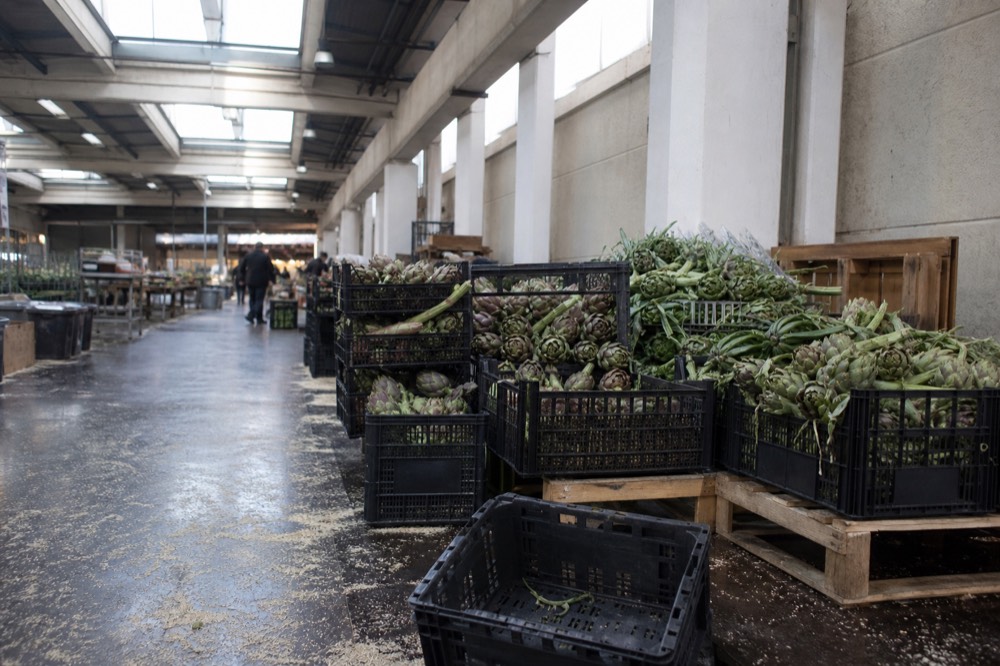
Mercato Trionfale sits on the Prati side, near the Vatican, and is one of the largest covered markets in the city. Its stalls sell fresh and dried fruit, cereals, fresh fish and baccala, cured meats, cheeses, porchetta, honey and jams. Prices are posted because the customers are regulars. Nobody photographs the menu because there is no menu. The Trionfale market tour run by Cooking Italy builds a four-hour walk around exactly this: a visit to the market, then the tastings, from $105.30 per group, rated a perfect 5 across 511 reviews.
Testaccio is the other pole. The district was built around the city slaughterhouse, which operated from its completion in 1891 until July 1975, and its cooking tradition grew from the quinto quarto, the fifth quarter of the animal that the slaughterhouse workers took home in place of wages. Tripe, oxtail, coratella and pajata are still on the menus here, and the market hall, open Monday to Saturday from 07:00 to roughly mid-afternoon, is where the neighbourhood shops. The Eating Europe tour combines the market with Roman pasta tastings, 3.5 hours, from $128.96 per group, rated 4.9 across 1,760 reviews.
The reason a guided version beats a solo visit on a short trip is time. A guide knows which stall's porchetta is cut to order, which cheese counter will let you taste, and which of the market's prepared-food stands is worth the queue. On a two or three day visit, that filtering is worth the ticket price. On a longer stay, go alone first and let the stallholders teach you, which they will, gladly. This is the approach Rome Food Tours takes across every neighbourhood guide on the site: name the market, name the rule, and let the posted prices do the arguing.
Which everyday prices catch visitors out?
An espresso at the counter in Rome averaged 1.35 euros in December 2025 per FIPE and ISTAT data, a medium gelato cone in the center reached 4 euros in summer 2025, and the city's tourist tax runs up to 10 euros per person per night at five-star hotels, capped at ten consecutive nights. The trap is not the prices, it is paying monument-corridor versions of them.
The espresso figure deserves a moment because it is the cleanest illustration of the two economies. The FIPE Ristorazione 2026 report, using ISTAT data, put the average counter espresso in Rome at 1.35 euros in December 2025; the same national data set shows the Italian average at 1.29 euros in 2026, up 24.2 percent since 2021. You can read the report at the FIPE site. A cafe charging 5 euros for a cappuccino is not charging the Roman price; it is charging the Piazza Navona price.
The tourist tax is the other figure that surprises people, because it is collected by the hotel at checkout rather than appearing in the booking total. Roma Capitale's official service page explains who pays and who collects it: non-residents, per person per night, with the rates set by the city's 2023 table, from 3.50 euros at hostels and 4 euros at one-star hotels up to 10 euros at five-star properties, capped at ten consecutive nights in the same place. Children up to their tenth birthday are exempt.
Here are the everyday numbers in one place, so you can spot the outliers:
| Item | Typical Rome figure | Where the figure comes from |
|---|---|---|
| Counter espresso | 1.35 euros average in Rome, December 2025 | FIPE Ristorazione 2026 report on ISTAT data |
| Medium gelato cone, center | Up to 4 euros | Central Rome pricing, summer 2025 |
| Tourist tax, 3-star hotel | 6 euros per person per night, max 10 nights | Roma Capitale tariff table in force since October 2023 |
| Tourist tax, short-let apartment | 6 euros per person per night, max 10 nights | Same Roma Capitale tariff table |
| Coperto | Zero, prohibited in Lazio | Legge Regionale 21/2006, article 16 |
Restaurant prices overall rose 3.2 percent nationally in 2025 per FIPE, so the honest baseline is not frozen, but the gap between the neighbourhood trattoria and the monument-fronting terrace remains wide. If a bill looks wrong, the two things to check are the coperto line and whether the servizio was on the displayed list, both covered earlier in this article.
What about August, closures and timing mistakes?
Avoid assuming anything is legally required to close in August: Lazio law leaves opening hours entirely to the operator, so the chiuso per ferie sign is custom, not regulation. What is official in August is that the night traffic zones switch off while the daytime ones keep normal hours. The bigger timing mistake is eating dinner at 18:30, hours before Romans do.
The August question comes up constantly, and the honest answer is that there is no legal closure. Legge Regionale 21/2006, the same law that governs price display, leaves opening and closing hours to the free determination of the operator, who must post them on a visible sign. What actually happens is that family-run places take their holidays in the weeks around Ferragosto, and the sign goes up. Some close, many do not, and the tourist corridor never does.
Timing is the more consequential error. Romans eat dinner late, and the restaurants that welcome you at 18:00 with open arms are, mostly, the ones whose regulars would never come at that hour. Our guide to what time Romans eat dinner covers the schedule in detail; the compressed rule is aperitivo around 19:00, dinner from 20:30 onward, and a kitchen that looks empty at 19:00 is not a bad restaurant, it is a punctual one.
The other timing trap is the market one. Rome's rione markets are morning institutions: Testaccio runs Monday to Saturday from 07:00 to about 15:30, Trionfale's official listed hours split between early closing and late closing days, and arriving at 14:00 expecting the full spectacle is the classic mistake. Book the market tours for morning slots when the stalls are at their loudest.
If your feet are done by mid-afternoon and the market still appeals, the golf cart format is the compromise option, four hours by cart with pasta and gelato stops, from $191.67 per group, rated 4.9 across 268 reviews. It also sidesteps the ZTL question entirely, since the operator holds the permits a rental driver would not.
The recurring traps are the menu turistico, the illegal coperto line, the fountain-step picnic, the late-night street drink and the monument-fronting price markup. Each one has a rule or a habit that neutralises it, and the answers below give the short version of every fix covered in this article.
Common questions about avoiding tourist traps in Rome
What to avoid when visiting Rome?
Avoid eating within sight of the major monuments, restaurants with photo menus or doorway hosts, street drinking after 22:00 in the nightlife zones, sitting on fountain steps with food, and any bill with a coperto line, which is prohibited in Lazio. Walk three streets further or let a guided market walk choose the stops for you.
Is the coperto legal in Rome restaurants?
No. Article 16 of Lazio's Legge Regionale 21/2006 prohibits a separate coperto charge, with fines from 2,500 to 7,500 euros for breaches. A servizio charge is legal but must appear on the price list visible before you order.
Are photo menus really that bad a sign?
They are the most reliable single warning sign. A kitchen that needs photographs to sell its dishes is cooking for people who will never return. Roman cooking is short-listed and simply described; the best menus are the shortest.
Can you eat on the Spanish Steps or by a fountain?
Sitting on monuments, fountain steps or archaeological remains while eating or drinking is banned by Rome's 2019 urban police regulation, with a 250 euro reduced-payment fine. Eat seated at a table, a licensed terrace, or in an equipped area.
Is Trastevere safe at night?
For a diner, yes. The 2026 anti-malamovida ordinance targets street takeaway alcohol sales after 22:00 and venues operating outside their licences, not restaurant customers. Eat seated at a licensed place and the enforcement wave does not concern you.
Do you have to pay the tourist tax in cash at the hotel?
The tax is collected by the hotel or host, per person per night, capped at ten consecutive nights, and is normally not included in the online booking price. Rates run from 3.50 euros at hostels to 10 euros at five-star hotels.