What to wear to a cooking class in Italy?
Practical clothing advice for a Rome cooking class: closed shoes, tight sleeves, aprons provided, and how to dress for the market-walk half of the day.
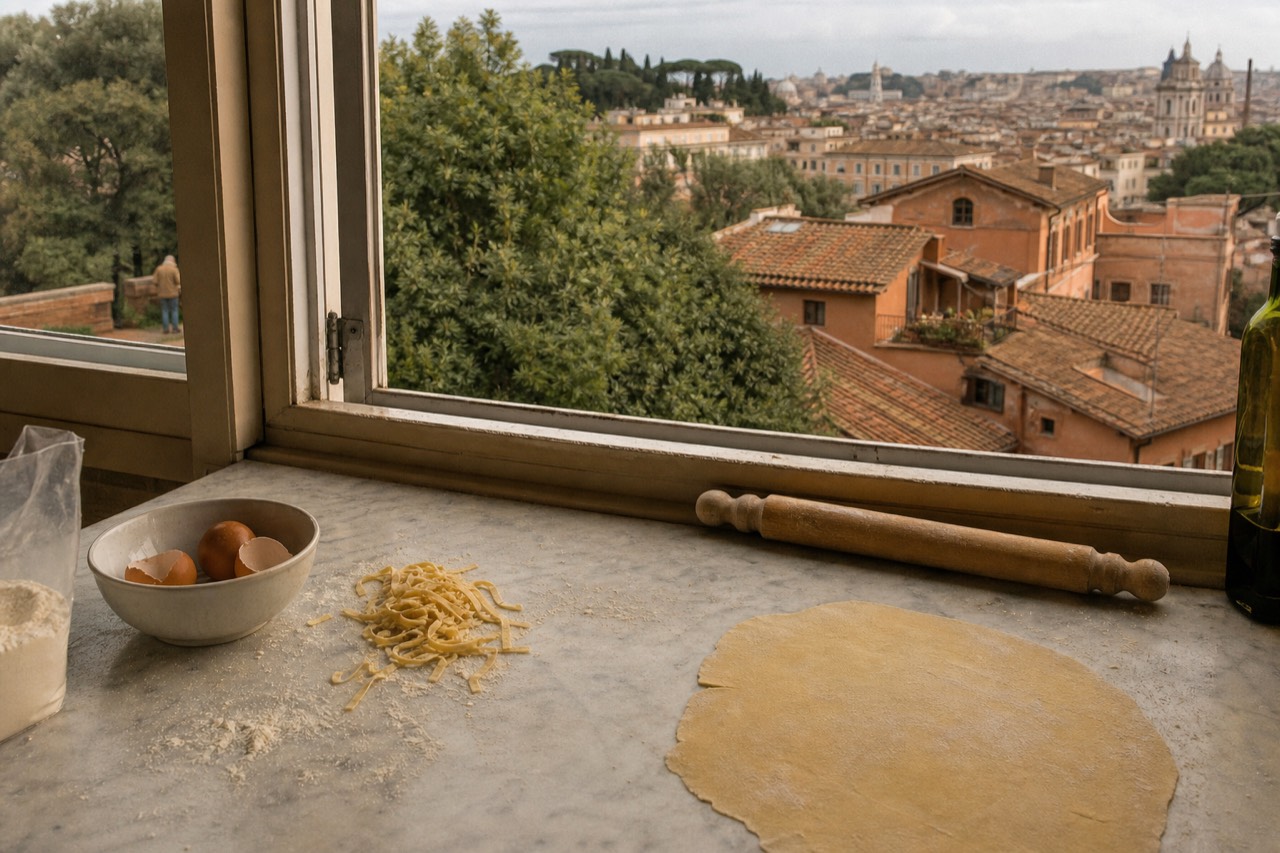
Italian cooking schools ask very little of your wardrobe, but the little they ask matters. A pasta class in Rome puts you on your feet for around three hours, in front of open flames, over cloudlike drifts of semolina flour, and often with a short outdoor walk to a market bolted onto the front of the session. The clothes that ruin a class are always the same few: floppy sandals, wide trailing sleeves, delicate dry-clean-only fabrics and brand-new white shirts. Everything else is comfort.
What to wear to a cooking class in Italy?
Wear closed, flat, non-slip shoes, long trousers or a mid-length skirt, a top with tight or rolled sleeves, and hair tied back. Leave dangling jewelry, strong perfume and loose scarves at the hotel. Schools provide aprons, and most provide the equipment, so your only real jobs are safe shoes and nothing that trails near a flame or drags through the dough. Layers help if the class includes a market walk.
That is the short version. The long version is worth reading, because the reasons behind each rule are specific to how Roman kitchens and Roman streets actually work, and they save you from the two or three mistakes that show up in guest reviews again and again.
Start with the economics of the decision. Analysis of 198 advertised classes puts the average Rome cooking class price at $172, so this is not a throwaway activity you can shrug off and repeat tomorrow. A class is often the single most expensive food experience of a trip, and the clothing choices that spoil one are all free to avoid. It is also now a more meaningful purchase than it used to be: UNESCO inscribed Italian cooking, between sustainability and biocultural diversity, on the Representative List of the Intangible Cultural Heritage of Humanity, the first time an entire national cuisine received the designation, and the surge of interest that followed has filled classes across the city.
Choosing the right class matters as much as dressing for it. If your session pairs a market walk with kitchen time, the format shapes your outfit more than the season does.
Why closed shoes are the one rule every school enforces
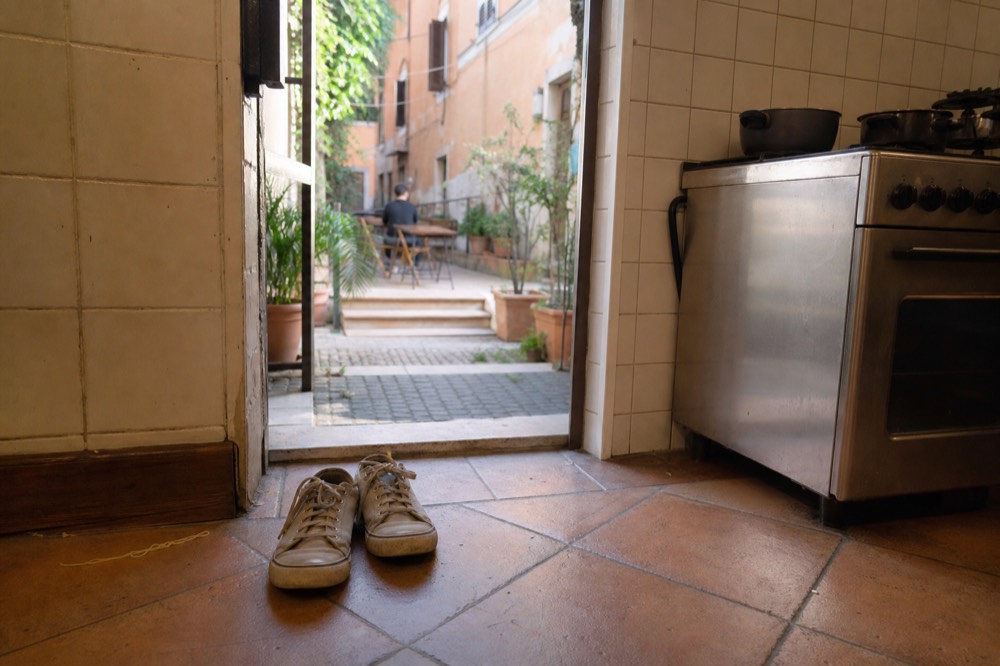
Closed, flat, non-slip shoes are the single most repeated requirement in Italian cooking class dress codes, and the reasons are physical: hot pans, splashing pasta water, dropped knives and floors that get wet within the first ten minutes of service. Sandals, flip-flops and backless slides fail on all four counts. Any comfortable closed shoe works, from canvas sneakers to short boots, and worn soles are safer than slick new leather soles on a tile floor.
The kitchen floor is the villain of most footwear stories. A Roman cooking school is not a demonstration studio with a raised stage; you stand at the same counter where the instructor works, and the water used to salt the pasta pot ends up on the tile around the stove. Boiling water is the most common hazard in a pasta class, and it lands where you are standing. A dropped chef's knife is rare, but the one time it happens, the difference between a sneaker and a sandal is the difference between a bruise and an emergency room.
Heels fail for a quieter reason. Three hours of standing and moving at a counter, often on a hard floor, punishes any shoe that concentrates your weight on a small point. Even a low block heel becomes uncomfortable by the second hour, when the sauce is still reducing and the tiramisu still needs assembling. Flat is not a style preference here; it is the difference between finishing the class and watching the last course from a chair.
A quick comparison of what works and what does not:
| Footwear | Verdict | Why |
|---|---|---|
| Canvas sneakers | Ideal | Grip, closed toe, comfortable for three hours of standing |
| Leather walking shoes | Good | Closed and stable; check the sole is not brand-new and slick |
| Ankle boots, flat | Good | Full protection, fine in any season |
| Sandals, any kind | No | Open toes near boiling water and dropped tools |
| Flip-flops, slides | No | Also a slip risk on wet tile |
| Heels, any height | No | Fatigue on hard floors, unstable near spills |
One more practical note: you will be on your feet before the class too. Many central Rome cooking schools sit a short walk from a metro stop or a bus line, and the cobbles between the two punish thin soles more than the kitchen does. The shoe that survives a Roman street survives the class.
Sleeves, hair, jewelry and the open flame rule
Tight or rolled sleeves, hair tied back, and no dangling bracelets, long necklaces or loose scarves. Roman pasta classes put a gas burner within arm's reach of your workstation, and a wide sleeve hovering over a flame is the most dangerous clothing mistake in the room. Synthetic fabrics melt rather than char, so a cotton or linen top is safer than a loose polyester blouse. A hair tie in your pocket costs nothing.
The flame rule drives everything in this section. When you fry the guanciale for carbonara or soften the soffritto for the sauce, your wrist passes over the burner dozens of times. A fitted short-sleeve top removes the problem entirely. A long-sleeve top is fine, and in winter it is the better choice, provided the cuffs are snug or buttoned; the failure mode is the wide bell sleeve of a loose knit, which hangs into the pan and catches the flame before you feel it.
Hair matters for a different reason. Kneading pasta dough by hand is the core of most Roman classes, and flour drifts upward the entire time. Loose hair picks up the dust, falls toward the board, and at some point has to be held back with a floury hand, which then has to be washed, which then interrupts the kneading. A tie, a clip or a bandana solves it in five seconds. The same logic applies to beards, incidentally; anyone who has one knows the answer already.
Jewelry is mostly a hygiene and dough problem rather than a safety one. Rings with stones and bracelets collect dough in their crevices, and the instructor will politely ask you to remove them or glove up. A plain band is fine. Long necklaces swing over the work surface. Watches and smartwatches are better left in a bag or a locker if the school provides one, both for the dough and for the occasional splash of tomato sauce.
Perfume deserves its own sentence. In a class built around tasting, a strong fragrance at the counter changes what you and your neighbors smell in the glass of wine and the bowl of pasta. Italian cooking culture treats the aroma of the dish as part of the experience, and a heavy scent competes with it. Skip the cologne on class day; you can put it back on for dinner.
Aprons, equipment and what the school provides
Almost every Italian cooking school provides an apron, and most provide all tools, ingredients and tastings, so you need to bring nothing except yourself in safe clothing. Aprons are usually the simple waist-to-knee bib type in the school's colors. Some schools let you keep them, most collect them at the end. If you own a favorite apron and want to wear it, nobody objects, but there is no reason to pack one.
The apron question is the most common one in pre-class emails, and the answer is nearly universal: yes, provided, no need to bring one. The apron exists to protect your clothes from flour, egg, olive oil and tomato, in roughly that order of likelihood. A pasta class is flour-forward; a pizza class is flour plus a hot oven; a gelato or tiramisu class is egg and cream-forward. Whatever the menu, the school has dressed hundreds of beginners before you and has the apron stock to prove it.
What the school does not provide is the layer underneath. That is where fabric choice earns its place. Dark colors hide tomato splashes; patterned fabrics hide flour; a crisp white shirt shows every gram of semolina that touches it. Cotton and linen wash clean easily at the hotel. Silk, cashmere and anything labeled dry clean only belong to the evening plans, not the class.
| Item | Provided by the school? | Notes |
|---|---|---|
| Apron | Yes, nearly always | Bib style; some schools let you keep it |
| Equipment, tools | Yes | Knives, boards, pots, pasta machines |
| Ingredients | Yes | Included in the class price |
| Water, wine, tastings | Usually yes | Check the listing for what is included |
| Hair ties | Sometimes | Bring your own to be safe |
| Container for leftovers | Often | Ask at the end of the session |
The leftovers row is a real one. Roman class portions are generous, and many schools send you out with a box of the pasta you just cut. If you are carrying a daypack, it earns its space for that reason alone.
Dressing for the market-walk half of the class
If your class includes a guided market walk, dress for two environments in one morning: an outdoor or covered market that is cool in the morning and busy underfoot, then a warm kitchen. Layers are the answer, a removable jacket or cardigan over a short-sleeve base, plus the closed shoes you already need for the kitchen. A small crossbody bag beats a large tote for weaving between stalls.
The market half changes the problem. Rome's covered markets are cooler than the street in summer and colder than you expect in winter; the Trionfale market, one of the largest with around 270 stalls, is a cavernous covered hall where the morning chill lingers. An outdoor piazza market has the opposite rhythm, warm in the sun, cool in the shade of the stall awnings. You will stand, walk, squeeze past other shoppers and occasionally carry a bag of the produce the instructor just bought for the lesson.
A market walk followed by a cooking session is the format where clothing earns its keep twice. The Trionfale market tour pairs a four-hour market visit with tastings, and the same logic applies to any class that starts at a stall and ends at a stove: you want the jacket off by the time the burner lights, and back on for the walk home.
The bag question deserves a direct answer. A large tote or backpack is a nuisance in a crowded market aisle and a hazard on a kitchen floor, where it becomes a trip hazard the instructor will ask you to move. A small crossbody bag or a daypack that lives in a locker during the class is the practical middle path. Whatever you carry, keep one hand free; the market half of these sessions tends to end with the group carrying the ingredients.
What to wear by season in Rome
In summer, a breathable short-sleeve top, light trousers and closed shoes, because kitchens are warmer than the street even with air conditioning. In winter, a base layer under a removable sweater, because the market walk is cold and the kitchen is not. Spring and autumn are the easy seasons: the same layers, lighter. Rain matters more than temperature, since a wet market walk precedes a dry kitchen.
Rome's summers push kitchens hard. Even a well-ventilated school runs warm once six burners are going and a class of ten is kneading dough, so the summer instinct to dress light is correct, with one correction: light does not mean open. A linen short-sleeve shirt and loose cotton trousers are cooler in practice than shorts and a tank top in practice, because natural fibers breathe and the apron covers the front anyway. Shorts are acceptable at nearly every school, but they leave your legs open to the occasional splash from the pasta water, and the apron stops at the knee.
Winter is the season travelers underdress for, in the wrong direction. The morning market walk in January is genuinely cold, and the walk from the hotel to the school is colder, so the coat comes along. The kitchen, meanwhile, is warm within twenty minutes of the class starting. The person who arrives in a heavy sweater with no removable layer spends the class flushed and rolling up sleeves that will not stay rolled. A base layer plus a zip jacket or cardigan solves the whole morning.
| Season | Base layer | Removable layer | Footwear note |
|---|---|---|---|
| Summer, June to August | Breathable short-sleeve cotton or linen | None needed | Closed and light; avoid dark canvas that bakes in the sun on the walk |
| Spring and autumn | Short or long sleeve | Light jacket or cardigan | Standard closed walking shoes |
| Winter, December to February | Long sleeve base | Sweater plus coat for the walk | Water-resistant sole if rain is in the forecast |
Rain is the wildcard in every season. Rome's autumn and winter showers arrive fast and leave the cobbles slick, which matters twice: once on the walk to the school and once inside, where a wet shoe sole on a tiled kitchen floor is a slip risk until it dries. A shoe with a treaded, water-resistant sole handles both. An umbrella is worth the carry on a forecast with rain, because the market half of the class does not pause for weather.
What not to wear, and what to leave at the hotel
Do not wear sandals, heels, trailing sleeves, dry-clean-only fabrics, strong perfume or dangling jewelry, and leave large bags, laptops and anything precious at the hotel. New white tops, loose scarves and long necklaces are the most commonly regretted items. Nothing on the banned list is a style judgment; every item maps to a specific hazard, a spill, a flame, a flour cloud or a crowded market aisle.
The white shirt deserves special mention because it is the one people defend. A brand-new white shirt feels like the right thing to wear to a nice activity, and it is the single most ruined garment in cooking classes. Flour alone defeats it, and flour is the theme of the day in a pasta class. Dark or patterned tops are not a better taste, they are simply a better bet.
Loose scarves and long necklaces combine both failure modes: they swing toward the flame at the stove and drag across the dough at the board. A short necklace worn inside a collar is harmless; anything that hangs free is a problem. The same goes for wide-brimmed hats worn indoors, which catch on other people, on cabinet doors and on nothing at all, but repeatedly.
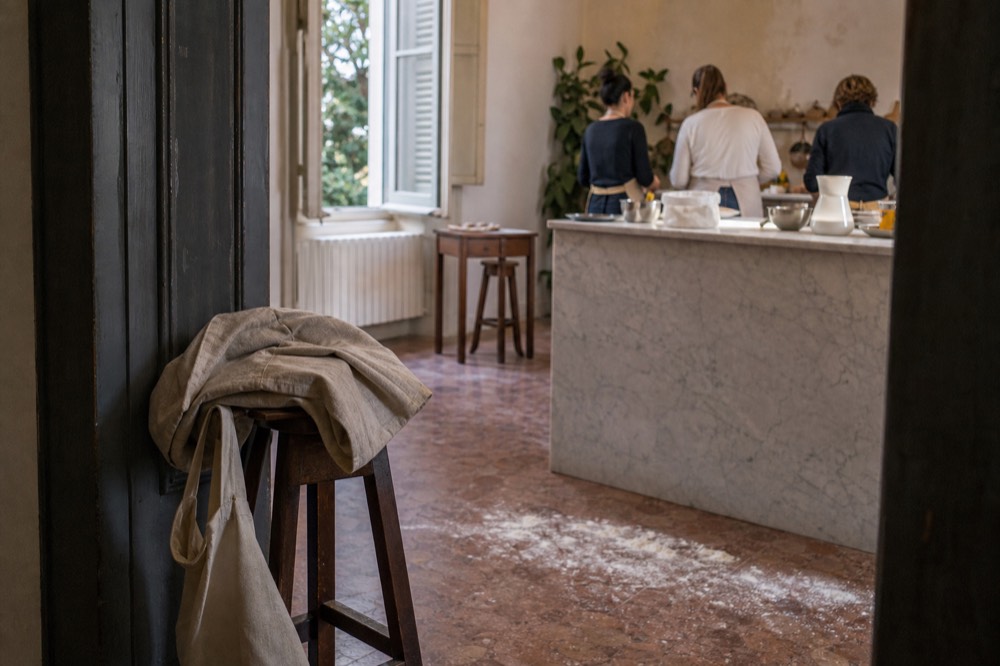
Electronics are the modern addition to the list. A phone in a back pocket is fine and useful for photos; a laptop, a tablet and a camera bag belong to the hotel. The work surface is shared, the floor is shared, and the one guest with a full desk setup is the one guest everyone works around. If the school has lockers, use them; if it does not, travel light enough that the question never comes up.
For anyone pairing the class with a bigger food day, the same outfit rules carry over to the walking formats. The gear advice in our guide to walking food tours in Rome overlaps almost entirely with this list, and the seasonal layering logic in free and cheap things to do in Rome applies to the market walk too. The short version across all of it: closed shoes, tight sleeves, layers, and nothing you would mind dusting with flour. That advice is the house line at Rome Food Tours for a reason.
If the class you are eyeing is one of the market-plus-kitchen formats, or if you want a food experience with even less standing, the market-anchored options below cover both.
The core answer stays the same across every school and season: closed, flat, non-slip shoes, tight or rolled sleeves, hair tied back, no dangling jewelry or strong perfume, and a removable layer if a market walk is on the schedule. The school supplies the apron, the tools and the ingredients, so packing is simple and the dress code is easy to satisfy with clothes you already own.
Common questions about what to wear to a cooking class in Italy
What to wear to a cooking class in Italy?
Closed, flat, non-slip shoes, long trousers or a mid-length skirt, a top with tight or rolled sleeves, and hair tied back. Skip dangling jewelry, loose scarves and strong perfume. The school provides the apron, the tools and the ingredients, so your clothing has exactly two jobs: keep you safe near the stove and comfortable for three hours of standing.
Do I need to bring an apron to a cooking class?
No. Nearly every Italian cooking school provides an apron, usually a simple bib style, along with all equipment and ingredients. Some schools let you keep the apron as a souvenir, most collect them at the end. If you have a favorite apron at home there is no harm in wearing it, but it is one more thing to carry through a market walk.
Can I wear shorts to a cooking class in Rome?
Most schools allow shorts, especially in summer, but long trousers are the safer choice. The apron stops at the knee, and the hazards of a pasta class, boiling water, hot oil when the guanciale renders, and splashes from the sauce, land below it. Light cotton or linen trousers are cooler in practice than shorts plus an apron anyway.
Are sandals acceptable in a cooking class kitchen?
No. Closed shoes are the one dress rule schools actually enforce, and sandals, flip-flops and slides fail it. The kitchen floor gets wet early in the session, hot liquids move across the room constantly, and a dropped knife is rare but decisive. Any comfortable closed shoe, sneakers, walking shoes or flat boots, passes the rule.
What should I wear if the class includes a market walk?
Dress in layers: a short-sleeve or light base layer under a removable jacket or cardigan, with the closed shoes you need for the kitchen. Covered markets are cooler than the street in summer and cold in winter, and the kitchen warms up quickly once the burners are on. Carry a small bag rather than a large tote for weaving between stalls.
Should I wear perfume or cologne to a cooking class?
Skip it. A class built around tasting treats aroma as part of the dish, and a strong fragrance competes with the wine, the herbs and the pasta itself, for you and for the people at neighboring stations. Save the cologne for dinner after the class, when it will not interfere with anyone's carbonara.