Gluten-Free Eating in Rome: Tours, Classes and Certified Kitchens
Italy takes coeliac disease seriously at a national level, and has done for decades. Here is how that plays out on the ground in Rome, which tours adapt well, and which questions separate a genuinely gluten-free experience from a walk with the wheat-eaters.
Short answer
Rome is one of the easiest cities in Europe for a coeliac visitor. Italy has 279,512 diagnosed coeliacs and a national accreditation scheme with over 4,200 venues. Tour prices run from $33.68 for a pizza and gelato class to $78.97 for a small-group Trastevere walk, and several operators will adapt on request.
Rome has an unusual advantage for travellers who cannot eat gluten: Italy takes coeliac disease seriously at a national level, and has done for decades. The Ministry of Health's annual report to Parliament counted 279,512 diagnosed coeliacs in Italy as of 31 December 2024, including 14,410 new diagnoses that year, and Lazio alone accounts for 27,883 of them. That is not a curiosity, it is the reason a visitor with coeliac disease finds certified kitchens, pharmacy shelves of gluten-free staples and waiters who understand the question in a way that is rare elsewhere in Europe.
The national health service even pays for it. The same ministry report records that the SSN spent nearly 273 million euro on gluten-free products for coeliacs in 2024, and Legge di Bilancio 2026 introduced a national digital buono celiachia that works across regions. A tourist benefits from none of that directly, but the infrastructure behind it, the trained kitchen staff and the accredited venues, is exactly what a visitor inherits.
This guide covers the practical side: how a gluten-free food tour in Rome works, which formats adapt well and which quietly skip stops, what certified actually means, and what to ask before you pay. Where a price or rating appears, it comes from the operator's live listing data; anything the listing does not confirm is written as such.
Why Rome is genuinely good for gluten-free eating
Italy runs a national, state-backed system for coeliac care that most countries have never attempted, and Rome sits inside it. The 2024 national report lists 279,512 diagnosed coeliacs, Lazio counts 27,883 of them, and the health service spent nearly 273 million euro on gluten-free products in a single year. That machinery is why a Roman waiter rarely blinks at the question.
The backbone is the Associazione Italiana Celiachia, whose Alimentazione Fuori Casa accreditation scheme trains and audits food businesses. The 2025 edition of its guide lists 4,189 accredited venues nationwide, including 482 new entries, and the network passed 4,200 accredited structures by late 2025. Accreditation is not a marketing badge: it means the venue has completed training on cross-contamination and passed an audit. In 2024 alone, 700 training courses reached over 17,000 foodservice operators across the country.
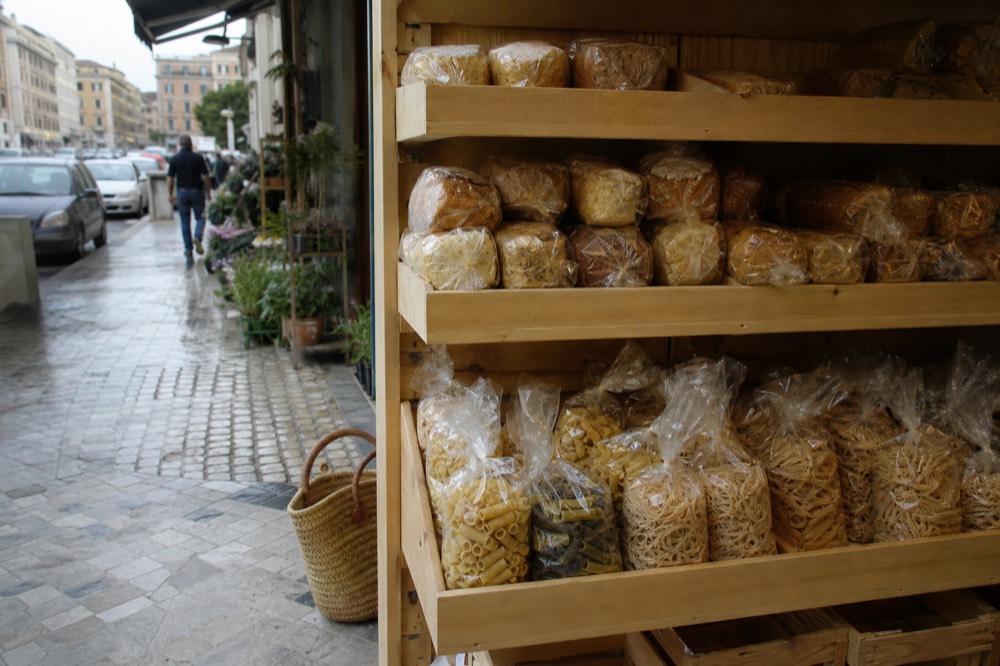
Rome has its own dedicated layer on top. New Food Experience in Prati, a fully gluten-free and lactose-free restaurant, marked two years of operation in November 2025, and the city's markets and trattorias increasingly carry gluten-free pasta as a standard option rather than a favour. The practical effect for a visitor: you are rarely more than a few streets from a kitchen that has been formally trained on the problem.
How a gluten-free food tour in Rome actually works
A standard Rome food tour is built around wheat: pizza al taglio, supplì, bread boards and pasta. A gluten-free adaptation means the guide swaps those stops for equivalents rather than deleting them, and the good ones confirm every venue in advance. Expect to state your requirement at booking, not on the day, because kitchen preparation starts before the group meets.
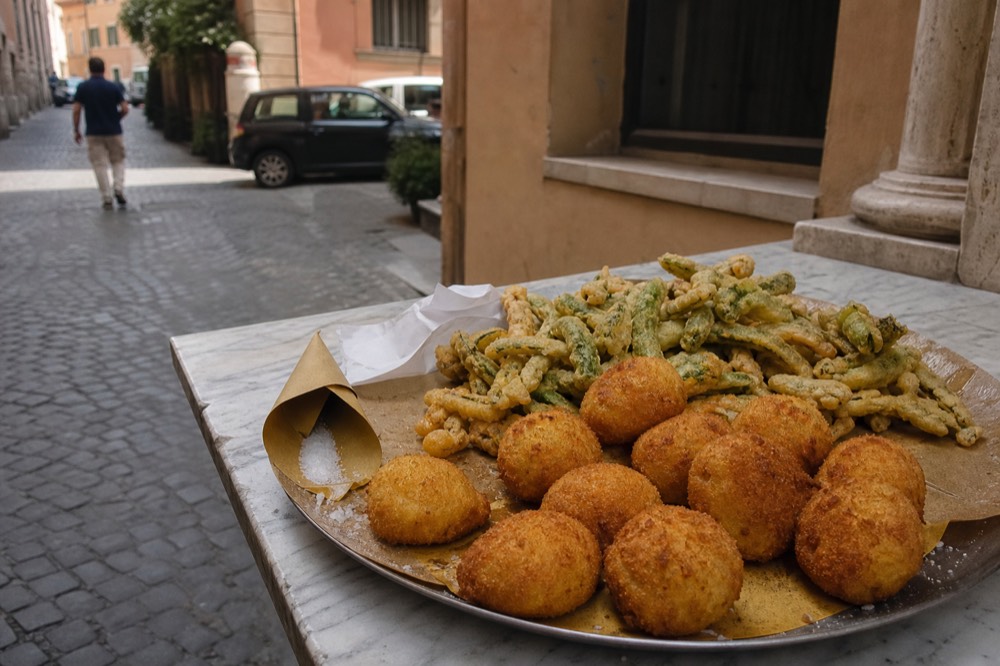
The honest first point: very few Rome tours are gluten-free by default. Most are wheat-centric by design, since pizza, pasta and fried rice balls are the city's street-food spine. What happens instead is adaptation. When you book, the operator contacts each stop and confirms whether the kitchen can produce a safe version of that tasting. A supplì becomes a fried croquette made without breadcrumbs; a pizza stop becomes a certified gluten-free pizzeria; a pasta tasting moves to a venue with separate water and separate pans.
The failure mode is equally predictable. An operator that cannot adapt will simply skip the stop and let you watch the rest of the group eat, which is why the question that matters is not "can you accommodate gluten-free?" but "what will I receive in place of each wheat tasting?" A confident answer names dishes. A vague one names nothing.
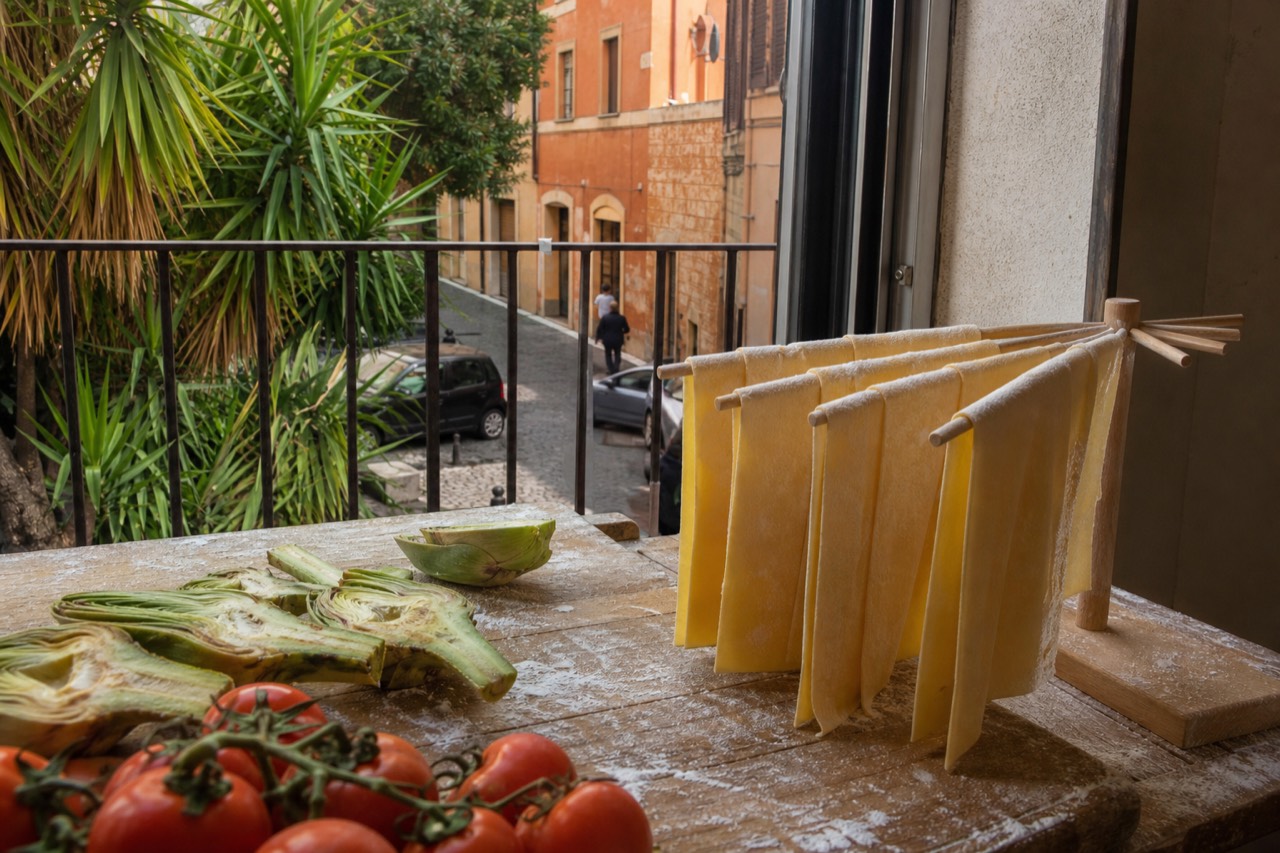
Cooking classes are a different case and often the better one, because you control the dough. A class that makes its own pasta from scratch can substitute a gluten-free flour blend for the whole group or for your bench, and the cross-contamination risk in a teaching kitchen is easier to manage than in a busy restaurant at dinner rush. For a deeper look at the format generally, see our guide to cooking classes in Rome.
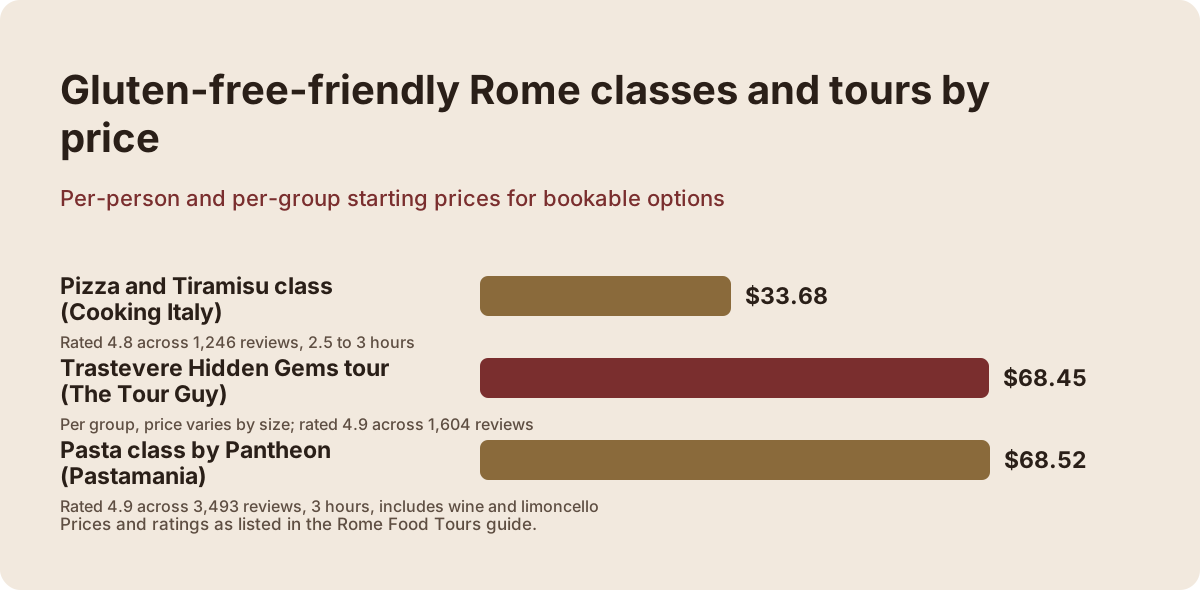
Three options worth comparing first, all bookable with dietary requests flagged at checkout:
The Pizza and Tiramisu class run by Cooking Italy is the budget entry at $33.68 per person, rated 4.8 across 1,246 reviews, and because tiramisu and gelato are the safer half of the menu, a gluten-free request is easier to honour there than in a bread-heavy walk. The pasta class by Pantheon, $68.52 per person and rated 4.9 across 3,493 reviews, is the strongest candidate for a full gluten-free dough, since Pastamania runs its own school kitchen and can prepare a separate flour station. The small-group Trastevere walk at $78.97 per person, 4.9 from 3,592 reviews, is the tour-style option: small groups make per-person substitutions practical.
Which operators adapt, and which just skip stops
Ask one question before booking: "What dish will I receive in place of each wheat tasting?" Operators who adapt will name substitutes, a gluten-free pizzeria, a separate pasta water, a cornstarch-thickened supplì. Operators who skip will offer a discount or a shrug, and neither feeds you. Confirm it in writing at booking time, not on the street.
The distinction matters most on walking tours, where the group eats what the neighbourhood serves. Trastevere and the historic center are wheat country: pizza in teglia, supplì, maritozzo, bread baskets. A good operator in these neighbourhoods has pre-arranged gluten-free versions with specific venues, and those arrangements exist because Italy's accreditation scheme gave the venues the training to do it safely. A lazy operator books nothing and improvises, which in a shared fryer city is exactly the risk a coeliac visitor is trying to avoid.
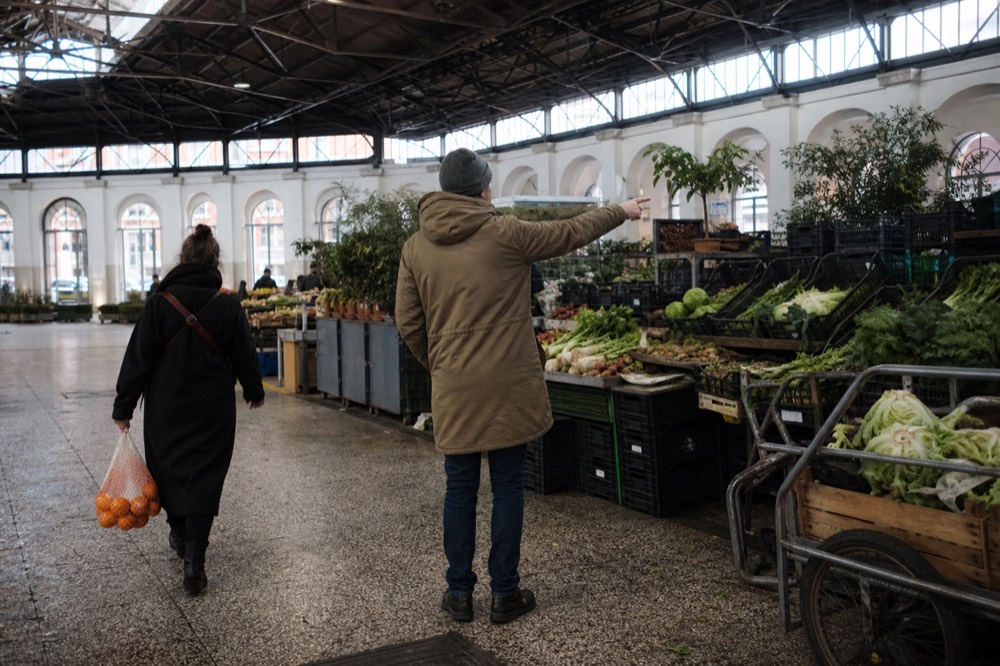
Market-based formats adapt better, because a market tasting of cheeses, cured meats, olives and vegetables is naturally low on gluten, and the wheat items are the add-ons rather than the structure. The Testaccio market walks are the strongest example: the market's stalls sell Pecorino Romano, porchetta, fresh produce and prepared foods, and a guide can route the tasting through the stalls that pose no risk while substituting a certified venue for the bread and pasta stops. Our Testaccio food tours guide covers the neighbourhood in detail.
| Format | Adaptation quality | What to watch for |
|---|---|---|
| Walking street-food tour | Weakest by default; strongest if pre-arranged | Shared fryers for supplì, bread handed around at stops |
| Market tour with tastings | Strong; much of a market tasting is naturally gluten-free | Cross-contamination on shared cutting boards |
| Small-group neighbourhood walk | Good; per-person substitution is practical in small groups | Ask whether the substitute is a dish or a skip |
| Cooking class | Strongest; you control the dough | Confirm separate flour station and separate pasta water |
| Private tour | Best; the whole route is built around you | Price scales with exclusivity, not safety |
One format worth flagging for its flexibility: the Trastevere Hidden Gems tour run by The Tour Guy, priced from $68.45 per group with the price varying by group size and rated 4.9 across 1,604 reviews. A private or semi-private dinner walk is where an operator can rebuild the whole route around your requirement rather than fitting you into a fixed one.
What "certified gluten-free" means in an Italian kitchen
In Italy, a credible gluten-free claim rests on the AIC Alimentazione Fuori Casa accreditation: staff trained on cross-contamination, audited procedures, and a venue listed in the national guide, which counted 4,189 accredited venues in its 2025 edition. Without that, "gluten-free options" on a menu is a promise, not a system.
The accreditation is administered by the Associazione Italiana Celiachia, the same body behind the national guide, and it is the closest thing Italy has to a state-recognised standard for eating out, backed by a Ministry of Health reporting framework that tracks diagnosed coeliacs nationwide. A venue in the scheme has done structured training on cross-contamination and passed an audit. A venue merely printing "senza glutine" on a menu has done neither, and in a city full of shared fryers the difference is the whole meal.
The Ministry of Health's annual celiachia report is the source of record for the national picture, and the Associazione Italiana Celiachia publishes the accreditation scheme and the digital voucher changes. For regional figures, the Dr. Schär Institute's epidemiology pages break the ministry data down by region, including Lazio's 27,883 diagnosed coeliacs.
For a tour buyer, the practical translation is simple. Ask whether the stops on your route are AIC-accredited. An operator who answers yes, and names the venues, has done the work. An operator who has never heard the question is telling you something too.
Cooking classes: the format where gluten-free works best
A cooking class is the most reliable gluten-free food experience in Rome because you make the dough yourself and the kitchen can prepare a separate flour station in advance. The Pizza and Tiramisu class from $33.68 per person and the pasta class by the Pantheon from $68.52 per person are the two most bookable options, both with the dietary request handled at booking.
The economics matter here as much as the safety. Classes are where a gluten-free visitor gets the fullest experience for the money, because the substitution is total rather than partial: everyone at your bench works with the same dough, or the kitchen runs a dedicated station, and there is no watching other people eat. Costs across the city's classes are covered in more depth in our piece on average cooking class prices in Rome.
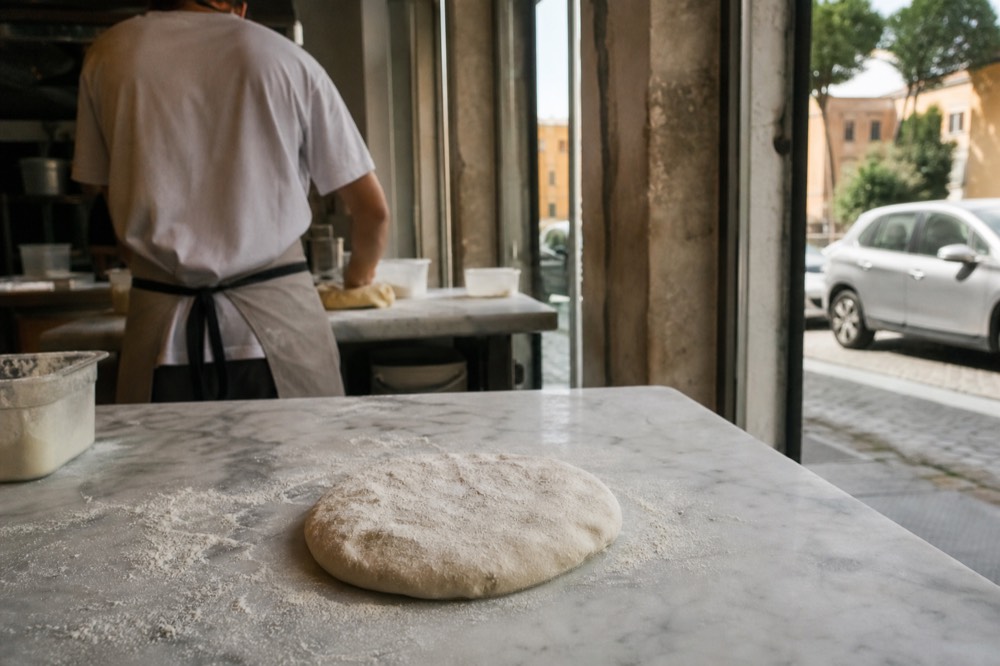
The Pizza and Tiramisu class run by Cooking Italy is the cheapest structured option on the Rome roster at $33.68 per person, rated 4.8 from 1,246 reviews over 2.5 to 3 hours. Its structure helps a coeliac visitor twice over: gluten-free pizza dough is a standard commercial product in Italy, and tiramisu's gluten element is the savoiardi biscuit, which gluten-free versions of replace routinely. Flag the requirement when booking so the school can prepare the station.
The pasta alternative is the Pastamania class near the Pantheon, $68.52 per person, rated 4.9 across 3,493 reviews over 3 hours, which includes wine, dessert and limoncello alongside the pasta making. A scratch pasta class can run on gluten-free flour blends, but the request has to reach the school in advance: the flour station, the rolling surfaces and the pasta water all need separating, and that is a preparation task, not a spur-of-the-moment one. The class meets at the school in Via della Gatta 14, which is worth knowing because a dedicated venue adapts more easily than a rented kitchen.
For families, the family pasta and tiramisu class at $60.39 per person, rated 4.9 from 263 reviews, runs the same logic in a format built for children, and a family with one coeliac child often finds a class less stressful than a walk, since nobody at the table is eating something the child cannot have.
What a gluten-free food experience in Rome costs
Prices across the gluten-friendly options run from $33.68 per person for the pizza and tiramisu class to $78.97 per person for a small-group Trastevere walk, with market tours from $79.27 per group and private dinner walks from $68.45 per group. Classes are the cheapest full-meal format; private tours are the most controllable.
These are listing prices, and group-priced tours vary by group size, so treat the per-group figures as starting points and check the live listing for your party size. What the table cannot capture is value: a class at $33.68 that feeds you a full meal you made yourself beats a walk at double the price where you watched other people eat.
| Experience | Price | Rating | Length | Gluten-free strength |
|---|---|---|---|---|
| Pizza and Tiramisu class | $33.68 per person | 4.8 from 1,246 reviews | 2.5-3 hours | Strong, with advance notice |
| Family pasta and tiramisu class | $60.39 per person | 4.9 from 263 reviews | 3 hours | Strong for coeliac children |
| Pasta class by the Pantheon | $68.52 per person | 4.9 from 3,493 reviews | 3 hours | Strong, needs a separated station |
| Hidden Gems dinner walk | $68.45 per group | 4.9 from 1,604 reviews | 3 hours | Good, small group format |
| Small-group Trastevere walk | $78.97 per person | 4.9 from 3,592 reviews | 3 hours | Good if stops are pre-arranged |
| Small-group Testaccio market tour | $79.27 per group | 4.9 from 293 reviews | 3.5 hours | Good, market tastings adapt well |
Two budget notes from the wider picture. Restaurant prices in the city are not standing still: the NIC consumer price index for Rome Capitale recorded a 3.6% year-on-year rise in May 2026, and ISTAT measured restaurant and accommodation services nationally at 2.9% year-on-year in June 2026. A tour price locked at booking is one of the few food costs in the city that cannot drift upward on you mid-trip.
Cross-contamination questions to ask before you book
Five questions separate a safe booking from a hopeful one: which stops are AIC-accredited, what dish replaces each wheat tasting, whether fryers are shared, whether pasta water and surfaces are separated, and whether the guide confirms everything in writing at booking. An operator that answers all five is rare and worth paying for; one that bristles at any of them has answered anyway.
The fryer question is the one visitors most often miss. Rome's signature street snacks, supplì and filetti di baccalà, are fried, and a fryer that has seen breaded food all afternoon is not a gluten-free fryer no matter what the dough is made of. The same logic applies to griddles, cutting boards and the bread basket that lands unasked on a shared table.
| Question to ask | Good answer | Warning answer |
|---|---|---|
| Which stops are AIC-accredited? | Named venues from the AIC guide | "All our partners are careful" |
| What replaces each wheat tasting? | Named dishes per stop | "We will find something" |
| Are fryers shared? | Dedicated fryer confirmed | "It is fine, the oil is hot" |
| Is the pasta water separated? | Separate pot and colander confirmed | Not understood as a question |
| Is the adaptation confirmed at booking? | Written confirmation before payment | "Tell the guide on the day" |
One Rome-specific note: Lazio law prohibits a separate coperto charge in food service, with fines from 2,500 to 7,500 euro for violations, so a tour or restaurant adding a cover charge to your bill is charging you something the region's own rules do not allow. It is a small point, but coeliac travellers are occasionally handed inflated or invented surcharges on the assumption they will not query them.
Planning a gluten-free food day in Rome on your own
You do not need a tour to eat safely in Rome: start at an accredited venue, build the morning around a market where produce, cheese and cured meats carry no risk, and reserve one structured experience, ideally a class, for the depth. A market morning plus a pizza or pasta class is the cheapest full gluten-free food day the city offers.
The market half is straightforward. Testaccio's covered market, roughly 7am to mid-afternoon Monday to Saturday by the market's own published hours, is built from stalls selling cheese, cured meat, porchetta, vegetables and prepared foods, and a coeliac visitor can assemble a full tasting there with almost no negotiation. The market also opens Friday evenings until 22:00, a change introduced in March 2026, which makes an early-evening visit possible in warmer months. Our Rome street food markets guide maps the city's other covered and open-air markets, including Trionfale with its roughly 270 stalls on the Vatican side of the river.
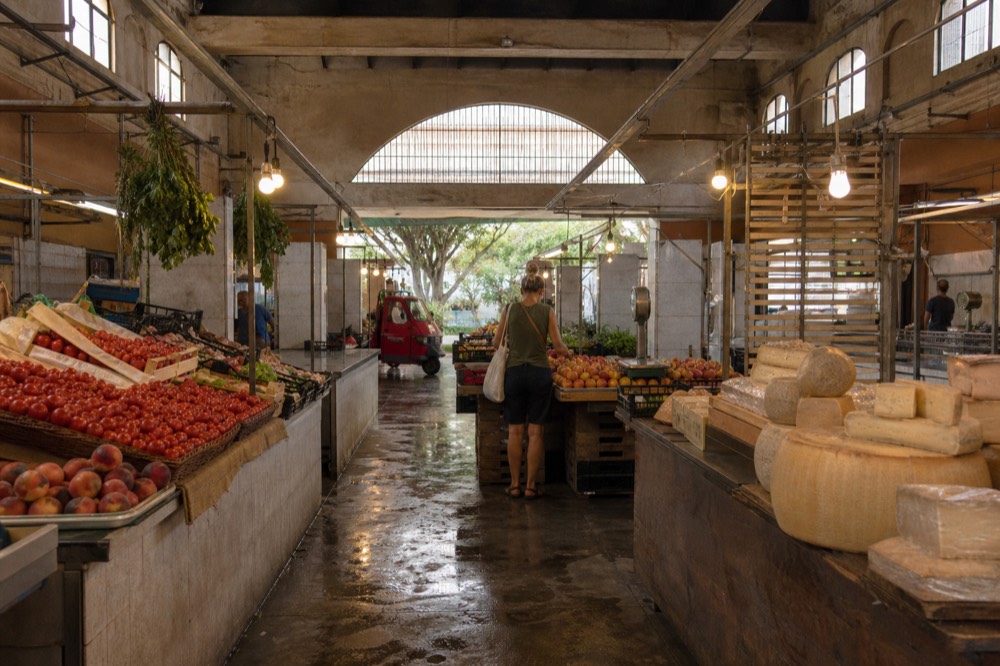
The structured half is where the roster earns its place. A small-group market tour such as the Testaccio walk run by Devour Italy, from $79.27 per group and rated 4.9 across 293 reviews, does the market morning with a guide who can steer the tasting, and the operator takes dietary requests at booking. Paired with a morning of independent market browsing, it turns a safe day into an interesting one.
For visitors with multiple restrictions, the vegan street food walk at $91.75 per person, a perfect 5 from 79 reviews, is worth knowing about, and our vegan and vegetarian food tours guide covers that intersection in full, since vegan and gluten-free requirements overlap often enough that some kitchens handle both on request.
The last planning point is timing. Roman dinner starts late, typically from 8pm, and evening tours in the center are affected by the night rules on takeaway alcohol in the movida zones, which ban takeaway sales from 22:00 and street drinking from 23:00 in the mapped central areas. None of that touches a seated tasting, but it is worth knowing if your evening plan involves carrying bottles between stops. The site's evening food tours guide covers the format, and Rome Food Tours maintains the full roster across every dietary category.
The short answers: Rome tours are safe for coeliacs only with advance notice, Italy is one of the best-equipped countries in Europe for gluten-free eating, and a cooking class is usually the most reliable format. Prices start at $33.68 per person, and the questions that matter are the ones about fryers, pasta water and written confirmation, all covered above.
Common questions about gluten-free food tours in Rome
Are Rome food tours safe for coeliacs?
Some are, with advance notice. No mainstream Rome tour is gluten-free by default, but operators can adapt tastings if you flag the requirement at booking, and Italy's AIC accreditation scheme means many venues have formal cross-contamination training. Ask what dish replaces each wheat tasting before you pay.
Do I need to tell the tour operator about my gluten-free requirement in advance?
Yes, always at booking rather than on the day. Kitchen preparation, separate stations and venue substitutions are arranged before the group meets, and an operator contacted on the morning of a tour can rarely rebuild a route safely.
Is Italy good for gluten-free travellers?
Italy is one of the best-equipped countries in Europe. The Ministry of Health counted 279,512 diagnosed coeliacs in its 2024 report, the health service spent nearly 273 million euro on gluten-free products, and the AIC's eating-out network passed 4,200 accredited venues. Waiters generally understand the question without translation.
Can a pasta-making class in Rome be gluten-free?
Yes, if the school is told in advance. Scratch pasta can be made with gluten-free flour blends, but the flour station, rolling surfaces, pasta water and colander all need separating from the wheat class, which is a preparation task rather than a same-day one.
What is the cheapest gluten-friendly food experience in Rome?
On the current roster, the Pizza and Tiramisu class at $33.68 per person, rated 4.8 from 1,246 reviews. Because you make the dough yourself and tiramisu's gluten element is easily substituted, it adapts more fully than most walking tours at several times the price.
Do Rome restaurants charge a coperto I should watch for?
Lazio law prohibits a separate coperto charge in food service, with fines from 2,500 to 7,500 euro for violations. If a service charge appears it must be shown on the price list before you order, so a bill with an unexplained cover charge is worth querying.